The Montgomery Bus Boycott
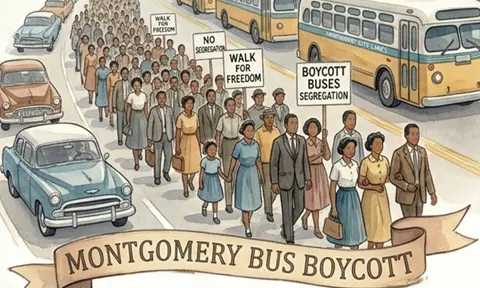
Fast Facts: Montgomery Bus Boycott
Montgomery Bus Boycott
- Location: Montgomery, Alabama (1955–1956)
- Spark: Arrest of Rosa Parks
- Main Leader: Martin Luther King Jr.
- Strategy: Nonviolent protest & carpools
- Outcome: Supreme Court ended bus segregation
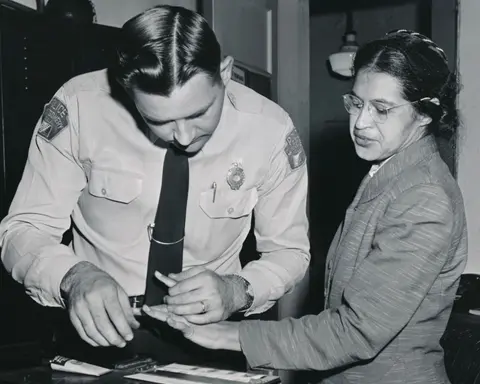
Montgomery Bus Boycott at a Glance
- Rosa Parks refused to give up her seat and was arrested.
- African Americans organized a year-long boycott of city buses.
- Martin Luther King Jr. became a national civil rights leader.
- Protestors used carpools and walked instead of riding buses.
- The Supreme Court ruled bus segregation unconstitutional.
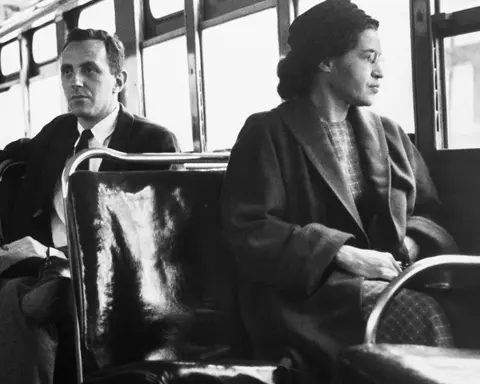
Rosa Parks Takes a Stand
On December 1, 1955, Rosa Parks boarded a bus in Montgomery, Alabama. When the bus became crowded, she refused to give up her seat to a white passenger. Parks was arrested, and her arrest sparked anger in the African American community.
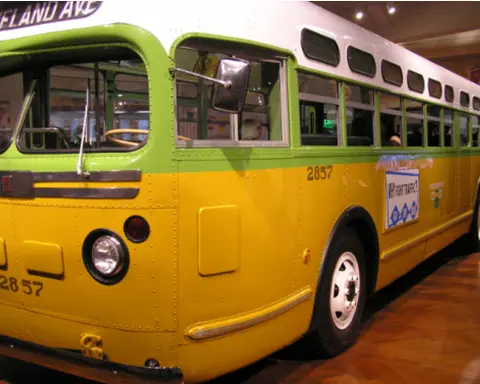
The Boycott Begins
African American leaders encouraged people to stop riding the buses. Instead, they walked, used carpools, or found other ways to travel. The boycott was peaceful but powerful. It showed that the community could work together to challenge unfair laws.
Martin Luther King Jr. Emerges as a Leader
A young pastor named Martin Luther King Jr. became the main leader of the boycott. He encouraged people to remain peaceful, even when they faced threats and violence. King’s speeches inspired many and helped bring national attention to the movement.
Violence and Challenges
Some people reacted angrily to the boycott. King’s home was bombed, and many protestors were arrested. Despite these dangers, the boycott continued for more than a year.
A Victory for Justice
In 1956, the Supreme Court ruled that bus segregation was unconstitutional. The decision ended the Montgomery Bus Boycott and marked one of the first major victories of the Civil Rights Movement.
Word Match
Drag the vocabulary words to their correct definitions!
Vocabulary Words
Definitions
Lesson 3 — The Montgomery Bus Boycott Quiz
Activities & Extensions
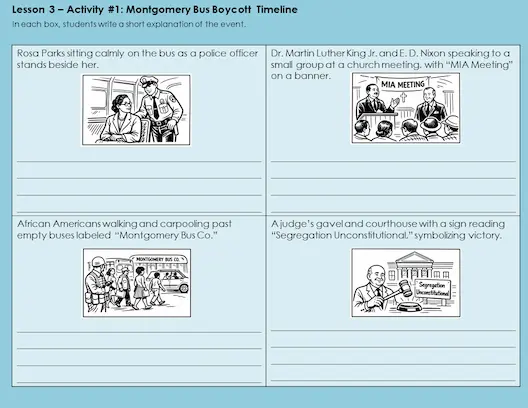
Students explore a four‑panel comic timeline showing key moments in the Montgomery Bus Boycott. This visual activity helps them understand how one act of courage sparked a powerful movement.
How to Do It: Display the comic timeline on the board or provide a single copy for groups. Students rotate through each panel and discuss:
- What is happening in this scene?
- How did this moment contribute to the boycott?
- What emotions or challenges do you notice?
Optional Extension: Students sketch a “fifth panel” in their notebooks showing what happened after the court decision.
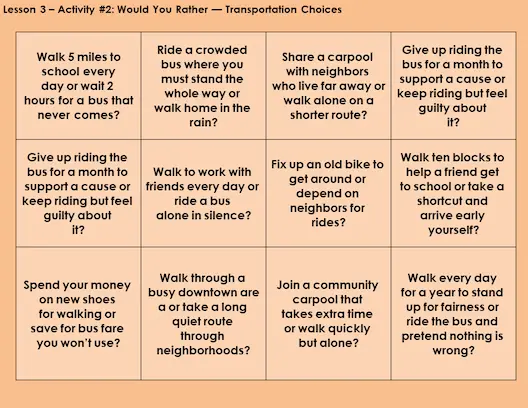
Students explore what it might feel like to give up easy transportation by making “Would You Rather?” choices about walking, riding, and supporting a cause. This activity builds empathy for the determination shown during the Montgomery Bus Boycott.
How to Do It: Read each “Would You Rather?” statement aloud or display them on the board. Students choose one option and be ready to explain why. You may have students move to different sides of the room to show their choices.
Discussion: After several rounds, connect their choices to the boycott:
- What makes some choices harder than others?
- Why might people choose to walk for over a year instead of riding the bus?
- How can everyday choices show support for fairness and justice?
Sample “Would You Rather?” Prompts:
- Walk 5 miles to school every day or wait 2 hours for a bus that never comes?
- Share a carpool with neighbors who live far away or walk alone on a shorter route?
- Give up riding the bus for a month to support a cause or keep riding but feel guilty about it?
- Walk to work with friends every day or ride a bus alone in silence?
- Fix up an old bike to get around or depend on neighbors for rides?
- Walk every day for a year to stand up for fairness or ride the bus and pretend nothing is wrong?
Civil Rights Navigation
Explore the Full Civil Rights Unit
This complete history unit includes research passages, organizers, writing tasks, quizzes, activities, and website research — all in printable and digital formats. Everything you need to teach the Civil Rights with confidence.
View the Full Unit on TPT