Working for Equal Rights
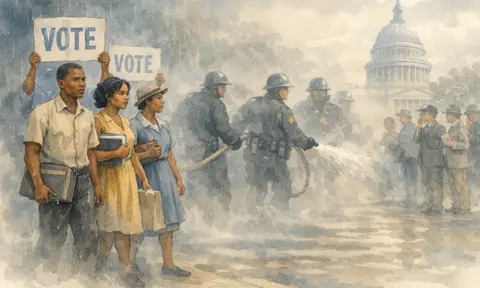
Fast Facts: Civil Rights Actions
Civil Rights Actions
- Freedom Riders: Challenged bus station segregation (1961)
- Birmingham: Church bombing killed four girls (1963)
- March on Washington: “I Have a Dream” speech
- Civil Rights Act: Ended segregation (1964)
- Voting Rights Act: Protected voting rights (1965)
Civil Rights Actions at a Glance
- Freedom Riders faced violence while testing desegregation laws.
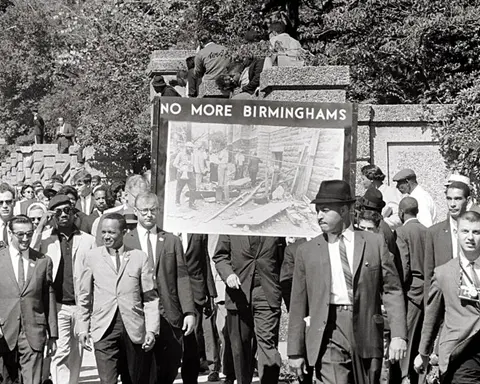
- A bombing in Birmingham shocked the nation and increased support for civil rights.
- The March on Washington brought over 200,000 people together for jobs and freedom.
- The Civil Rights Act of 1964 ended segregation in public places.
- The Voting Rights Act of 1965 protected African Americans’ right to vote.
The Freedom Riders
In 1961, groups of Black and white activists known as the Freedom Riders rode buses across the South to test whether bus stations were following desegregation laws. Many riders were attacked or arrested, but their bravery brought national attention to the issue.
Violence in Birmingham
In 1963, a bomb exploded at the Sixteenth Street Baptist Church in Birmingham, Alabama. Four young girls were killed. The tragedy shocked the nation and increased support for stronger civil rights laws.
The March on Washington
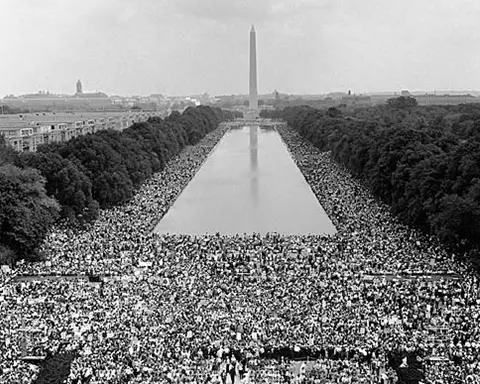
Later in 1963, more than 200,000 people gathered in Washington, D.C., to demand jobs and freedom. During this event, Martin Luther King Jr. delivered his famous “I Have a Dream” speech, calling for equality and an end to racism.
The Civil Rights Act of 1964
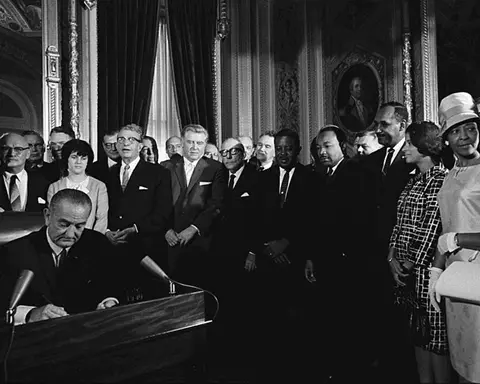
In 1964, President Lyndon B. Johnson signed the Civil Rights Act. This law ended segregation in public places and made it illegal to discriminate based on race, color, religion, or national origin.
The Voting Rights Act of 1965
Even after the Civil Rights Act, many states used unfair tests to stop African Americans from voting. The Voting Rights Act of 1965 protected the right to vote and banned these unfair practices.
A Turning Point
The actions of the Freedom Riders, marchers, and leaders helped bring major changes to the United States. The new laws of the 1960s gave African Americans stronger legal protections and moved the nation closer to equality.
Word Match
Drag the vocabulary words to their correct definitions!
Vocabulary Words
Definitions
Lesson 5 — Working for Equal Rights Quiz
Activities & Extensions
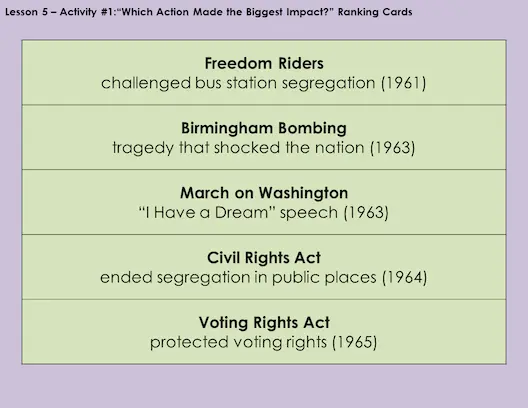
Students analyze five major Civil Rights actions and rank them from most to least impactful based on evidence from the article. This activity encourages critical thinking and helps students understand how different events contributed to change.
How to Do It: Provide students with five cards (or display the list on the board): Freedom Riders, Birmingham bombing, March on Washington, Civil Rights Act, and Voting Rights Act. Students rank them from 1 = biggest impact to 5 = still important.
Discussion: After ranking, students explain their choices:
- Which action created the most immediate change?
- Which action had the longest-lasting impact?
- How did these events build on one another?
Optional Extension: Students reorder the cards from most dangerous to least dangerous based on the risks protestors faced.
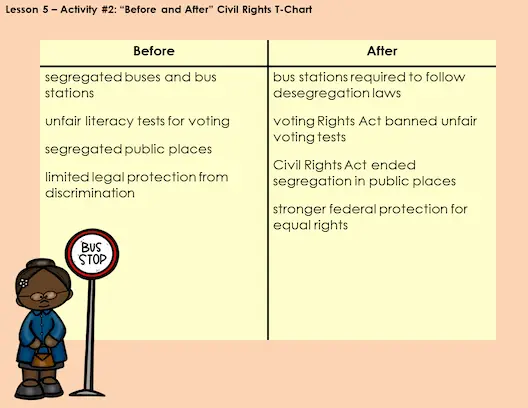
Students compare life before and after major Civil Rights laws by creating a simple T‑chart. This activity helps students visualize how the Freedom Riders, marches, and new laws changed daily life for African Americans.
How to Do It: Students draw a T‑chart labeled Before and After. Using information from the article, they list examples such as segregated buses, unfair voting tests, and segregated public places on the left, and the protections created by the Civil Rights Act and Voting Rights Act on the right.
Discussion: Bring the class together to reflect:
- Which changes had the biggest effect on daily life?
- How did laws help protect rights that people were already fighting for?
- Why were both protests and laws necessary?
Optional Extension: Students choose one “before” item and rewrite it as a “news headline” showing how life changed after the new laws.
Civil Rights Navigation
Explore the Full Civil Rights Unit
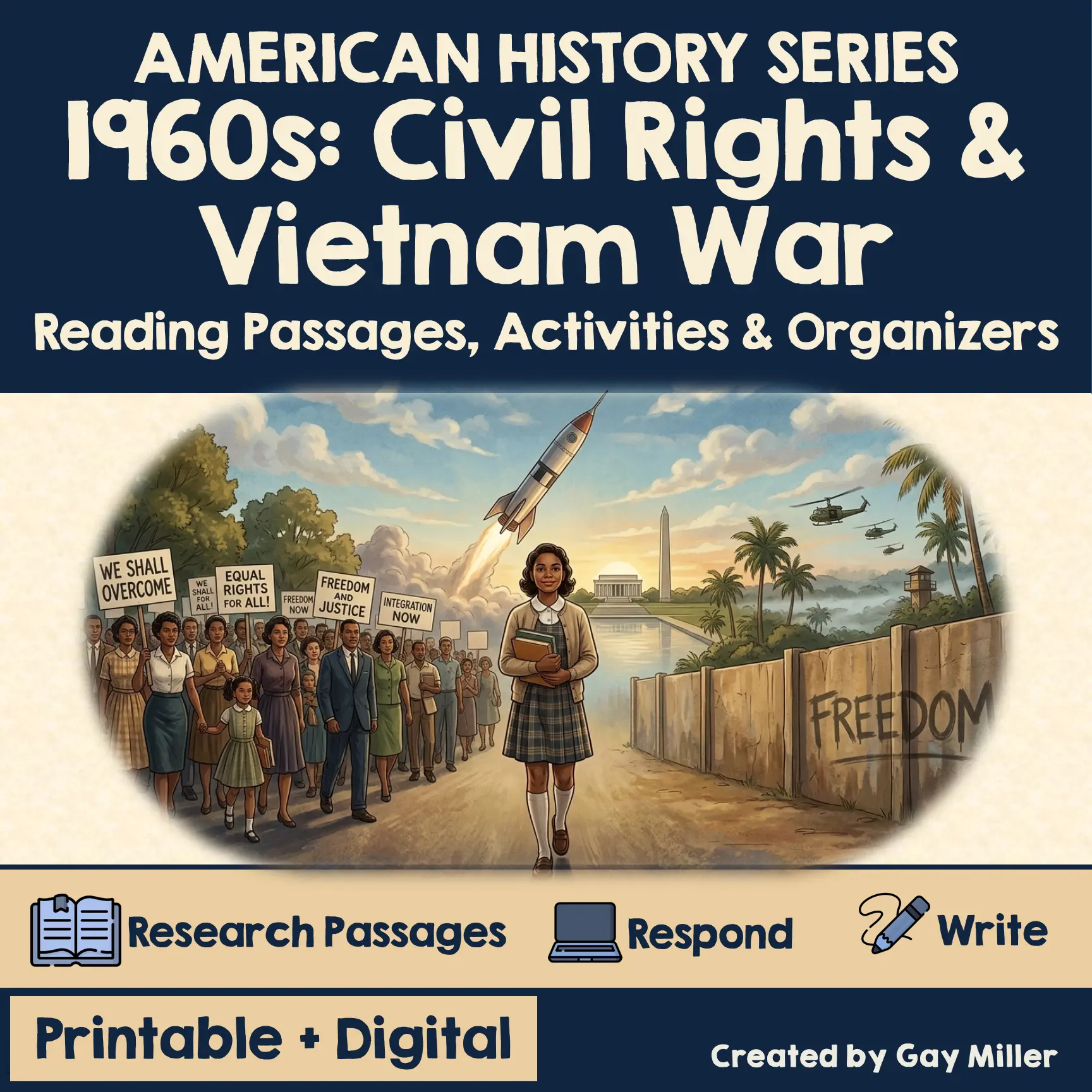
This complete history unit includes research passages, organizers, writing tasks, quizzes, activities, and website research — all in printable and digital formats. Everything you need to teach the Civil Rights with confidence.
View the Full Unit on TPT