The Secret Symbolism of the Statue of Liberty

evidence

Most students recognize the Statue of Liberty as a symbol of freedom, hope, and new beginnings. But very few know the deeper story hidden in her design,  a story that connects the end of the Civil War to the wave of immigration that followed. When students discover this symbolism, the statue becomes more than a landmark. It becomes a powerful piece of American history.

🗽 A Symbol Born from the Civil War’s Aftermath

When French sculptor Frédéric‑Auguste Bartholdi began designing the Statue of Liberty in the 1870s, the United States was still healing from the Civil War. Slavery had been abolished. Reconstruction was underway. The nation was redefining itself.

Many historians believe Bartholdi wanted to celebrate more than America’s independence from Britain; they believe he wanted to celebrate the abolition of slavery as well. That intention is carved directly into the statue… but almost no one notices it.

🔍 The Hidden Detail Students Never See

Most textbook photos crop the statue at the waist. But if you zoom all the way down to her feet, you’ll find something extraordinary:

She is stepping forward out of broken shackles and a severed chain.

Her right foot is lifted mid‑stride, as if she is actively walking out of bondage. This detail transforms the statue’s meaning. She isn’t just holding a torch of freedom — she is moving forward from oppression, symbolizing progress, justice, and the nation’s commitment to liberty for all.

🧠 Why This Matters for Your Curriculum

This single symbol creates a powerful bridge between two major units:

1. Civil War & Reconstruction: Students learn about emancipation, the 13th Amendment, and the struggle for equality.

2. Immigration & Changing America: Millions of immigrants arrived at Ellis Island seeking freedom and opportunity — greeted by a statue literally stepping out of chains.

It’s an “aha!” moment students remember.

📥 Get the free organizer, handouts, and more.

🗽 Statue of Liberty Symbolism Activities

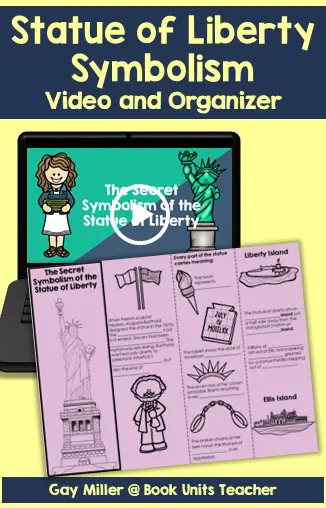
Activity #1: Video Lesson & Companion Organizer

The accompanying video zooms in on the statue’s feet, highlights the broken chains, and explains Bartholdi’s original symbolism. It works beautifully as a:

  • bell ringer
  • warm‑up
  • symbolism mini‑lesson
  • immigration unit intro
  • Civil War wrap‑up

After watching, ask students:

“Why do you think Bartholdi placed the chains at her feet instead of in her hands?”

Their answers spark meaningful discussion.
The Statue of Liberty Symbolism Video for Upper Elementary
Play Video about The Statue of Liberty Symbolism Video for Upper Elementary

📘 Video Companion Organizer

Statue of Liberty Symbolism Video for Upper Elementary Students

The organizer helps students:

  • understand why Bartholdi added symbolism to the statue
  • list the meaning behind each symbol
  • explain the statue’s role in welcoming immigrants

It fits perfectly on your four‑column layout with room for illustrations and labels.

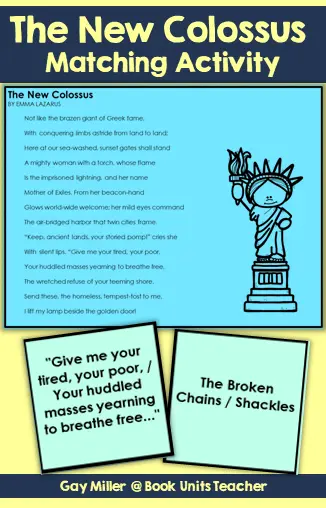
Activity #2: Primary Source Analysis: “The New Colossus” Close Reading

Connect the statue’s visual symbolism to the literary symbolism of Emma Lazarus’s famous poem The New Colossus.

Statue of Liberty Symbolism Activities for Upper Elementary Students

Provide students with a short, kid‑friendly excerpt. Have them draw lines connecting phrases from the poem to symbols on their organizer, like pairing the “triumph over oppression” broken chains with the welcome extended to incoming immigrants.

Why it works: It’s an ideal upper‑elementary ELA integration that shows how visual art and poetry can share the same thematic message.

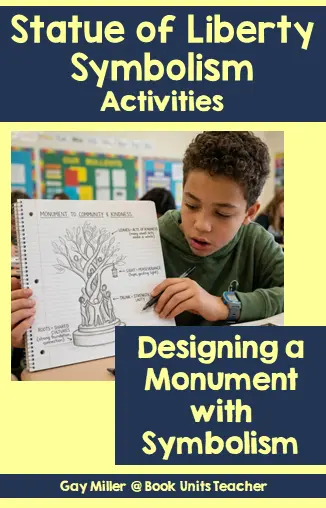
Activity #3: Act It Out: “Symbolism Stations” Gallery Walk

Turn the statue’s key symbols — the torch, tablet, seven‑rayed crown, and broken shackles — into interactive stations.

Statue of Liberty Symbolism Activities for Upper Elementary Students

Place a large photo or cutout of each symbol around the room. Students rotate in small groups with their organizers. At each station, they discuss why Bartholdi chose that symbol and leave behind a sticky‑note reflection.

Why it works: It gets students moving, talking, and thinking before they complete their individual work.

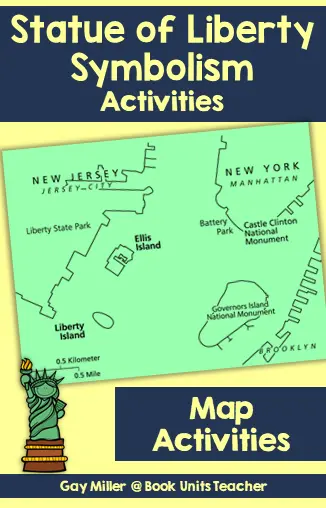
Activity #4:  Geography & History: The Tale of Two Islands (Mapping Activity)

Use a simple map of New York Harbor to ground the lesson in real‑world geography.

Statue of Liberty Symbolism Activities for Upper Elementary Students

Students plot Liberty Island and Ellis Island, then draw the path an immigrant ship would take as it passed Lady Liberty. They finish with a short journal entry from the perspective of a child immigrant in 1892, describing what it felt like to see the statue “stepping out of chains.”

Why it works: It blends geography, history, and empathy — helping students visualize the immigrant experience.

Activity #5:  Math Connection: “Statue by the Numbers” Scale Comparison

Celebrate Dedication Day with a quick measurement activity.

Provide students with the statue’s actual measurements (like an 8‑foot index finger or a 4.5‑foot nose). Students measure their own features and compare how many “student sizes” equal one “Lady Liberty size.”

Why it works: Upper elementary students love quirky size comparisons, making the history memorable while sneaking in math practice.

📥 Get the free organizer, handouts, and more.

Helping Students See History in a New Light

The Statue of Liberty isn’t just a symbol of hope; it’s a reminder of the struggle it took to achieve freedom and the responsibility we have to protect it. When students discover the hidden symbolism carved into her design, they connect history, literature, geography, and empathy in a single lesson.

And that’s the kind of learning that lasts.

See the product that inspired this post.

Industrial America Unit on TPT

Check out the full Industrial America Unit on Teachers Pay Teachers, including organizers, articles, and more.

Gay Miller

Permanent link to this article: https://bookunitsteacher.com/wp/?p=31889

Leave a Reply

Your email address will not be published.