Steps, Decimal Division & the Area Model Check
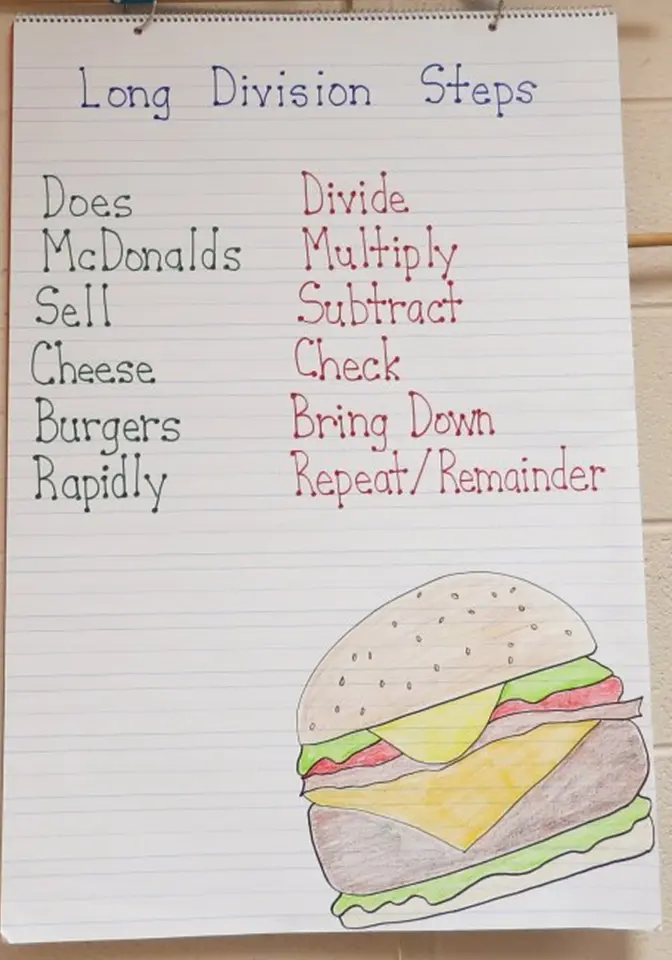
Long Division Steps Anchor Chart
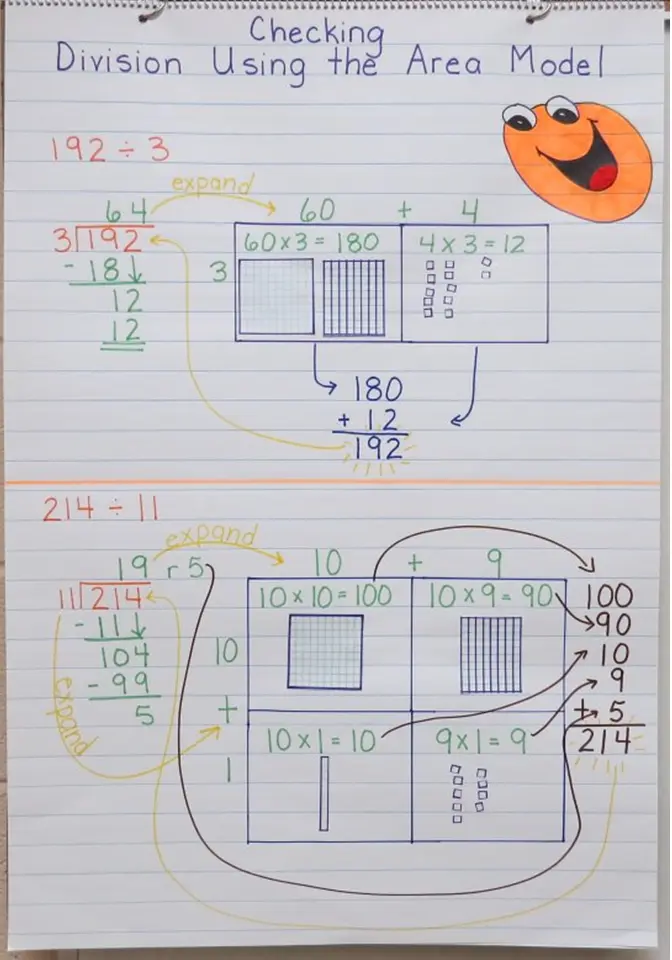
Checking Division Using the Area Model
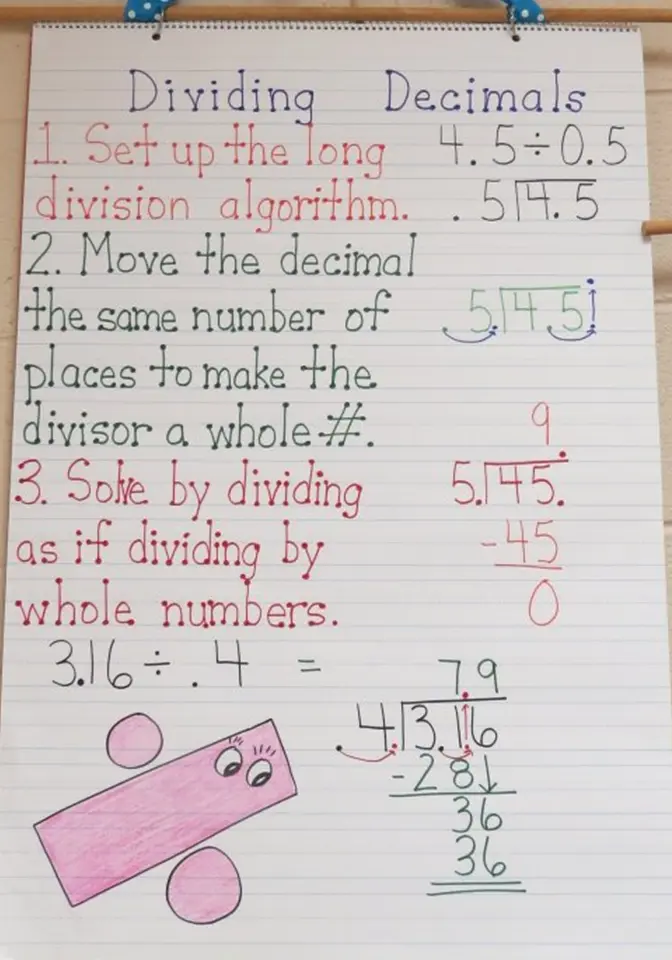
Dividing Decimals Anchor Chart
Long division is one of those skills that clicks instantly for some students and feels impossible for others. The good news? With the right memory tools, visual strategies, and practice, every student can master it. This page walks through three essential division concepts — the step-by-step mnemonic, dividing decimals, and checking answers with the area model — using interactive activities designed to make the process stick.
Does McDonald's Sell Cheese Burgers Rapidly?
Click each numbered flap to reveal the long division step it represents.
Watch how 184 ÷ 4 is solved using all six steps. Click through each step to follow along.
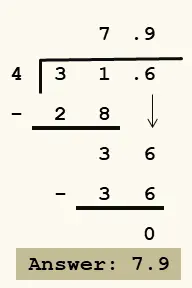
Dividing with decimals follows the same long division steps — with one key move first. Click each step to reveal the process using 3.16 ÷ 0.4.
Set up the long division algorithm.
Write the problem in long division format.
Move the decimal the same number of places in both numbers to make the divisor a whole number.
0.4 has 1 decimal place → move both decimals 1 place right
Solve by dividing as if dividing by whole numbers.
Keep the decimal point in the same position in the quotient.
The area model is a powerful way to check your division answer. It breaks the dividend into easy-to-work-with chunks and multiplies them back together. Click through the steps to see how to verify 184 ÷ 4 = 46.
Choose a practice set, solve the problems, then check your answers!
Print the Does McDonald's mnemonic large and display it prominently. Have students decorate their own mini-version for their binders. The fast food theme makes it memorable and fun to reference during independent work.
Assign each student one of the six steps. As the class solves a problem together, each student stands when their step is reached. This kinesthetic approach helps students internalize the order of operations.
Have students use a different color for each step — divide in blue, multiply in green, subtract in red, and so on. Color-coding mirrors your anchor chart and helps students visually track where they are in the process.
After solving a division problem independently, students swap papers with a partner. The partner checks the answer using the area model. This builds both skills simultaneously and creates natural discussion about errors.
Give students several decimal division problems and have them figure out the pattern of decimal movement before explaining it. This inquiry approach deepens understanding compared to just memorizing the rule.
Use the free downloadable foldables for student interactive notebooks. The Long Division Steps foldable becomes a reference tool students can flip open during any division work throughout the year.
Visit other math pages at Book Units Teacher: