The Politics of the Twenties
Fast Facts: Politics of the Twenties
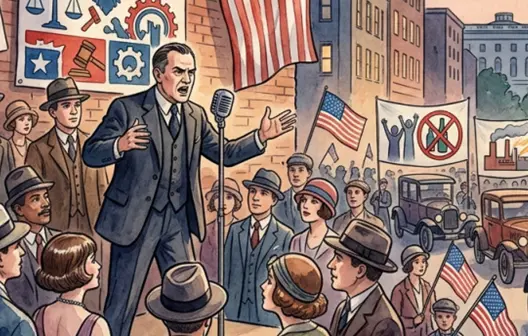
Politics of the Twenties
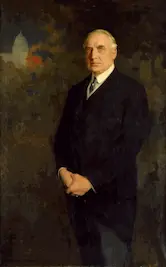
- President: Warren G. Harding
- Goal: “Return to normalcy” after WWI
- Policy: High tariffs on foreign goods
- Issue: Prohibition and illegal alcohol trade
- Concern: Growth of the Ku Klux Klan
- Tennessee: Governor Austin Peay’s reforms
At a Glance
- Harding wanted the nation to avoid foreign problems.
- Congress passed high tariffs to protect American businesses.
- Coolidge believed government should not interfere with business.
- Prohibition led to bootleggers and speakeasies.
- The Ku Klux Klan grew rapidly during the decade.
- Austin Peay improved roads, schools, and state government.
Harding and a “Return to Normalcy”
After World War I, many Americans wanted life to return to normal. Warren G. Harding was elected President in 1920 by promising a “return to normalcy.” Congress rejected joining the League of Nations and passed high tariffs to protect American businesses, although these tariffs made it harder for farmers to sell their crops overseas.
Coolidge and Business Growth
When Harding died in 1923, Calvin Coolidge became President. Coolidge believed the government should interfere as little as possible in business. His policies helped businesses grow but allowed risky financial practices to continue.
Prohibition
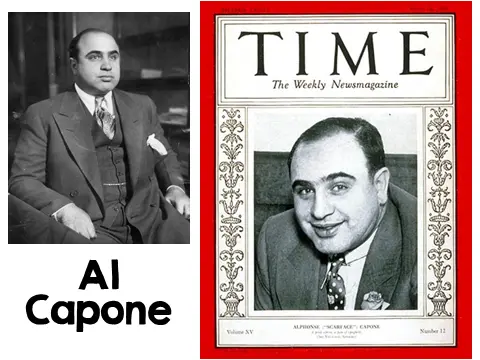
The Eighteenth Amendment made it illegal to make or sell alcohol. Instead of reducing crime, Prohibition led to bootleggers, speakeasies, and powerful gangsters such as Al Capone. The law was difficult to enforce and was later repealed.
The Ku Klux Klan
The Ku Klux Klan grew during the 1920s. The Klan targeted African Americans, immigrants, Jews, and Catholics. Its membership reached more than four million people by 1924.
Austin Peay in Tennessee
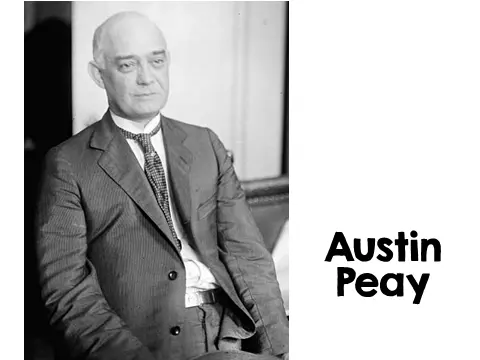
Austin Peay served as Tennessee’s governor from 1923 to 1927. He improved the state’s roads, reorganized the government, helped create the Great Smoky Mountains National Park, and guaranteed eight months of school for students.
Word Match
Drag the vocabulary words to their correct definitions!
Vocabulary Words
Definitions
Lesson 4 — The Politics of the Twenties Quiz
Activities & Extensions
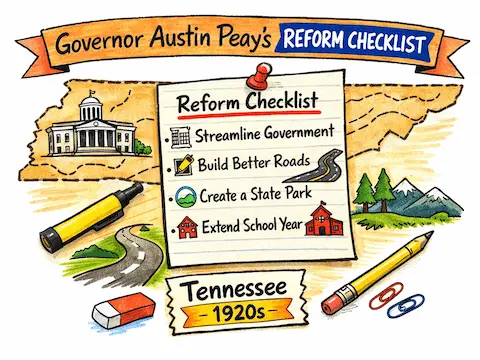
Students explore how state-level political leadership reshaped daily life in the 1920s. By examining the reforms of Tennessee Governor Austin Peay, students discover the lasting impact of government infrastructure, conservation, and education policies.
How to Do It: After reading the political overview, provide students with a "State Reform Checklist" featuring Governor Peay’s key initiatives: roads, school term extensions, government reorganization, and national park creation. Students analyze each reform and write a brief explanation detailing how it directly improved life for regular citizens and families during the decade.
Materials:
- Lesson 4 reading text or webpage summary
- Reform Checklist graphic organizer
- pencils and highlighters
Optional Extension: Students design a commemorative travel postcard or a vintage state highway map celebrating the opening of the Great Smoky Mountains National Park or the newly improved 1920s state roads.
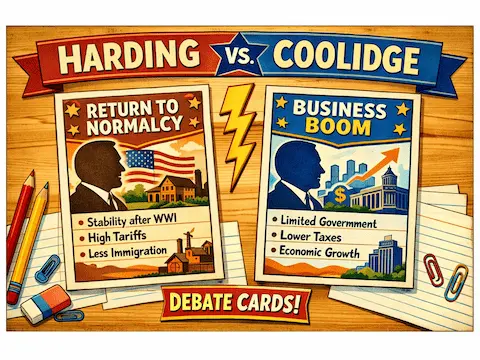
Students create debate-style cards comparing the political ideas of Presidents Warren Harding and Calvin Coolidge. This activity helps students understand how each leader shaped the decade.
How to Do It: Students create two cards:
- Harding Card: “Return to normalcy,” stability after WWI, high tariffs
- Coolidge Card: Limited government, support for business, economic growth
Students then write a short explanation of how these policies affected the economy of the 1920s.
Materials: Index cards or notebook paper, colored pencils or markers, pencil
Optional Extension: Students choose one policy and explain how it might affect families, workers, or businesses.
The Roaring Twenties Navigation
Explore the Full World War 1 and Roaring Twenties Unit

This complete history unit includes research passages, organizers, writing tasks, quizzes, activities, and website research — all in printable and digital formats. Everything you need to teach The Roaring Twenties with confidence.
View the Full Unit on TPT