The Economy of the Twenties

Fast Facts: The Economy of the Twenties
The Economy of the Twenties
- Era: The Roaring Twenties
- Key Change: New inventions and consumer goods
- Buying Trend: People used credit to purchase items
- Business Growth: Chain stores expanded nationwide
- Major Impact: Automobiles changed American life

At a Glance
- Factories produced new goods like cars, radios, and appliances.
- People bought items using credit and monthly payments.
- Chain stores such as A&P grew rapidly.
- Advertising encouraged Americans to buy more products.
- Automobiles created new jobs and allowed families to travel farther.
New Products and Modern Life
After World War I, American factories produced new goods such as automobiles, record players, refrigerators, canned food, and ready-made clothing. People enjoyed new entertainment like movies and radio, and everyday life began to feel more modern.
Buying on Credit
Many families could not afford these new products all at once, so companies offered credit. People could buy items “on time” by paying a little money down and making monthly payments. This made expensive items easier to buy.
Chain Stores and Advertising
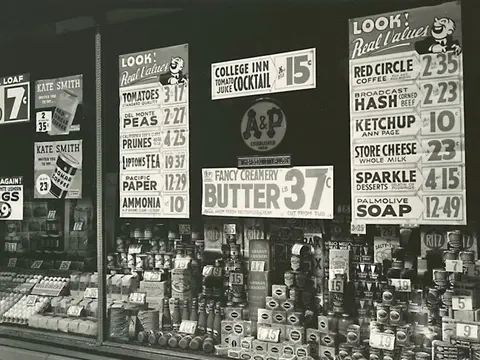
Chain stores grew quickly during the decade. The A&P grocery company expanded from 4,000 stores in 1920 to almost 16,000 by 1929. Colorful magazine advertisements encouraged people to buy the newest products.
The Automobile Changes America
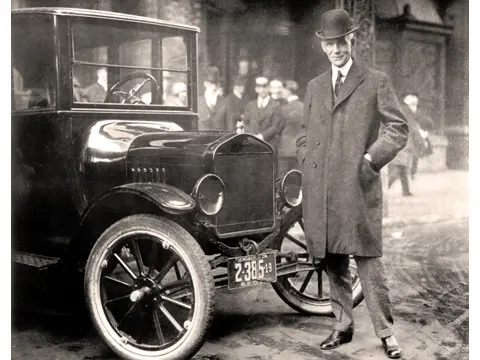
Henry Ford’s assembly line made cars faster and cheaper to build. As more families bought cars, new jobs were created in factories, gas stations, and repair shops. Cars allowed people to travel farther for work and fun, helping connect rural and urban areas.
A Growing Nation
The 1920s became a decade of growth and new ideas. With new inventions, expanding businesses, and the rise of the automobile, American life changed quickly and dramatically.
Word Match
Drag the vocabulary words to their correct definitions!
Vocabulary Words
Definitions
Lesson 1: The Economy of the Twenties Quiz
Activities & Extensions
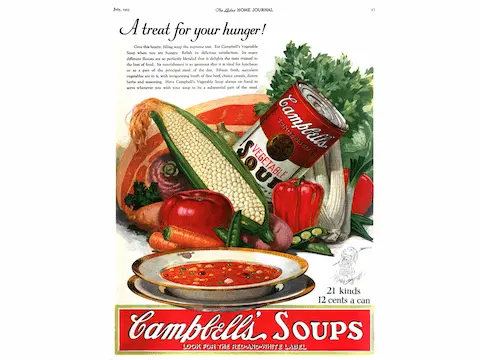
Students design a 1920s-style advertisement for a new invention such as a radio, refrigerator, vacuum cleaner, or Model T. This activity reinforces how mass production and advertising shaped consumer culture during the decade.
How to Do It: Students choose one invention and create an advertisement that includes:
- a catchy 1920s-style slogan
- a drawing of the product
- a short persuasive paragraph encouraging people to buy it
Encourage students to mimic the bold fonts, simple layouts, and enthusiastic tone of real 1920s ads.
Materials: paper, colored pencils or markers, notebook, pencil
Optional Extension: Students compare their ad to a modern advertisement and identify similarities and differences in style and persuasion.
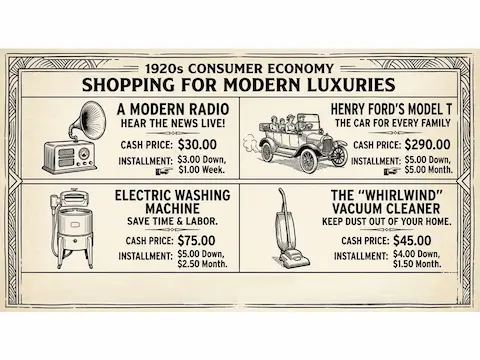
Students explore the roaring economy of the 1920s by navigating the birth of modern consumer culture. By balancing a mock budget against vintage advertisements, students experience firsthand how installment plans, chain stores, and mass production changed how Americans lived and shopped.
How to Do It: Provide students with a fixed 1920s cash budget and a shopping catalog featuring era-defining goods like radios, vacuum cleaners, and Henry Ford's Model T. Students must choose whether to pay upfront with cash or use an installment plan ("buying on credit"). Students map out a multi‑month family ledger to track their weekly payments and examine how debt fueled the decade's economic boom.
Materials:
- mock 1920s catalog sheet with cash and installment prices
- student budget ledger worksheet
- pencils and calculators
Optional Extension: Students write a brief prediction about what might happen to a family's installment plan goods if the main earner suddenly lost their job, foreshadowing the transition into the Great Depression.
The Roaring Twenties Navigation
Explore the Full World War 1 and Roaring Twenties Unit
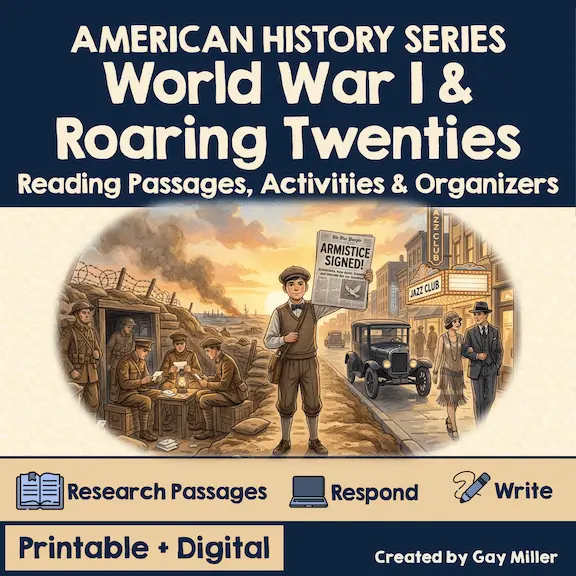
This complete history unit includes research passages, organizers, writing tasks, quizzes, activities, and website research — all in printable and digital formats. Everything you need to teach The Roaring Twenties with confidence.
View the Full Unit on TPT