The Pueblo Peoples

Pueblo is the Spanish word for "town." The Spanish used it for the people they met living in large, many-roomed villages in what is now New Mexico and Arizona. The Pueblo peoples are not one tribe. They are about twenty separate nations, speaking several different languages. Some Pueblo villages, like Acoma and Taos, have been lived in for about a thousand years.
The Pueblo Peoples at a Glance
The Pueblo Peoples
- Region: Southwest
- Nations: The 19 Pueblos of New Mexico (including Acoma, Laguna, Zuni, Taos, and San Ildefonso), the Hopi of Arizona, and Ysleta del Sur in Texas
- Homes: Pueblos: many-storied buildings of adobe and stone
- Food: Corn of many colors, beans, and squash
- Languages: Several families, including Keres, Tanoan, Zuni, and Hopi

Key Facts
- Pueblo means "town" in Spanish.
- Acoma and Taos have been lived in for about 1,000 years.
- People climbed ladders to enter through the roof.
- Ancestral Puebloans built the cliff dwellings at Mesa Verde.
- In 1680, the Pueblo Revolt drove the Spanish out for 12 years.
Tap or hover over the card to flip it. Students can copy this information into their lapbook organizers before reading.
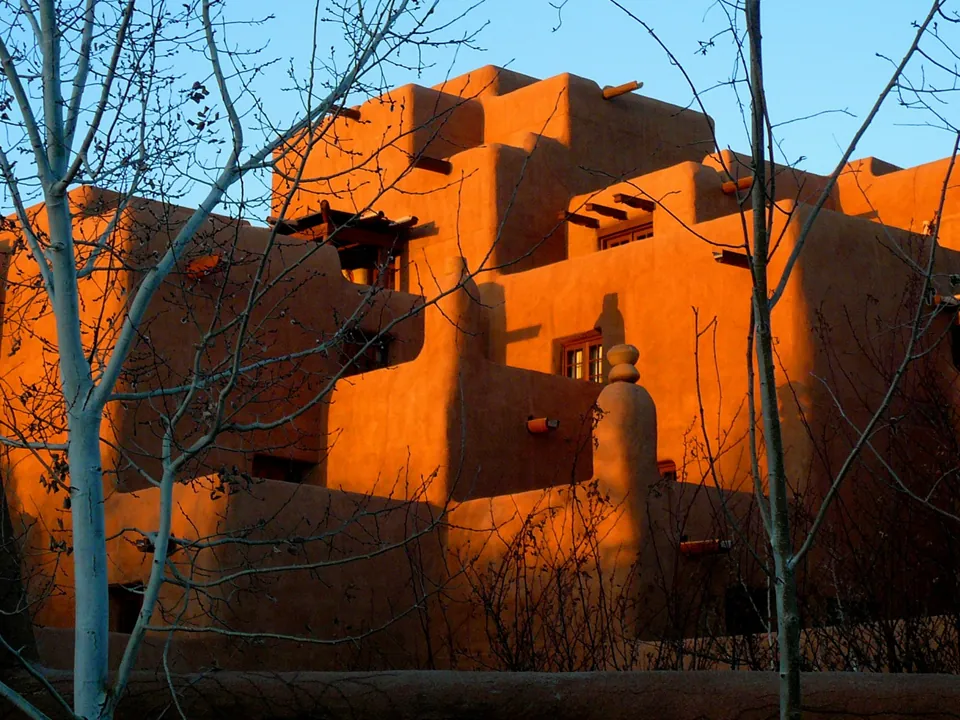
Look Closely: The building in the Homes section looks like a pueblo, with adobe walls, rounded corners, and wooden beams sticking out of the walls. But it is not a Pueblo village. It is a building in Santa Fe, New Mexico, built in the Pueblo Revival style, which copies the look of pueblos. Many hotels, museums, and homes in New Mexico are built this way. What details make it look like a pueblo? What clues tell you it is a modern building? Why might builders want to copy the look of a pueblo?
Where the Pueblo Peoples Live Map
Most Pueblos are along the Rio Grande in New Mexico. Others, like Acoma, Zuni, and the Hopi villages, sit on or near high, flat-topped hills called mesas. The land is dry, with canyons, plateaus, and desert. Days are hot and nights are cool. Most rain falls in short, heavy summer storms, so every drop of water matters.
The ancestors of the Pueblo peoples, called Ancestral Puebloans, built great stone villages at Chaco Canyon in New Mexico and cliff dwellings at Mesa Verde in Colorado. Around the late 1200s, they moved south to the places where many Pueblos are today. Compare them with other early civilizations of the Americas.
Homes Homes
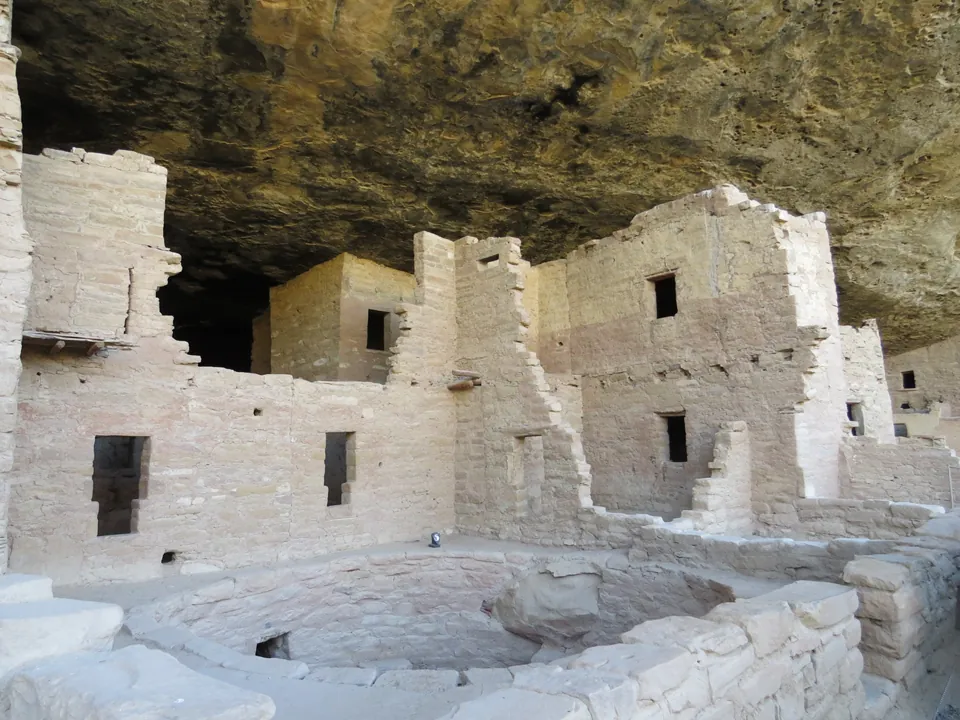
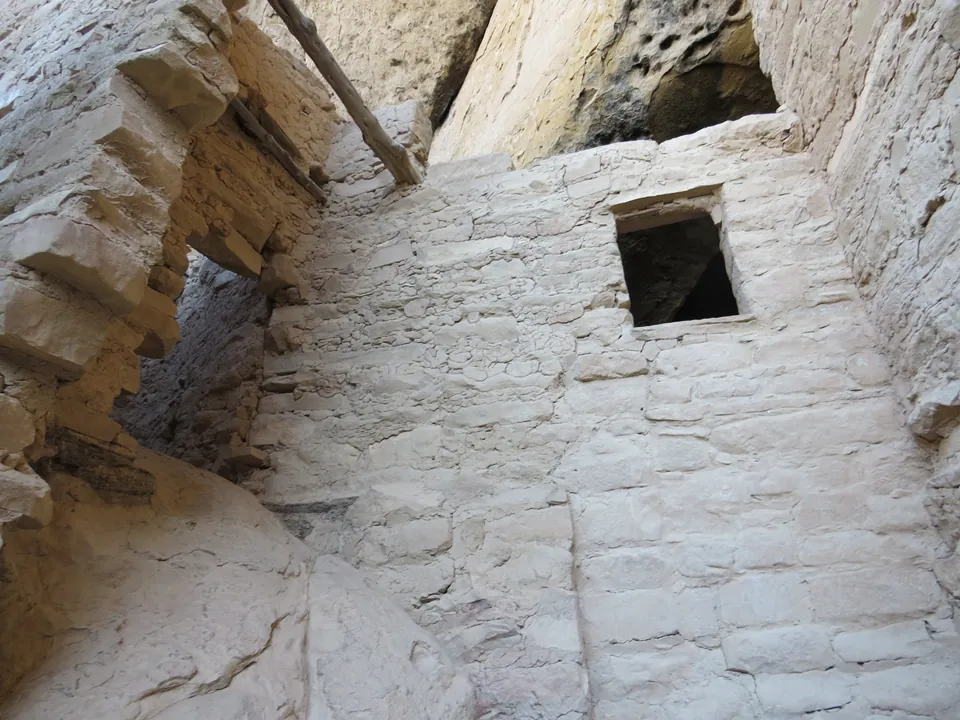
A pueblo is like an apartment building. Rooms are built side by side and stacked up to four or five stories high. Each upper story is set back from the one below, so the roof of one room becomes a porch for the room above. Walls were made of adobe, bricks of mud mixed with straw and dried in the sun, or of stone held together with mud. Roofs were made of wooden beams covered with smaller poles, brush, and a thick layer of earth.
Long ago, ground-floor rooms had no doors. People climbed ladders and entered through a hole in the roof. If enemies came, the ladders could be pulled up. Small windows and thick walls kept rooms cool in summer and warm in winter. Women owned the homes and plastered the walls with fresh mud.
Clothing Clothing
Pueblo men grew cotton and wove it into cloth. Men wore cotton kilts, shirts, and woven sashes. Women wore a manta, a dress worn over one shoulder and tied with a sash, along with deerskin leggings wrapped like boots. In winter, people wrapped up in blankets woven from strips of rabbit fur or turkey feathers. Later, wool from Spanish sheep was woven into blankets and dresses.
Unmarried Hopi girls traditionally wore their hair in two large whorls on the sides of the head, called the squash blossom style.
Food Foods
Corn was the most important food: blue, white, yellow, red, and speckled corn. It was ground into flour on a flat grinding stone called a metate with a hand stone called a mano. Hopi women make piki, a paper-thin blue corn bread baked on a hot stone. Pueblo farmers also grew beans, squash, and cotton.
Farmers caught rainwater with small dams and ditches, and the Zuni made waffle gardens, squares of soil with low walls that held water around each plant. After the Spanish came, Pueblo farmers added wheat, chiles, peaches, and melons. Men hunted deer and rabbits; rabbits were often caught with a curved throwing stick.
Customs and Beliefs Villages Book
Every Pueblo has one or more kivas, round or square rooms, often partly underground, used for ceremonies and meetings. Many ceremonies ask for rain and good harvests and give thanks for them.
Each Pueblo also holds a feast day each year, often on the day of its patron saint, with dances in the plaza. Some feast day dances welcome respectful visitors.
Showing Respect: Many Pueblo ceremonies are private. Pueblos ask visitors not to photograph, sketch, or record ceremonies, and the Hopi ask that images of katsinam (spirit beings) and ceremonial objects not be copied or sold.
The Pueblo Revolt
Spanish soldiers arrived in 1540, and in 1598 Spain set up a colony along the Rio Grande. Spanish officials forced Pueblo people to work for them, took their food, and punished them for practicing their religion.
In August 1680, the Pueblos rose up together in the Pueblo Revolt, led by Popé (Po'pay) of Ohkay Owingeh. Runners carried knotted cords from village to village so every Pueblo would strike on the same day. The Pueblos drove the Spanish out of New Mexico for twelve years. When the Spanish returned in 1692, they did not try as hard to stamp out Pueblo religion.
Tools and Travel
Pueblo farmers used digging sticks and wooden hoes. Women ground corn with the mano and metate and carried water in pottery jars balanced on their heads. Men used bows and arrows, throwing sticks, and snares for hunting.
Art Art
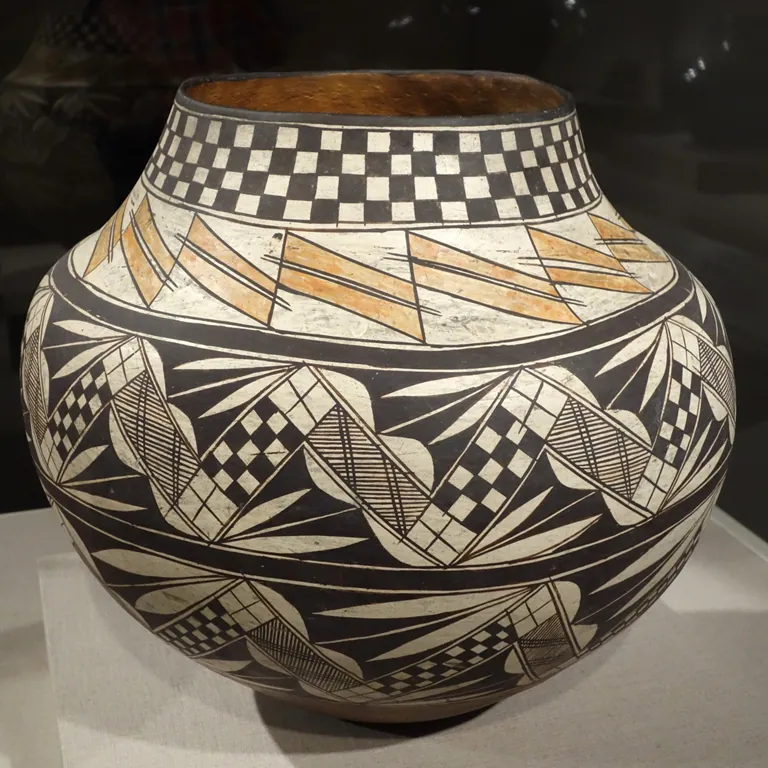
Pueblo potters build pots by hand, without a potter's wheel. They roll clay into long ropes called coils, stack them in a spiral, and smooth them together. Then they polish the pot with a smooth stone, paint it with colors made from plants and minerals, and fire it outdoors without glaze. Each Pueblo has its own style. Acoma potters are known for thin walls and fine painted lines. At San Ildefonso Pueblo, Maria Martinez and her husband Julian became famous for shiny black-on-black pottery.
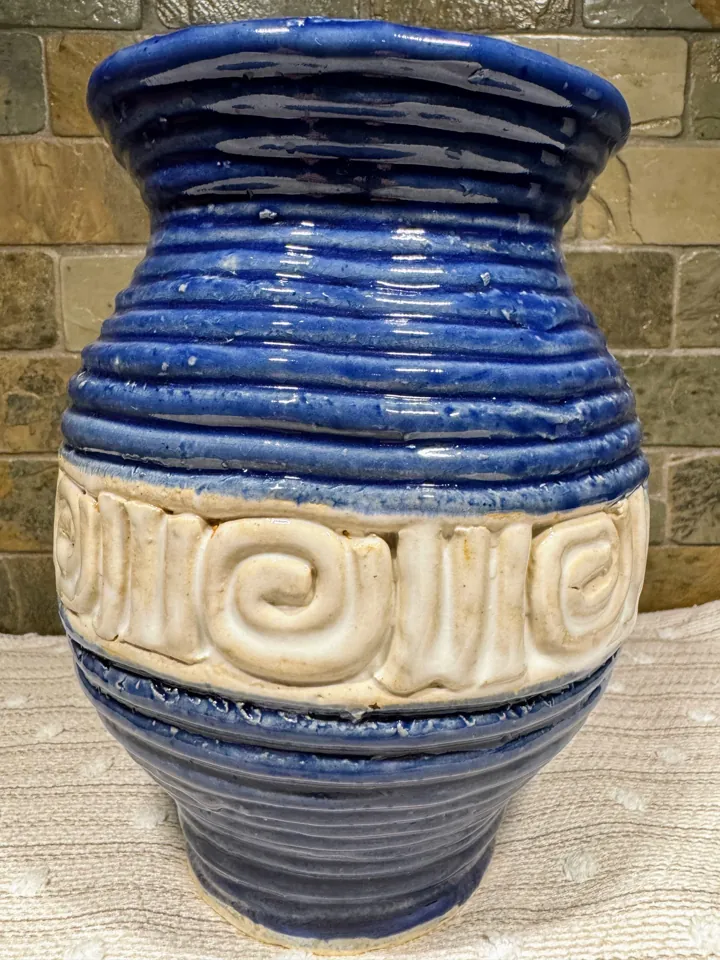
Look Closely: The student pot was built with coils, the same method Pueblo potters use. But Pueblo potters smooth the coils until they disappear, polish the clay with a stone, paint it with plant and mineral paints, and fire it without glaze. This student left the coils showing and used shiny glaze. What is the same about the two pots? What is different?
The Pueblos Today
The 19 Pueblos of New Mexico, the Hopi Tribe in Arizona, and Ysleta del Sur Pueblo in Texas are all self-governing nations. The 19 Pueblos together own the Indian Pueblo Cultural Center in Albuquerque. Pueblo potters still dig their own clay, and Pueblo artists sell their work at the Santa Fe Indian Market each August.
Deb Haaland of Laguna Pueblo became the first Native American to serve as a U.S. Cabinet secretary.
Activities
Build a Pueblo
Stack adobe rooms level by level, add ladders to rooftop doors, and find the area and perimeter of each level.
For teachers: Online builder with challenges, area and perimeter practice, and paper pueblo directions. Skills: engineering, area, and perimeter. About 30–45 minutes.
Start the ActivityFamous People Connected to This Page
Word Match
Drag each word to its definition, or tap a word and then tap its definition.