Northwest Coast Peoples
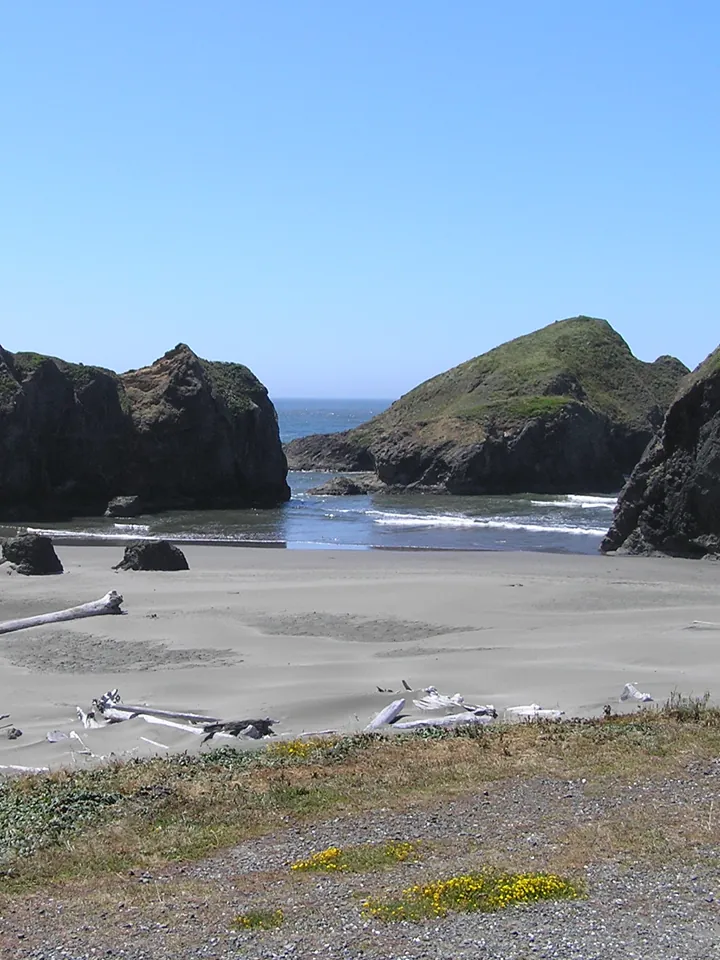
Along the rainy Pacific coast, from southern Alaska to northern California, live dozens of nations, including the Tlingit, Haida, Tsimshian, Kwakwaka'wakw, Nuu-chah-nulth, Makah, Coast Salish, and Chinook. With salmon in the rivers, shellfish on the beaches, and giant cedar trees in the forests, they built large villages, carved huge canoes, and created one of the world's great art traditions, all without farming.
Northwest Coast Peoples at a Glance
Northwest Coast Peoples
- Region: Northwest Coast
- Homeland: Pacific coast from southern Alaska to northern California
- Some nations: Tlingit, Haida, Tsimshian, Kwakwaka'wakw, Nuu-chah-nulth, Makah, Coast Salish, Chinook
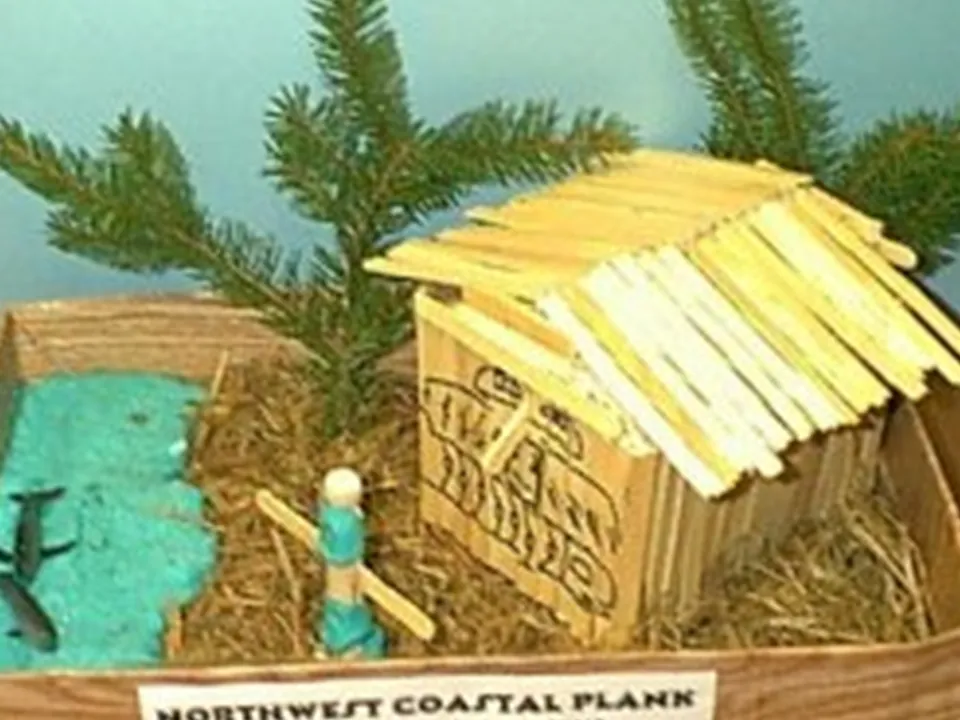
- Homes: Cedar plank houses
- Food: Salmon, shellfish, seals, whales, berries
- Known for: Crest poles, carving, weaving, canoes
Key Facts
- Western red cedar was called the "tree of life."
- Several related families lived together in one plank house.
- Families held potlatches to mark important events.
- Canada banned the potlatch from 1885 to 1951.
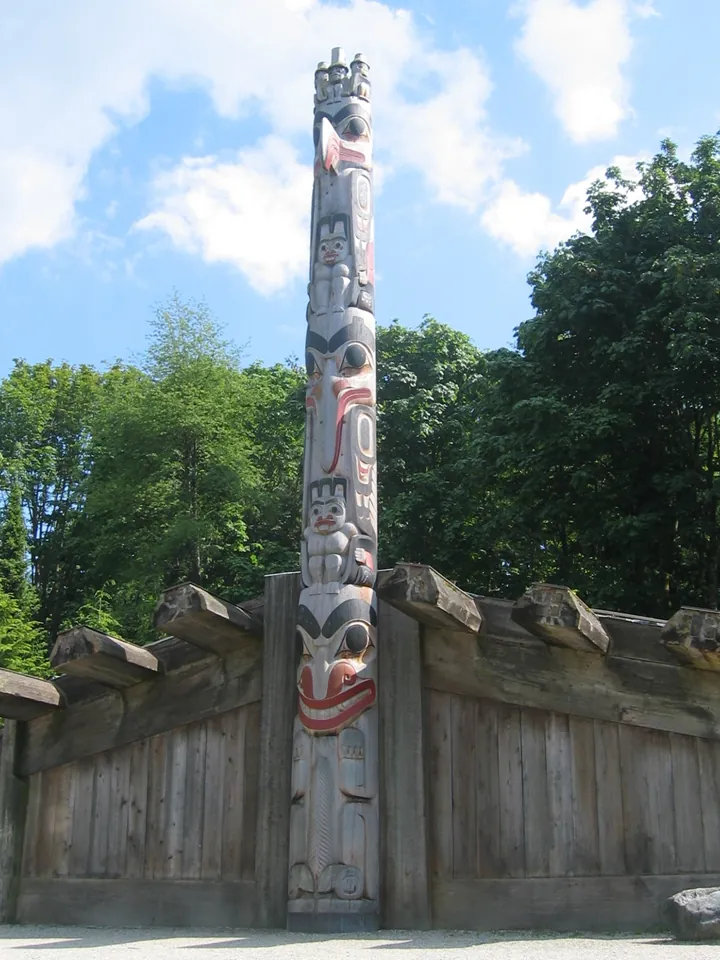
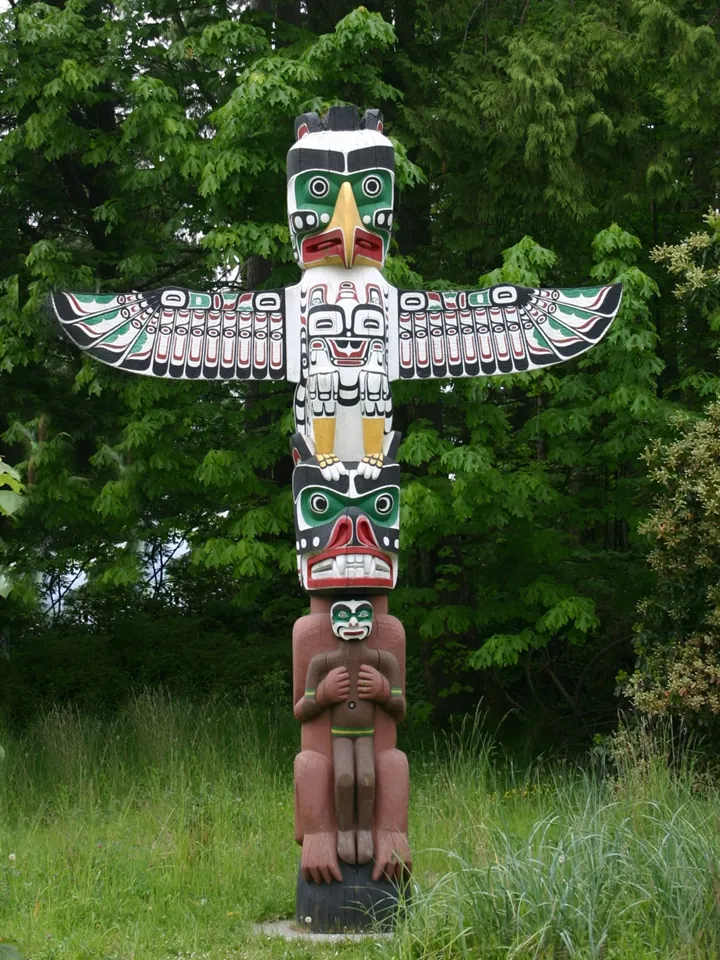
- Crest poles show a family's history and the crests it owns.
Tap or hover over the card to flip it. Students can copy this information into their lapbook organizers before reading.
Look Closely: Many people call carved poles like the one in the Art section "totem poles." Many Northwest Coast people prefer names that say what the pole is for: crest poles show the crests a family owns, memorial poles honor someone who has died, and house posts hold up the roof inside a house. The crests on a pole belong to a particular family or clan. Who has the right to carve a family's crest? Why might a family not want a class to copy its pole as a craft?
Where They Lived Map
The Northwest Coast is a narrow strip of land between the Pacific Ocean and tall mountains. It has thousands of islands, deep inlets, rocky beaches, and rivers that fill with salmon every year. The climate is mild and very rainy, and thick forests of cedar, spruce, and fir grow right down to the shore.
Because food was so plentiful, the Northwest Coast was one of the most crowded areas of North America before Europeans arrived. Villages stood along beaches and river mouths, facing the water.
Homes Homes
Northwest Coast peoples built large rectangular plank houses. A frame of huge cedar posts and beams held up walls and a roof made of wide cedar planks split from the trees. Several related families, sometimes 30 or more people, lived in one house. Each family had its own space along the walls, divided by woven mats or wooden screens, and families shared the big fire in the middle.
The front of a house was often painted with the family's crests, and carved house posts held up the roof beams inside. Many nations had winter villages and summer fishing camps. Some Coast Salish families took the wall planks with them and used them to build summer shelters.
Clothing Clothing
In the mild, rainy climate, people often went barefoot. Women pounded the soft inner bark of cedar trees and wove it into skirts, capes, and blankets. Cone-shaped hats woven tightly from spruce root and cedar bark kept off the rain. In cold weather, people wore robes of fur or sea otter skin.
For ceremonies, high-ranking people wore woven robes. Chilkat robes, woven by Tlingit and other northern weavers from mountain goat wool and cedar bark, show crest designs and can take a year to make. In the 1800s, people began making button blankets from red and dark blue wool trade blankets decorated with crests outlined in shiny shell buttons.
Food Foods
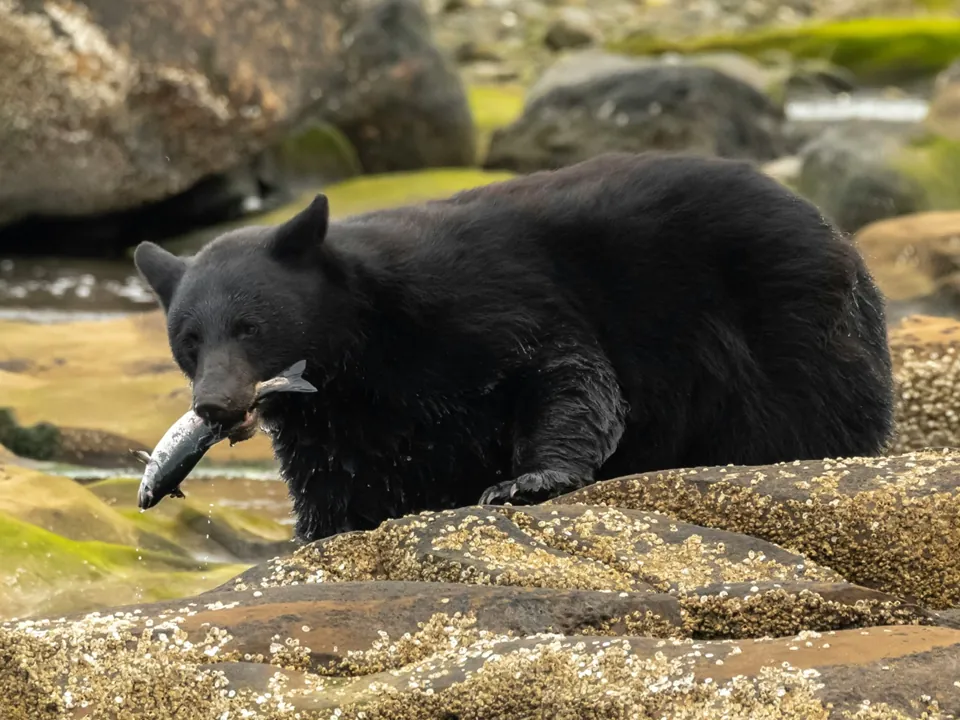
Every year, millions of salmon swim up the rivers to lay their eggs. People caught them with nets, traps, spears, and fences across the rivers called weirs. During the summer salmon runs, families could catch and smoke enough salmon to feed them through the whole winter. Many nations hold a First Salmon Ceremony to honor the first salmon of the year and return its bones to the water.
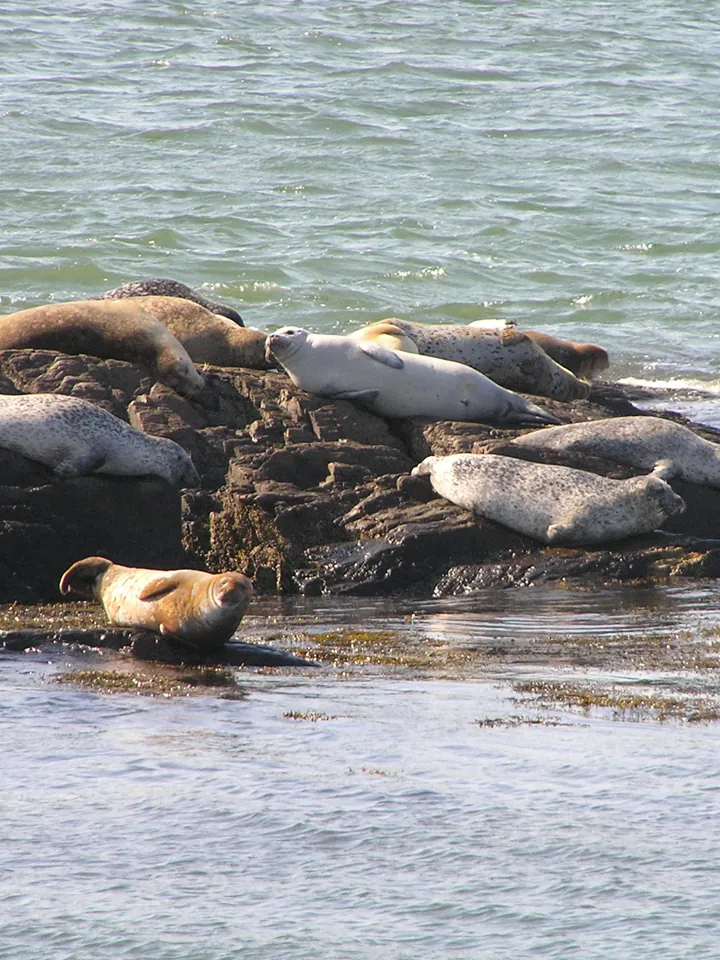
People also caught halibut, cod, and herring, collected herring eggs, clams, mussels, and seaweed, and hunted seals and sea lions. The Makah and Nuu-chah-nulth hunted whales from canoes. Women gathered huckleberries, salmonberries, roots, and camas bulbs. Oil from a small fish called the eulachon was so valuable that it was traded along "grease trails" far inland.
Customs and Beliefs Villages Book
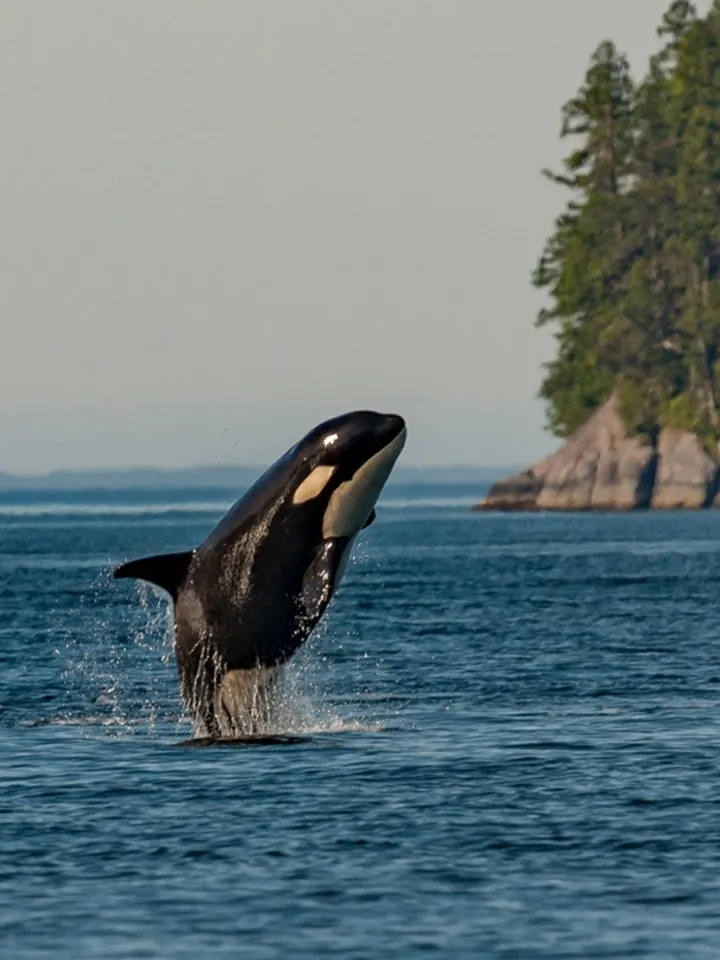
Families and clans own crests, animals or beings such as Raven, Eagle, Wolf, Bear, Frog, Thunderbird, and Killer Whale, connected to their family histories. Only the family that owns a crest has the right to use it. Many northern nations, such as the Tlingit and Haida, are divided into two halves, Raven and Eagle (or Wolf).
A potlatch is a great feast that a family gives to mark an important event, such as naming a child, raising a pole, a marriage, or remembering someone who has died. The hosts serve food, share songs and dances that tell their family history, and give gifts to the guests, who serve as witnesses. In 1885, Canada made potlatches illegal. Many families held them in secret until the law was dropped in 1951.
Showing Respect: Masks, songs, and dances used at potlatches belong to particular families and are often sacred. They are not copied as crafts.
Tools and Travel
Northwest Coast peoples carved canoes from single cedar logs. The largest, more than 50 feet long, could carry dozens of people and were used for travel, trade, war, and whaling. Woodworkers used adzes, wedges, and chisels of stone, bone, and shell.
A bentwood box is made from one cedar plank. The carver cuts three grooves across it, steams the plank until it bends, folds it into a box at the grooves, and pegs or sews the last corner shut. Bentwood boxes were used for storage and even for cooking: people filled them with water and dropped in hot stones until the water boiled.
Art Art
Northwest Coast art uses a style called formline: flowing black and red lines, oval shapes called ovoids, and U shapes that fit together to fill a space. Artists carve and paint crest poles, house posts, boxes, masks, canoes, and bowls. Today, carvers from many Northwest Coast nations are carving and raising new poles.

Northwest Coast Peoples Today
Northwest Coast nations live in Alaska, British Columbia, Washington, and Oregon. Since 1989, canoe families from many nations have paddled together on the Tribal Canoe Journeys, held most summers, traveling for days and hosting each other along the way. In 1999, the Makah of Washington hunted a gray whale for the first time in about 70 years. Many nations are teaching their languages to children and raising new carved poles.
Activities
Bentwood Box Builder
Steam and bend one cedar plank into a box, find which nets fold into a box, and sort what was made from cedar.
For teachers: Animated bending, a nets challenge, a cedar sort, and paper box directions. Skills: geometry nets and 3-D shapes. About 30 minutes.
Start the ActivityWord Match
Drag each word to its definition, or tap a word and then tap its definition.