Last updated: November 11, 2025
If you’re teaching figurative language and want something your students will leap for, this post is packed with Frog Jumping Day figurative language activities! From a silly science story to a modern “FrogTok” competition, these frog-themed lessons blend humor, creativity, and critical thinking. Whether you’re exploring idioms, tone, or tall tales, your class will have a hopping good time diving into these engaging, standards-aligned ideas.
Lesson Handout
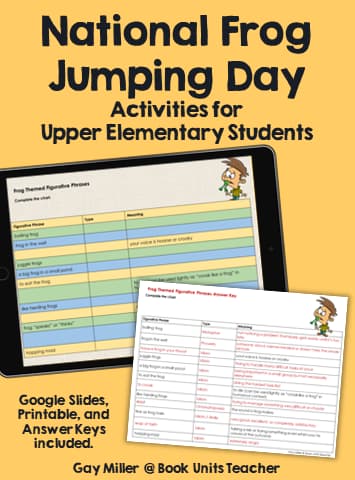
The handout for this blog post is available in the Spring Vault. It includes printables and instructions for all activities listed in this post.
To access this handout and other spring-themed resources, click the button below. Sign up using your email, and we’ll send you the username and password immediately.
Figurative Language Activities
for
National Frog Jumping Day
Activity 1: Freddy the Frog and the Jetpack Jump
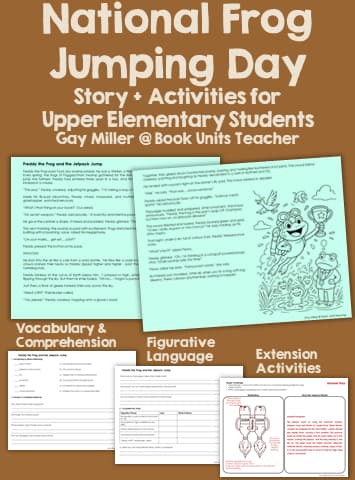
Start your lesson with the original short story “Freddy the Frog and the Jetpack Jump.”
Freddy is a science-loving frog who’s tired of losing the annual swamp jumping contest. Determined to win, he invents a soda-fizz-powered jetpack. His plan works a little too well. Freddy blasts off into space! Luckily, a flock of geese helps him glide safely back to Earth… just in time to win the trophy and inspire a brand-new contest rule: No jetpacks allowed!
Skills Focus
- Similes: “He flew like a soda bottle on the Fourth of July.”
- Hyperbole: “He jumped so high, satellites waved hello.”
- Idioms: “Freddy really leaped at the chance.”
Classroom Ideas
- Highlight and label examples of similes, idioms, and hyperbole.
- Have students invent their own frog-inspired exaggerations.
- Encourage creative writing: What other inventions might Freddy try next year?
Extension Idea: Pair this story with a mini STEM challenge, design your own “jump booster” for Freddy using classroom materials. Students can test paper frogs with rubber-band “launchers” to compare real vs. exaggerated results.
Activity 2: Modern Twist: The TikTok Frog-Off
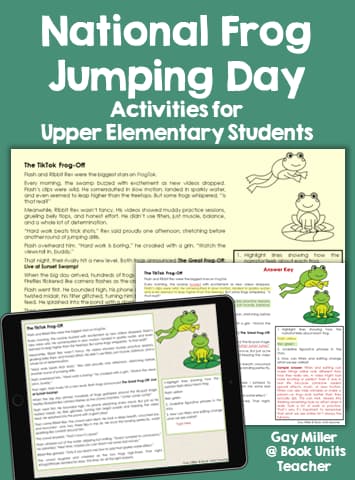
Bring the lesson into the digital age with this fun, modern retelling. Two rival frogs go viral for their jumping stunts: one using flashy filters, the other relying on practice and skill. When their live showdown reveals the truth, students discuss the theme of authenticity vs. performance.
Skills Focus
- Tone: Compare the narrator’s admiration vs. skepticism.
- Figurative Language: “He jumped like he had springs in his sneakers.”
Activity Ideas
- Create Your Own Frog Contest: Students invent “Frog-Off” competitors with wild talents and write short tall tales or news reports about the event.
- Tone Detective: Compare two descriptions of the same frog performance. Which sounds sincere? Which sounds exaggerated?
- Frog Figurative Language Challenge: Match idioms such as “leap of faith,” “frog in your throat,” and “hopping mad” to literal frog actions.
Optional STEM Tie-In: Build a frog “training plan” using real science. How far can a frog jump? How do muscles store and release energy?
Activity 3: Animated Connection: The Tale of a Frog
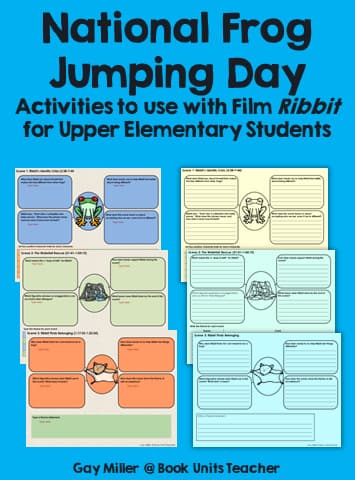
If you want to extend this theme with visuals, try a short clip from the animated film Ribbit (available on YouTube). In this movie, a frog who hates jumping goes on a quest of self-discovery. Even a brief scene, such as the moment Ribbit hesitates before his first leap, works perfectly for analyzing theme, tone, or symbolism.
Activity Ideas
- Discuss how Ribbit’s “leap” represents courage and growth.
- Compare Ribbit’s first jump to Freddy’s over-the-top rocket jump.
- Write a reflection: What leap of faith have you taken?
Activity 4: Frog-Themed Figurative Phrases
Students complete a chart to explore the types and meanings of figurative phrases inspired by frogs. With examples like fine as frog hairs, have a frog in your throat, and a big frog in a small pond, this activity adds a humorous twist to figurative language practice. As students sort, define, and interpret each phrase, they’ll build both comprehension and confidence while giggling through the process.
These Frog Jumping Day figurative language activities blend humor, STEM-inspired thinking, and literary analysis to make learning a memorable experience. Whether your students are identifying idioms, analyzing tone, or crafting tall tales, each activity helps them leap into deeper understanding with creativity and joy.



2 comments
I am loving this idea.
Author
I hope your students enjoy this.