The Inuit

Inuit means "the people." The Inuit live along the Arctic coasts of Canada, Greenland, and Alaska, one of the coldest places on Earth. In Alaska, closely related peoples call themselves Iñupiat and Yup'ik. For about a thousand years, the Inuit and their ancestors have lived where almost no trees grow, using snow, ice, stone, bone, and animal skins to make everything they needed. You may see the word "Eskimo" in old books, but most Inuit prefer their own name.
The Inuit at a Glance
The Inuit
- Region: Arctic
- Homeland: Arctic coasts of Alaska, Canada, and Greenland
- Homes: Sod houses; snow iglus on winter hunting trips; skin tents in summer
- Food: Seal, whale, walrus, caribou, fish
- Language: Inuktitut and related languages (Inuit-Yupik family)
- Today: Nunavut, a territory of Canada run mostly by Inuit
Key Facts
- Iglu is the Inuktitut word for any house.
- A seal-oil lamp gave heat and light.
- Kayak and anorak are Inuit words.
- Hunters shared their catch with the whole community.
- In 1999, Canada created Nunavut, "our land."
Tap or hover over the card to flip it. Students can copy this information into their lapbook organizers before reading.
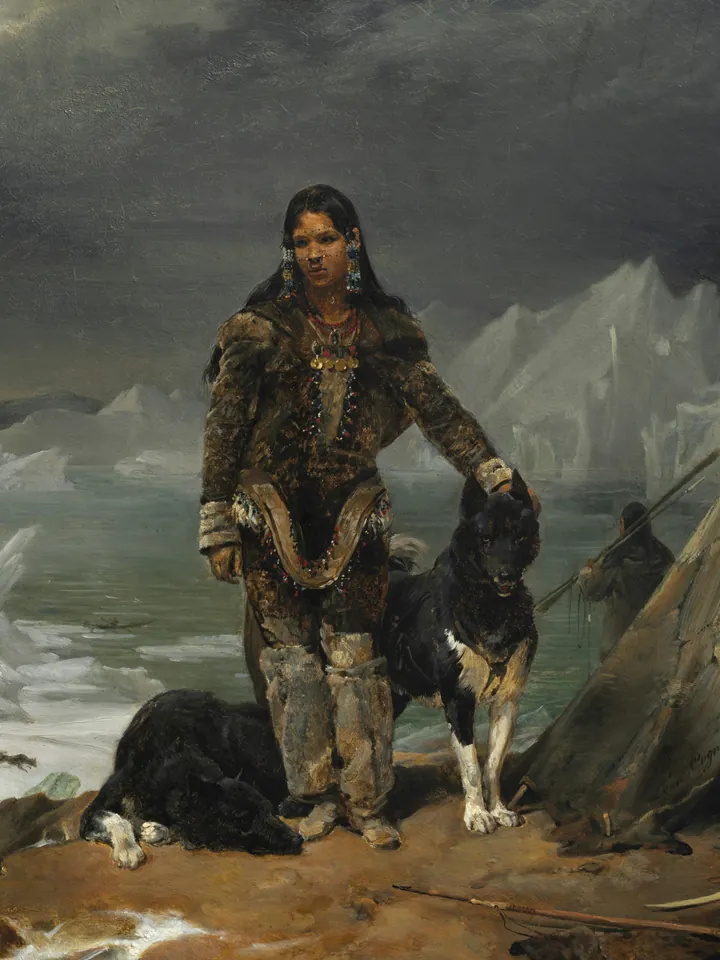
Look Closely: The French artist Léon Cogniet painted this picture in 1826 and called it A Woman from the Land of the Eskimos. We do not know whether Cogniet ever met an Inuit woman, or whether he painted from other people's drawings and stories. Read the Clothing section, then study the painting. Does her clothing look like the parkas described on this page? What about the dogs, the land, and her pose? Which details might the painter have imagined?
Where the Inuit Live Map
The Arctic stretches more than 5,000 miles, from the Bering Strait in Alaska across northern Canada to Greenland. It is tundra: flat or rolling land where the ground below the surface stays frozen all year and no trees grow. In winter the sea freezes, temperatures can drop to 40 degrees below zero, and in the far north the sun does not rise for weeks. In summer, the sun stays up all night.
Because there are no trees, people used driftwood washed up on beaches, whale bones, stone, snow, and animal skins for building and tools.
Homes Homes
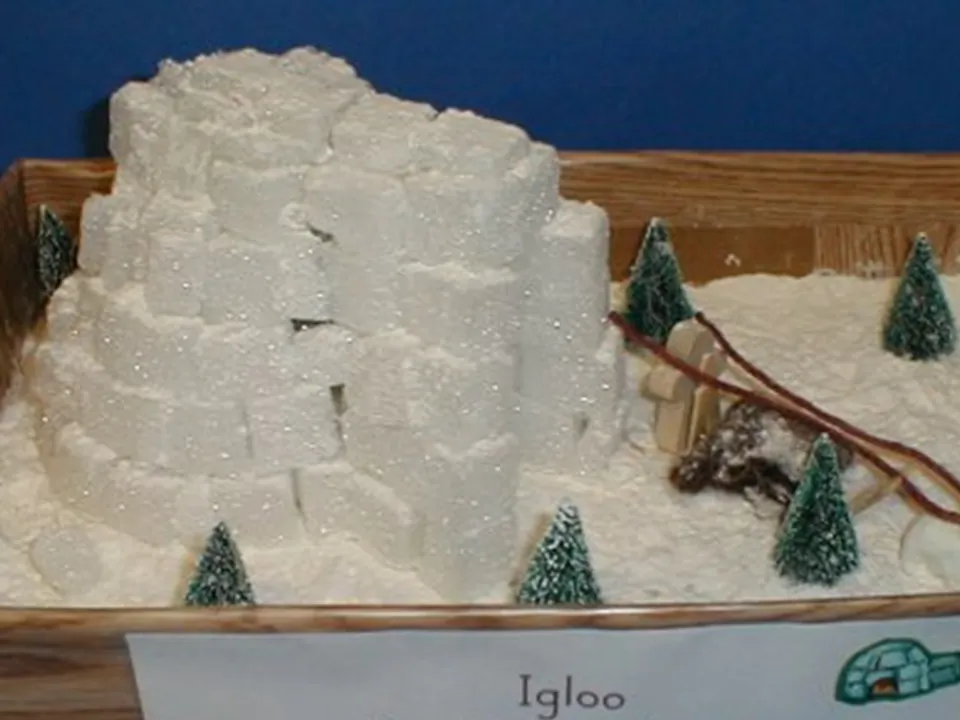
In Inuktitut, iglu means any house. The snow-block iglu most people picture was a temporary home for winter hunting trips, used mostly by Inuit in central and eastern Canada. Builders cut blocks of hard-packed snow with a long knife and stacked them in a rising spiral that leaned inward to form a dome. A skilled builder could make one in about an hour. Snow is full of tiny air pockets that hold in heat, so an iglu could be much warmer inside than out.
For most of the winter, families lived in sod houses built partly underground, with frames of driftwood or whale bones covered with sod and stone. A long, low tunnel at the entrance trapped the cold air. In summer, families lived in tents made of seal or caribou skins. Inside every home, a stone lamp burning seal oil gave heat and light and was used for cooking.
Clothing Clothing
Inuit clothing is among the warmest ever made. Women sewed it from caribou and seal skins using needles of bone and thread made of sinew. In winter, people wore two layers of caribou-skin clothing: an inner layer with the fur facing in and an outer layer with the fur facing out. Caribou hairs are hollow, so they trap warm air. Sealskin was waterproof and was used for boots, called kamiks, and summer clothing.
Everyone wore a hooded parka, pants, mittens, and boots. A mother's parka, called an amauti, has a large pouch in the back where her baby rides, warm against her skin.
Food Foods
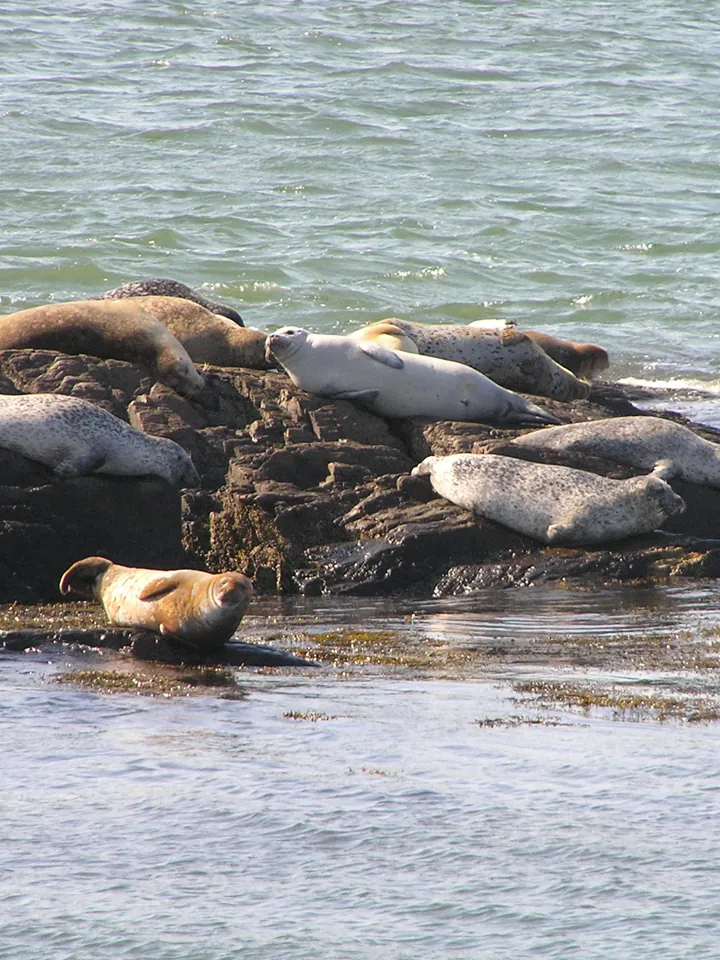
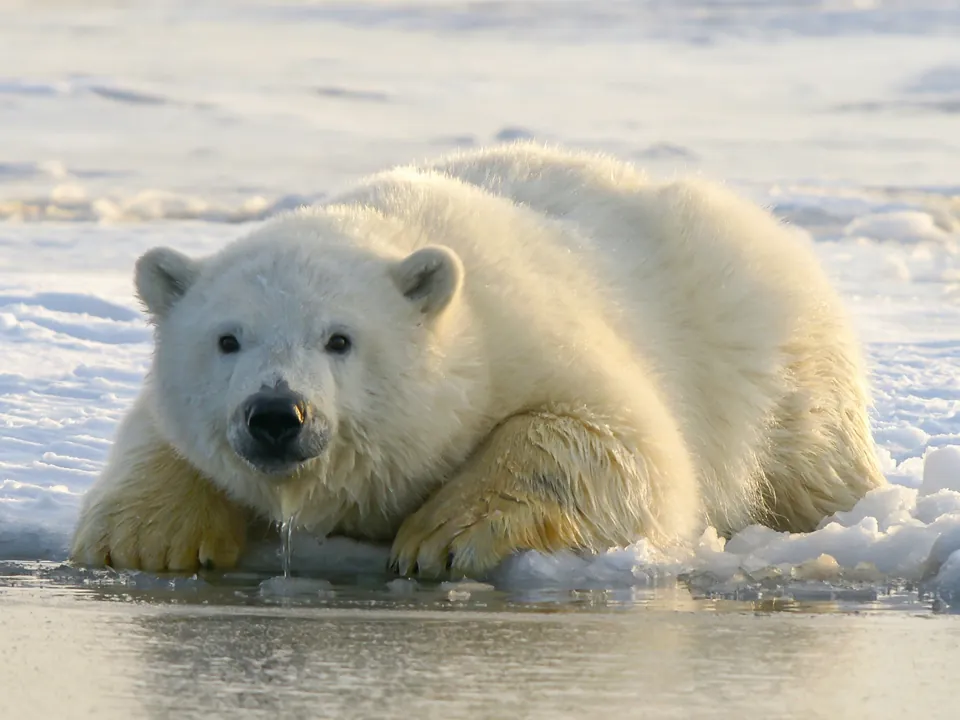
Seals were the most important food. In winter, a hunter waited beside a seal's breathing hole in the ice, sometimes for hours, ready to strike with a harpoon. In spring and summer, hunters crept up on seals resting on the ice. People also hunted walrus, whales such as the bowhead and beluga, caribou, polar bears, birds, and fish like Arctic char, and gathered berries in summer.
Much of the meat was eaten raw or frozen, which kept its vitamins. Raw whale skin, called muktuk, has vitamin C, important in a place with almost no fruits or vegetables. A successful hunter shared his catch with everyone, so no family went hungry.
Customs and Beliefs Recreation/Games
Inuit tradition teaches respect for animals, which give themselves to hunters who treat them well. Elders pass on knowledge of the land, sea ice, and weather through stories.
During the long winters, people played games of strength, balance, and skill. In the one-foot high kick, an athlete jumps and kicks a hanging target with one foot, then lands on the same foot. In the Iñupiat blanket toss, people pull a walrus-hide blanket tight and toss a person high into the air. These games are still played at the Arctic Winter Games and the World Eskimo-Indian Olympics. Inuit women in Canada practice throat singing, a game in which two singers face each other and make rhythmic sounds until one laughs or runs out of breath.
Tools and Travel
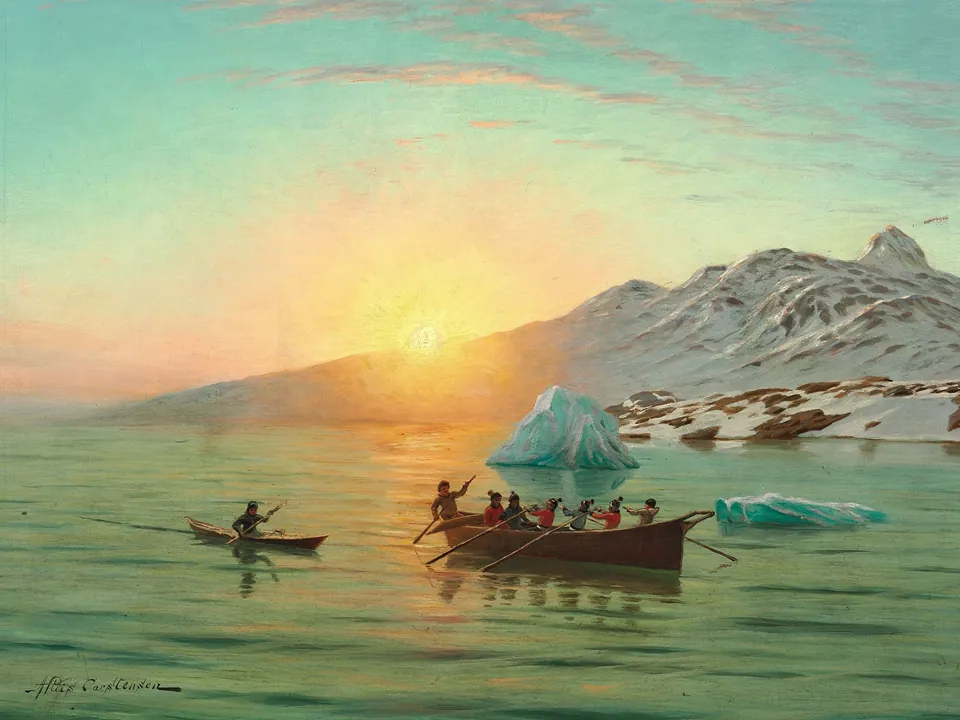
The kayak is a one-person boat made of sealskin stretched over a frame of driftwood or bone. It is fast, quiet, and good for hunting. The umiak is a large, open skin boat that carried families and their belongings and was used for whale hunting. In winter, teams of dogs pulled sleds across the snow and ice.
Arctic hunters invented the toggling harpoon, with a head that turns sideways inside the animal so it cannot pull free. Women use a curved knife called an ulu for cutting skins and food. To protect their eyes from the glare of sun on snow, people wore snow goggles of wood or bone with narrow slits.
Art Art
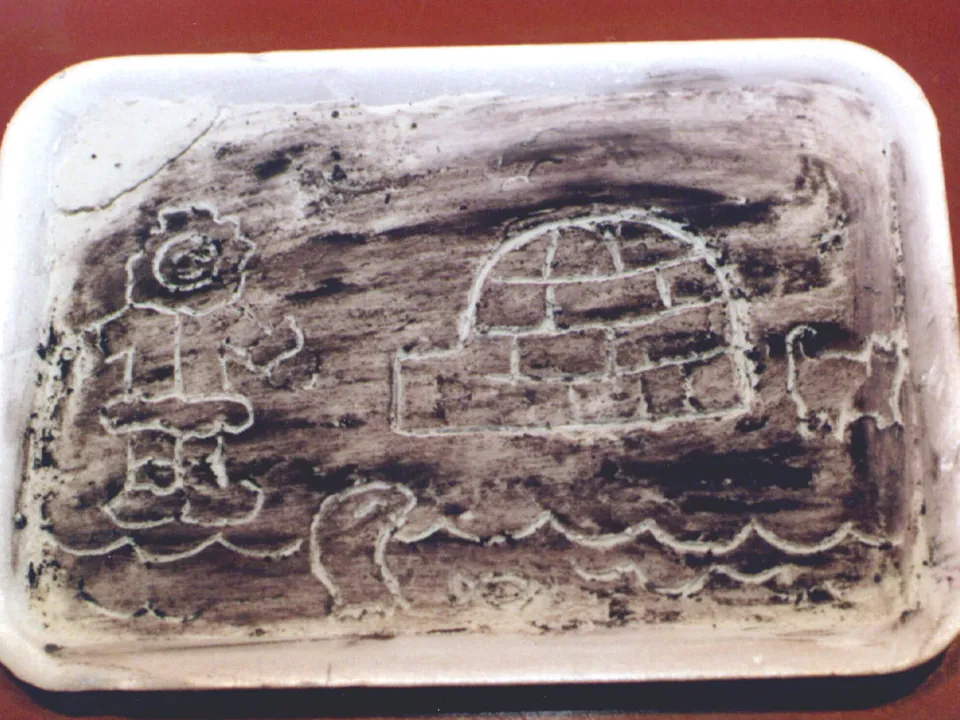
For hundreds of years, Inuit and Iñupiat artists have carved small figures of people and animals from walrus ivory, bone, and soapstone, and engraved pictures of hunting and daily life on ivory, filling the lines with soot. Later, American and European whalers learned to engrave whale teeth, which they called scrimshaw; the Inuit tradition is much older.
Since the late 1940s, Inuit soapstone sculptures have been sold around the world. In 1959, artists in Kinngait (Cape Dorset), in what is now Nunavut, began making prints. Kenojuak Ashevak's print The Enchanted Owl became one of the most famous works of Canadian art.
The Inuit Today
In 1999, Canada created the territory of Nunavut ("our land"), where most people are Inuit and Inuktitut is an official language. Greenland governs itself within the Kingdom of Denmark, and most Greenlanders are Inuit. In Alaska, Iñupiat and Yup'ik people own land through Native corporations.
Many Inuit still hunt, fish, and travel on the land and sea ice, now often by snowmobile. Inuit hunters and elders are among the first to see how a warming climate is changing the Arctic.
Activities
Iglu Engineering
Make the five decisions an Inuit builder makes, then test how warm the iglu stays and graph your results.
For teachers: Step-by-step building choices, a temperature model with a bar graph, and sugar-cube iglu directions. Skills: engineering, cause and effect, graphing. About 30 minutes.
Start the ActivityWord Match
Drag each word to its definition, or tap a word and then tap its definition.