Iglu Engineering
In Inuktitut, the language of the Inuit, iglu means any house. The snow-block iglu was a temporary winter home for hunting trips, used mostly by Inuit in central and eastern Canada. For most of the winter, families lived in sod houses built partly underground. But out on the land and sea ice, a skilled builder could make a snow iglu in about an hour, using only a long snow knife and the snow under his feet.
How Can Snow Keep You Warm?
Hard-packed snow is full of tiny pockets of trapped air. Trapped air slows heat from escaping, the same way a puffy winter coat does. With a seal-oil lamp burning and people inside, an iglu can be many degrees warmer than the wind and cold outside.
Build the Iglu
Make five builder's decisions. Watch what happens to your iglu after each choice.
Warm It Up
It is −30°F outside. Change what is happening inside the iglu, then record each test on the graph.
My Test Results
This is a simple model, not exact data. Real temperatures depend on the weather, the size of the iglu, how thick the walls are, and how many people are inside.
Think About It
- Why did the builder use hard-packed snow instead of fresh, fluffy snow or blocks of ice?
- Why does building in a spiral make it easier to finish the dome than building one flat ring at a time?
- Cold air sinks and warm air rises. Use that idea to explain why the entrance tunnel was lower than the floor and the sleeping platform was higher.
- Look at your graph. Which change made the biggest difference in the inside temperature? Why do you think the iglu still needed a small vent?
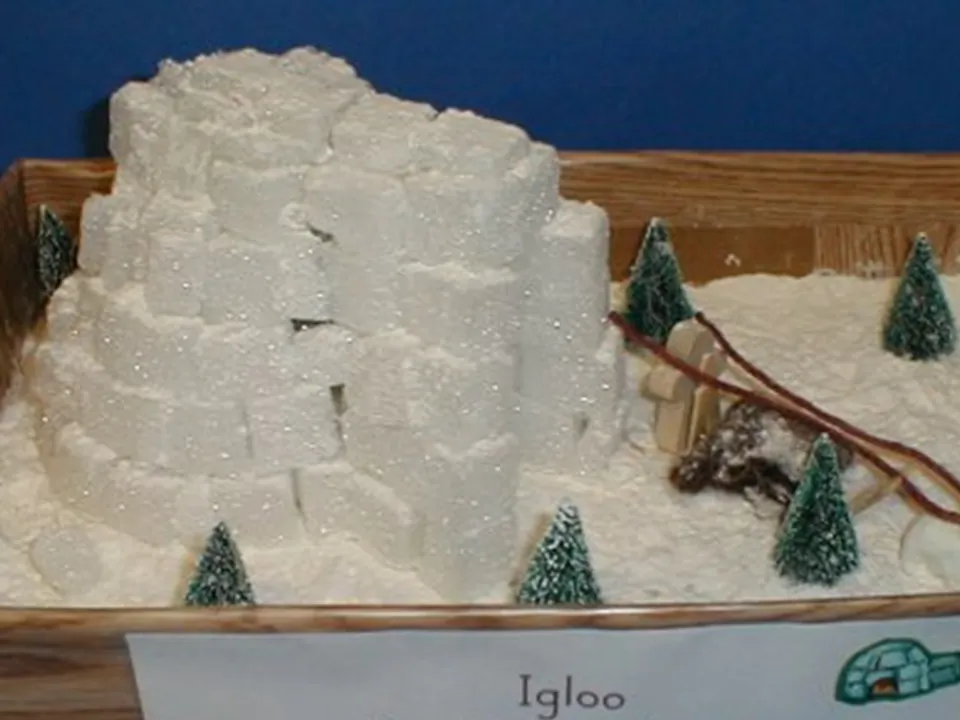
Build a Sugar-Cube Iglu
Materials
- sugar cubes or small foam blocks
- white glue or frosting "mortar"
- a paper plate for the base
- two small thermometers (optional)
Directions
- Draw a circle about 5 inches across on the plate.
- Glue the first row of blocks around the circle, leaving a gap for the door.
- Keep adding rows in a spiral, setting each block a little inward, so the walls lean in and form a dome.
- Add a short, low entrance tunnel and leave a tiny air hole at the top.
- Optional: Put one thermometer inside and one outside near a cold window. Record both every 10 minutes and make a graph.
Arctic sports challenge: Inuit games test strength and balance. Measure each student's standing long jump, then make a bar graph of the class results.