The Cherokee
The Cherokee have lived in the southern Appalachian Mountains for more than a thousand years. In their own language, they call themselves Tsalagi (ᏣᎳᎩ). Cherokee families farmed river valleys, hunted in the forests, and built towns with council houses where everyone could speak. Today the Cherokee are one of the largest Native nations in the United States.
The Cherokee at a Glance
The Cherokee (Tsalagi)
- Region: Eastern Woodlands (Southeast)
- Homeland: Southern Appalachian Mountains: parts of North Carolina, Tennessee, Georgia, South Carolina, and Alabama
- Homes: Wattle-and-daub houses; later, log cabins
- Food: Corn, beans, and squash; deer and turkey
- Language: Cherokee (Iroquoian family)
- Today: Cherokee Nation, Eastern Band of Cherokee Indians, United Keetoowah Band
Key Facts
- Cherokee towns were built along rivers, each with a council house.
- Women owned the houses and fields. Children belonged to their mother's clan.
- Sequoyah created a writing system for Cherokee in 1821.
- The Cherokee Phoenix (1828) was the first Native American newspaper.
- In 1838, the U.S. Army forced most Cherokee west on the Trail of Tears.
Tap or hover over the card to flip it. Students can copy this information into their lapbook organizers before reading.
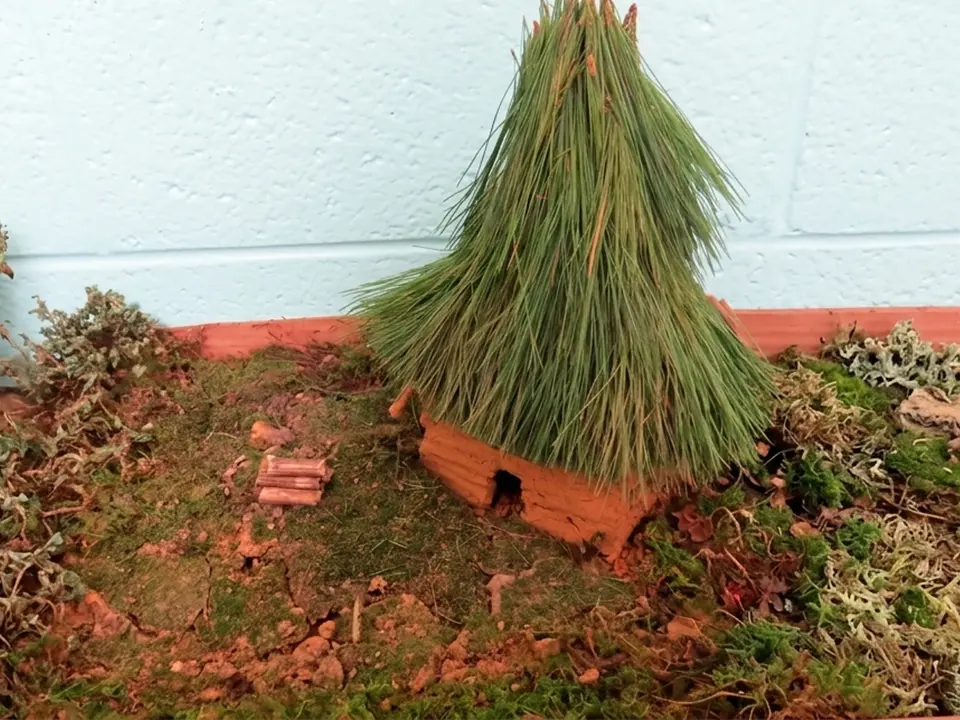
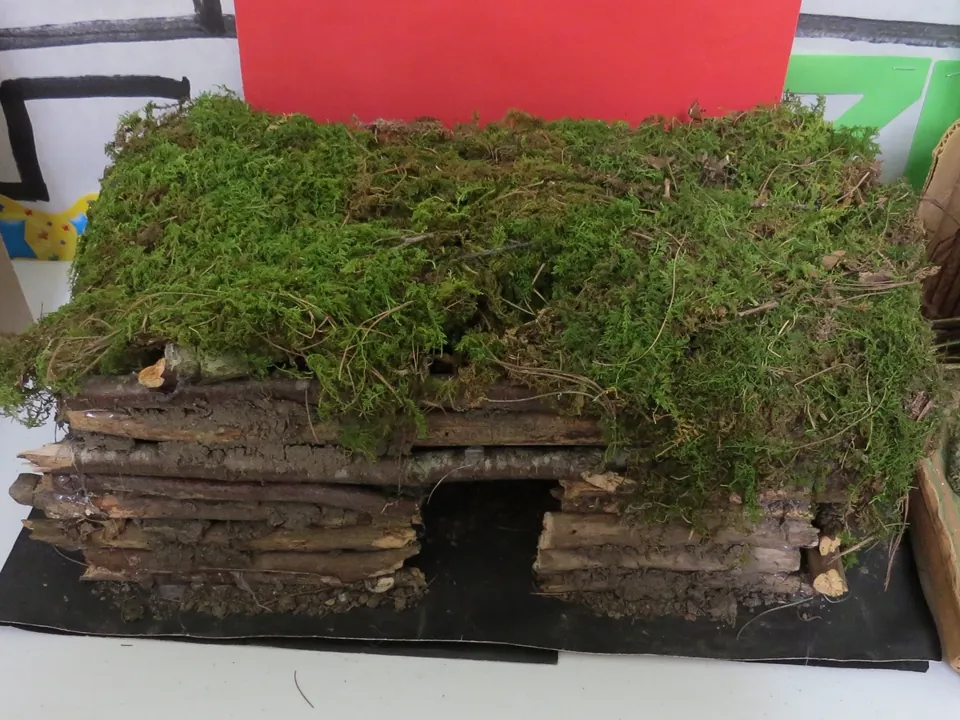
Look Closely: The pictures on this page include two student models: a round house with a cone-shaped roof and a log house with a moss roof. A model is not the real thing. It is someone's idea of what a home looked like, built from what they read. Compare the models with the description under Homes below. Which home is older? What did each student get right? What can a model never show you about a real house?
Where the Cherokee Lived Map
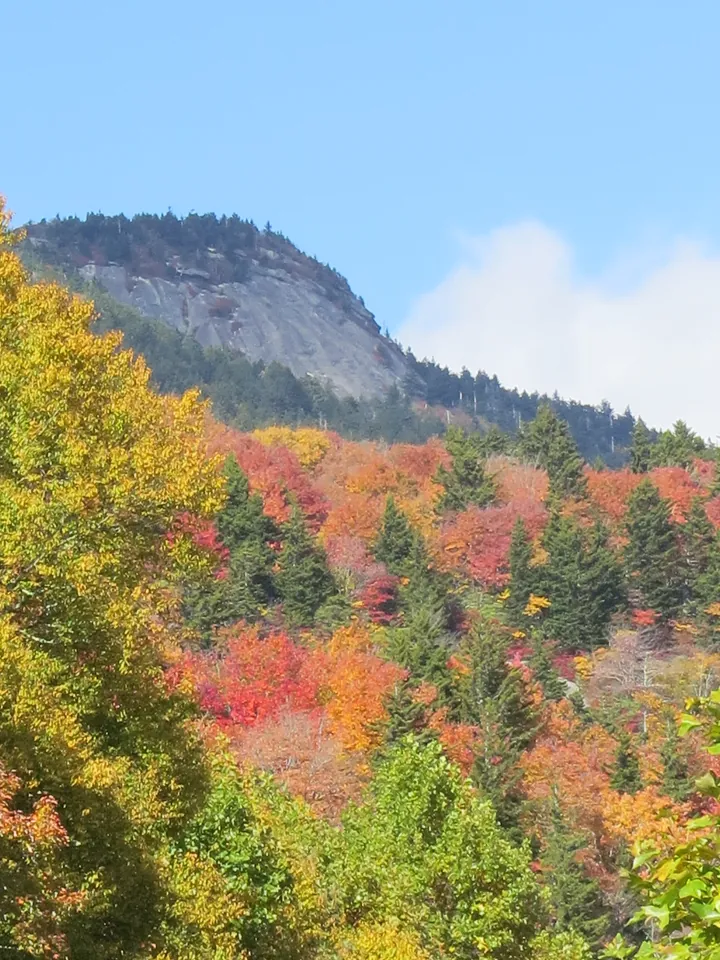
The Cherokee homeland is in the southern Appalachian Mountains. Before Europeans arrived, Cherokee towns stretched across what is now western North Carolina, eastern Tennessee, northern Georgia, the northwest corner of South Carolina, and northeast Alabama. The land had tall, forested mountains, rushing rivers, and rich valley soil for farming.
Most Cherokee lived in towns along rivers. In the 1700s there were dozens of Cherokee towns. Each town governed itself, but the towns shared a language, clans, and ceremonies.
Homes Homes
Each Cherokee town had a council house, a large round building where the people met to make decisions and hold ceremonies. Council houses were often built on top of a flat-topped earth mound.
Families had two kinds of houses. In summer they lived in a rectangular house with walls made of wattle and daub: young trees (saplings) woven together like a basket and then plastered with clay. The roof was covered with bark or grass. In winter they moved into a small, round house with a cone-shaped roof. A fire burned inside, and the thick clay walls held in the heat.
In the 1700s, many Cherokee families began building log cabins like those of their European neighbors. By the early 1800s, many Cherokee lived in log homes and farmed with plows and livestock.
Clothing Clothing
Cherokee clothing was made mostly from deerskin. Men wore breechcloths, leggings, and moccasins. Women wore skirts made of deerskin or of cloth woven from the inner bark of mulberry trees. In cold weather, people wrapped themselves in capes made of turkey feathers or fur. Clothing was decorated with dyed porcupine quills, shell beads, and paint.
After trade with Europeans began, the Cherokee used cloth, glass beads, and silver. By the 1800s, many Cherokee men wore long hunting shirts and cloth turbans, and women wore long cotton dresses. Today, the Cherokee tear dress and ribbon shirt are worn for special events.
Food Foods
The Cherokee were skilled farmers. Each town had large shared fields, and each family also had a small garden near its home. They grew corn, beans, squash, pumpkins, and sunflowers. Women owned the fields and did most of the farming. Men cleared new fields and helped with planting.
Men hunted deer, turkey, bear, and rabbits with bows and arrows. For small animals and birds, hunters used blowguns made from hollow rivercane, with darts tipped in thistle down. Families also fished with traps and spears and gathered hickory nuts, walnuts, chestnuts, and berries.
Customs and Beliefs Villages Book
Every Cherokee belongs to one of seven clans: Wolf, Deer, Bird, Paint, Long Hair, Blue, and Wild Potato. A child belongs to the mother's clan. Clan members treat one another as family, so people do not marry within their own clan.
The most important celebration of the year was the Green Corn Ceremony, held when the first corn was ready to eat. It was a time to give thanks, settle quarrels, forgive, and start fresh.
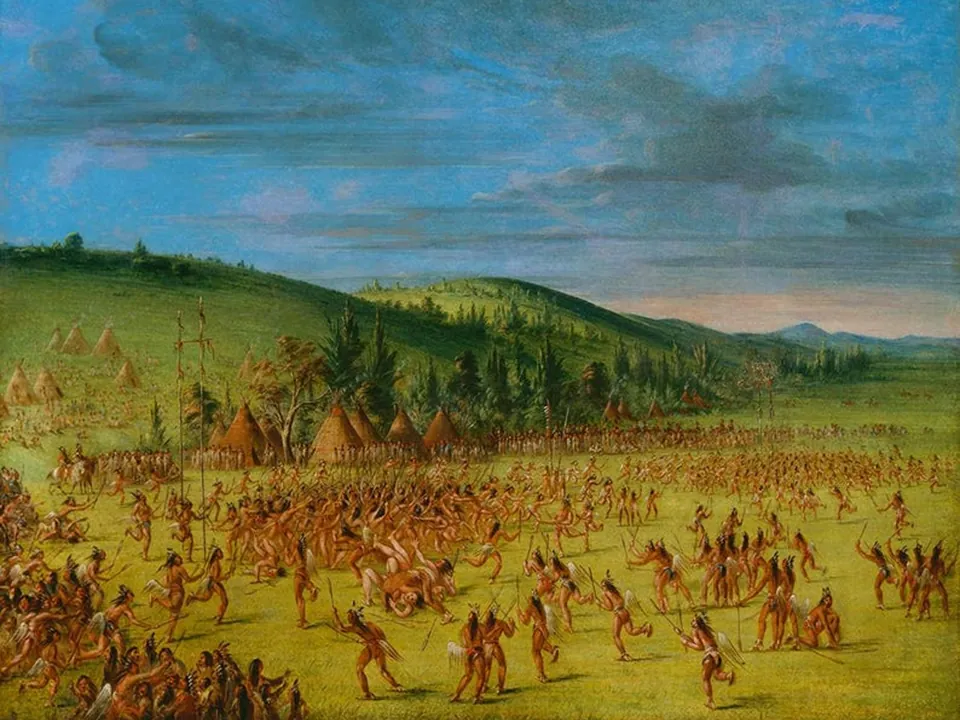
Cherokee towns played stickball, a fast, rough game played with two small sticks and a ball. Games between towns could have many players on each side, and they were sometimes used to settle arguments instead of fighting. The Cherokee called stickball "the little brother of war." It is still played today, especially at the Cherokee Indian Fair in North Carolina.
Tools and Travel
Cherokee men made bows, arrows, blowguns, stone axes, and fishing traps. They carved dugout canoes from large poplar logs by burning and scraping out the inside. Women made pottery, baskets, and tools for farming and cooking. After the 1700s, the Cherokee traded deerskins for metal hoes, knives, kettles, and guns.
Art Art
Cherokee weavers make baskets from rivercane, a tall native grass. They split the cane into thin strips and dye them dark brown with walnut and red with bloodroot. The most skilled weavers make double-weave baskets, a basket inside a basket woven as one piece. Cherokee potters pressed carved wooden paddles into wet clay to stamp patterns on their pots.

Writing the Cherokee Language
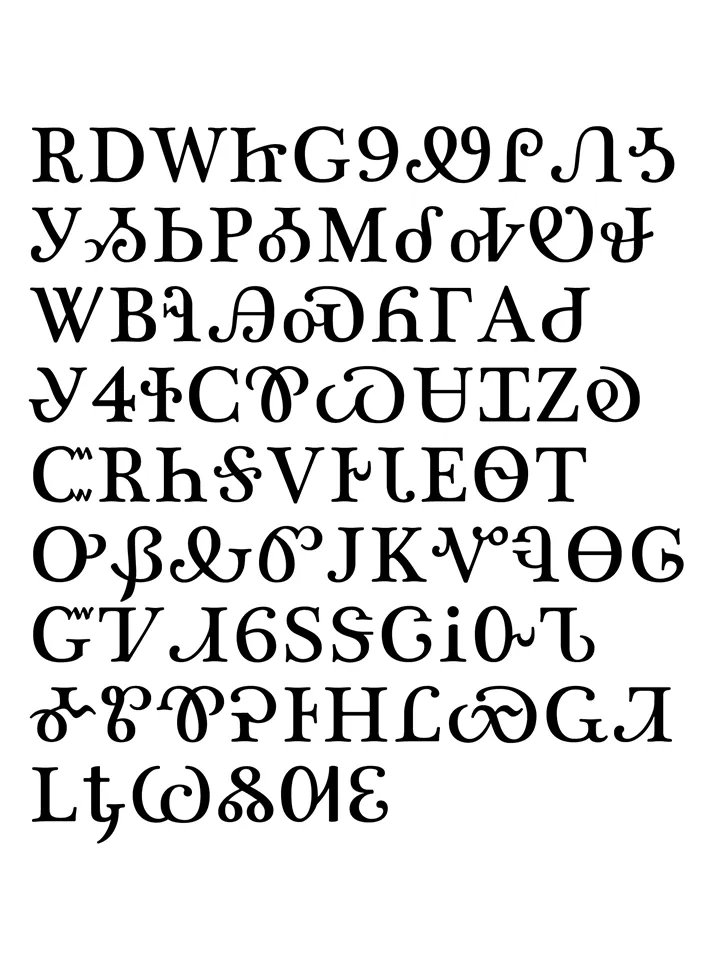
A Cherokee silversmith named Sequoyah spent about twelve years creating a way to write the Cherokee language. In 1821, he shared his syllabary, a set of symbols in which each symbol stands for a syllable, such as "ga" or "lo." It was so easy to learn that thousands of Cherokee people learned to read and write within a few years. In 1828, the Cherokee Nation began printing the Cherokee Phoenix, a newspaper in both Cherokee and English.
The Trail of Tears
By the 1820s, the Cherokee Nation had a written constitution, a capital at New Echota, Georgia, schools, and a newspaper. But settlers wanted Cherokee land, especially after gold was found in Georgia in 1828. In 1830, Congress passed the Indian Removal Act. In 1832, the Supreme Court ruled that Georgia's laws did not apply inside the Cherokee Nation, but President Andrew Jackson did not enforce the ruling.
In 1835, a small group of Cherokee signed the Treaty of New Echota, agreeing to move west. Most Cherokee, led by Principal Chief John Ross, said the treaty was not legal. In 1838, the U.S. Army forced about 16,000 Cherokee from their homes into camps and then west to Indian Territory, in what is now Oklahoma. About 4,000 Cherokee died from disease, cold, and hunger. This forced march is called the Trail of Tears.
Some Cherokee hid in the North Carolina mountains or held on to land there. Their descendants are the Eastern Band of Cherokee Indians.
The Cherokee Today
There are three federally recognized Cherokee tribes. The Cherokee Nation, based in Tahlequah, Oklahoma, has more than 450,000 citizens, making it one of the largest tribes in the United States. The United Keetoowah Band of Cherokee Indians is also in Oklahoma. The Eastern Band of Cherokee Indians lives on the Qualla Boundary in western North Carolina.
Cherokee children can attend language immersion schools where classes are taught in Cherokee, and the syllabary appears on street signs, in books, and on phones and computers.
Activities
Sequoyah's Cherokee Syllabary
Explore the symbols Sequoyah created, decode real Cherokee words, and print a bookmark with your name in Cherokee.
For teachers: Interactive syllabary chart, decoding challenge, and printable name bookmark. Pairs with the Sequoyah biography. About 20–30 minutes. Printer needed for bookmarks.
Start the ActivityFamous People Connected to This Page
Word Match
Drag each word to its definition, or tap a word and then tap its definition.