The United States Steps In
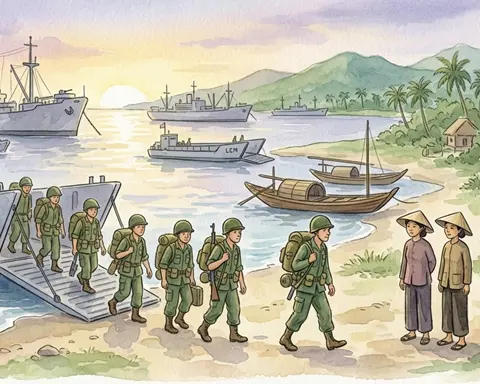
Fast Facts: U.S. Steps In
U.S. Steps In
- South Vietnam Leader: Ngo Dinh Diem
- U.S. Goal: Stop the spread of communism
- Main Threat: Vietcong attacks in the South
- Early U.S. Role: Advisors sent to train troops
- Key President: John F. Kennedy
The U.S. Steps In at a Glance
- South Vietnam struggled under the leadership of Ngo Dinh Diem.
- The Vietcong grew stronger and attacked villages in the South.
- The United States supported South Vietnam to stop communism.
- President Kennedy sent about 15,000 advisors to train South Vietnamese troops.
- The Ho Chi Minh Trail supplied the Vietcong from the North.

Dividing Vietnam
After the French left Vietnam in 1954, the country was temporarily divided at the 17th parallel. North Vietnam became a communist nation led by Ho Chi Minh. South Vietnam was anti-communist and supported by the United States. The two sides were supposed to hold elections to reunite the country, but these elections never happened. Tension between the North and South continued to grow.
Problems in South Vietnam
South Vietnam was led by Ngo Dinh Diem, a leader who struggled to gain support from his own people. Many South Vietnamese felt Diem’s government was unfair and corrupt. Because of this, some citizens supported the Vietcong, a communist group in the South that wanted to overthrow Diem and unite Vietnam under Ho Chi Minh.
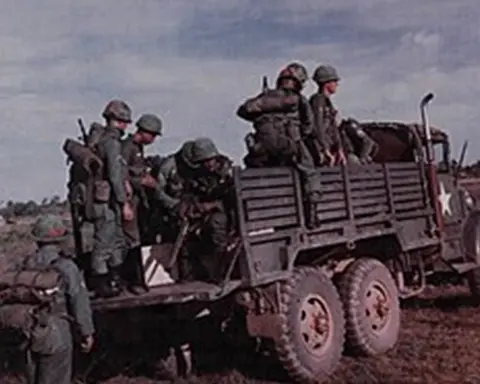
The Vietcong Grow Stronger
The Vietcong used guerrilla tactics—surprise attacks, hidden tunnels, and quick movements—to weaken the South Vietnamese army. They received supplies and support from North Vietnam through a network of jungle paths known as the Ho Chi Minh Trail. This trail ran through neighboring countries and made it difficult for South Vietnam to stop the flow of weapons and fighters.
The United States Gets Involved
The United States worried that if South Vietnam fell to communism, other countries in Southeast Asia might follow. This idea was known as the “domino theory.” To prevent this, the U.S. began sending money, supplies, and military advisors to help South Vietnam defend itself.
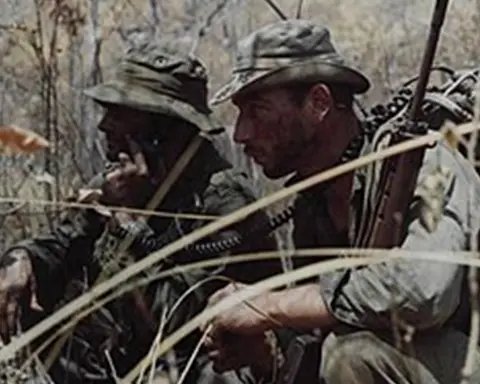
Kennedy Sends Advisors
In the early 1960s, President John F. Kennedy increased U.S. involvement. He sent about 15,000 American advisors to train South Vietnamese troops. Although these advisors were not supposed to fight, many soon found themselves in dangerous situations as the conflict intensified. The United States was becoming more deeply involved in Vietnam.
A Growing Conflict
By the time President Kennedy was assassinated in 1963, the situation in Vietnam had become more unstable. The Vietcong were gaining strength, South Vietnam was struggling, and the United States was taking on a larger role. The stage was set for even greater involvement in the years ahead.
Word Match
Drag the vocabulary words to their correct definitions!
Vocabulary Words
Definitions
Lesson 2 — U.S. Escalation & Early Involvement Quiz
Activities & Extensions
Students explore why the Vietcong grew stronger and why South Vietnam struggled by sorting simple images or statements into two categories. This helps students understand the early challenges that shaped U.S. involvement.
How to Do It: Display or provide 6–8 small images or statements (AI‑drawn icons or teacher‑created slips). Students sort them into two groups in their notebooks: Vietcong Strengths and South Vietnam Struggles.
Examples students might sort:
- Guerrilla tactics (surprise attacks, tunnels)
- Support from North Vietnam via the Ho Chi Minh Trail
- South Vietnamese citizens unhappy with Diem
- Corruption in South Vietnam’s government
- Vietcong blending in with local villagers
- South Vietnam’s difficulty stopping supplies from the North
Students glue or sketch the items into two columns and write a short explanation of why each item belongs in that category.
Materials: Notebook, pencil, optional AI‑generated icons
Optional Extension: Students add a third column titled “Why This Led the U.S. to Step In” and write 2–3 sentences connecting the categories to U.S. involvement.

Students model the Domino Theory to understand why U.S. leaders feared the spread of communism in Southeast Asia. This hands-on demonstration makes an abstract idea concrete.
How to Do It: Line up dominoes (or paper rectangles) labeled with countries in Asia. Students gently tap the first “domino” to show how U.S. leaders believed one nation falling to communism might influence others. Students then discuss whether this fear was realistic based on what they learned.
Materials:
- Dominoes or small paper rectangles
- Markers for labeling countries
Optional Extension: Students write a short reflection: “How did the Domino Theory influence U.S. decisions in Vietnam?”
Vietnam War Navigation
Explore the Full Vietnam War Unit

This complete history unit includes research passages, organizers, writing tasks, quizzes, activities, and website research — all in printable and digital formats. Everything you need to teach the Vietnam War with confidence.
View the Full Unit on TPT