The End of the War and the Fall of Saigon
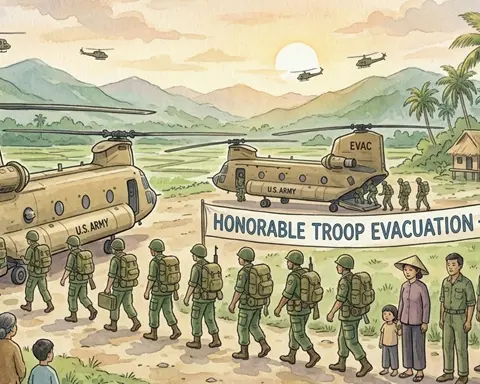
Fast Facts: End of the War
End of the War
- Key President: Richard Nixon
- Main Strategy: Vietnamization
- Major Actions: Troop withdrawal & peace talks
- Final Event: Fall of Saigon (1975)
- Aftermath: Many Vietnamese fled as refugees
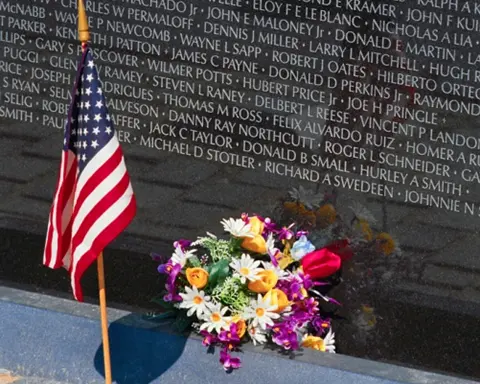
End of the War at a Glance
- President Nixon began Vietnamization, shifting fighting to South Vietnamese troops.
- American forces gradually withdrew while bombing continued in some areas.
- The Paris Peace Accords (1973) led to a ceasefire and U.S. troop withdrawal.
- North Vietnamese forces captured Saigon in 1975, ending the war.
- Hundreds of thousands of Vietnamese fled the country as refugees.
Nixon’s Plan: Vietnamization
By the late 1960s, many Americans wanted the Vietnam War to end. When Richard Nixon became president in 1969, he introduced a new plan called Vietnamization. The goal was to slowly withdraw American troops while training South Vietnamese soldiers to take over the fighting. Nixon hoped this would reduce U.S. involvement without allowing South Vietnam to fall to communism.
Bringing Troops Home
As Vietnamization continued, thousands of American soldiers returned home each year. Although ground troops were leaving, the United States still provided supplies, money, and air support. Bombing campaigns continued in some areas in an effort to weaken North Vietnam and push both sides toward peace talks.
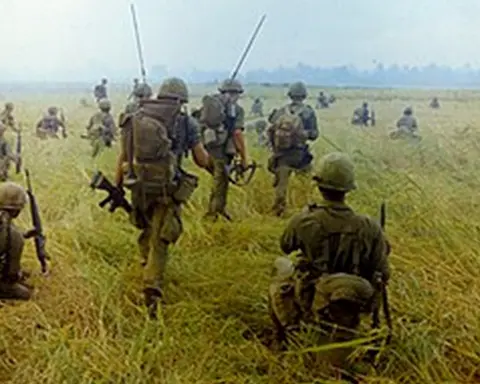
The Paris Peace Accords
After years of negotiations, the Paris Peace Accords were signed in 1973. The agreement called for a ceasefire, the release of prisoners of war, and the withdrawal of the remaining American troops. Although the United States was no longer directly fighting, the conflict between North and South Vietnam continued.
The Fall of Saigon
Without full American support, South Vietnam struggled to defend itself. In early 1975, North Vietnamese forces launched a major attack. City after city fell, and South Vietnamese troops were unable to stop the advance. On April 30, 1975, North Vietnamese tanks rolled into Saigon, the capital of South Vietnam. The city surrendered, marking the official end of the Vietnam War.
Escape and Aftermath
As Saigon fell, thousands of people rushed to escape. Helicopters lifted Americans and some South Vietnamese from rooftops in a dramatic evacuation. After the war, many Vietnamese fled the country by boat or plane, hoping to find safety and a new life elsewhere. These refugees became known as the “boat people.”
A War That Changed a Nation
The Vietnam War left a lasting impact on both Vietnam and the United States. Vietnam was reunited under a communist government, but the country faced years of rebuilding. In the United States, the war changed how people viewed their government, the military, and America’s role in the world. The conflict remains one of the most debated and emotional chapters in American history.
Word Match
Drag the vocabulary words to their correct definitions!
Vocabulary Words
Definitions
Lesson 5 — Vietnamization, Withdrawal & Aftermath Quiz
Activities & Extensions
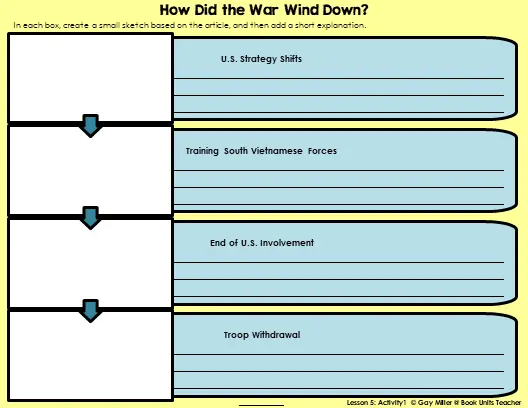
Students explore the major events that led to the Fall of Saigon by completing a simple four‑step cause‑and‑effect ladder. This activity helps students visualize how one event led to the next as the war came to an end.
How to Do It: Students draw a ladder with four rungs in their notebooks. On each rung, they sketch a small symbol and write a short explanation for one step: U.S. Troops Withdraw, South Vietnam Loses Support, North Vietnam Advances, and Fall of Saigon.
Materials:
- Notebook
- Pencil
Optional Extension: Students add a final reflection titled “Which Step Was the Most Important?” and explain their reasoning.
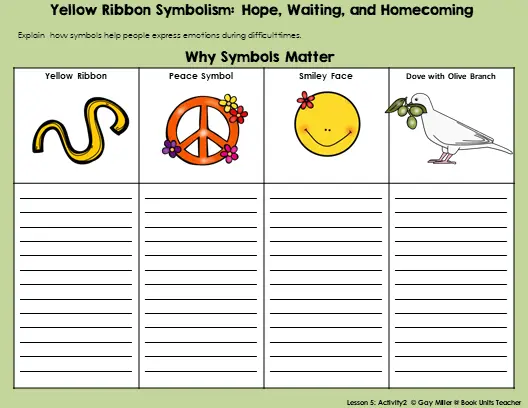
Students explore the final days of the Vietnam War by reading short perspective passages from people who experienced 1975 in different ways. This activity helps students understand the emotions and viewpoints surrounding the Fall of Saigon and the end of the war.
How to Do It: Provide students with several short passages representing different perspectives from 1975. Students sort each passage into one of four groups: South Vietnamese Citizen, American Soldier Leaving Vietnam, Refugee Fleeing by Boat, or North Vietnamese Soldier Entering Saigon. Students then write one sentence explaining what that person might have been feeling.
Materials:
- Notebook
- Pencil
Optional Extension: Students choose one perspective and write a short journal entry titled “My Experience in 1975.”
Vietnam War Navigation
Explore the Full Vietnam War Unit
This complete history unit includes research passages, organizers, writing tasks, quizzes, activities, and website research — all in printable and digital formats. Everything you need to teach the Vietnam War with confidence.
View the Full Unit on TPT