The Navajo (Diné)
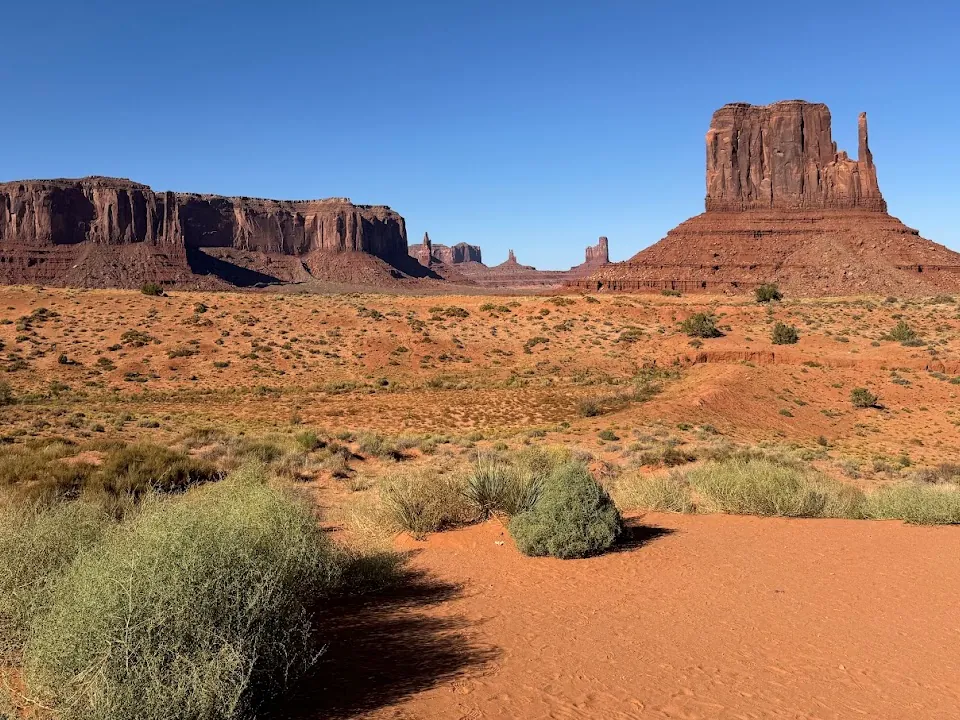
The Navajo call themselves Diné (dih-NEH), "the People." Their homeland, Dinétah, lies between four sacred mountains in the Southwest. The Diné are famous for their weaving and silverwork, for the Code Talkers of World War II, and for keeping their language strong. Today the Navajo Nation is the largest reservation in the United States.
The Diné at a Glance
The Navajo (Diné)
- Region: Southwest
- Homeland: Between four sacred mountains in Arizona, New Mexico, Colorado, and Utah
- Homes: Hogans
- Food: Corn, beans, squash, and mutton (sheep)
- Language: Navajo (Athabaskan family, related to Apache)
- Today: Navajo Nation, capital at Window Rock, Arizona
Key Facts
- A hogan door faces east, toward the rising sun.
- Sheep came with the Spanish in the 1600s and became central to Diné life.
- In 1864, the U.S. Army forced the Diné on the Long Walk.
- The Treaty of 1868 let the Diné return to their homeland.
- Navajo Code Talkers helped win World War II.
Tap or hover over the card to flip it. Students can copy this information into their lapbook organizers before reading.
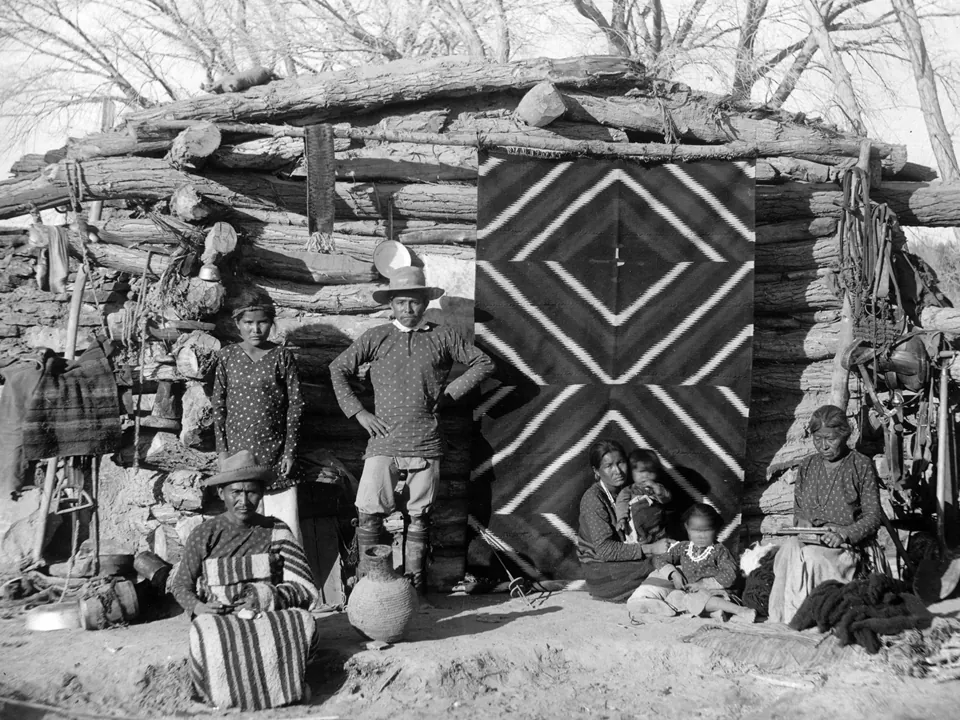
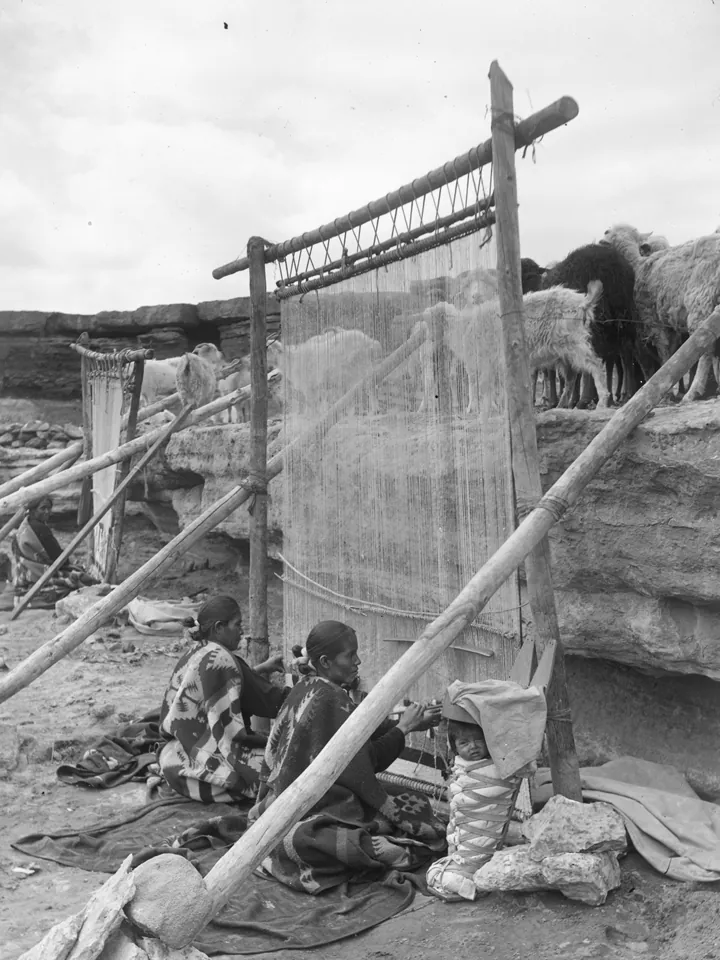
Look Closely: Compare the painting of a weaver in the Art section with the 1914 photograph of Diné weavers. Both show an upright loom set up outdoors. Which picture shows more details about how the loom is built? Which one shows more color? If you wanted to learn how to set up a Navajo loom, which picture would you trust more, and why? What might a painter add or leave out?
Where the Diné Live Map
Diné tradition teaches that the People emerged into this world inside the boundary of four sacred mountains: Sisnaajiní (Blanca Peak) in the east, Tsoodził (Mount Taylor) in the south, Dookʼoʼoosłííd (the San Francisco Peaks) in the west, and Dibé Ntsaa (Hesperus Mountain) in the north. Scientists who study languages note that Navajo is related to languages spoken in Alaska and Canada, and they believe the ancestors of the Diné and Apache moved south many centuries ago.
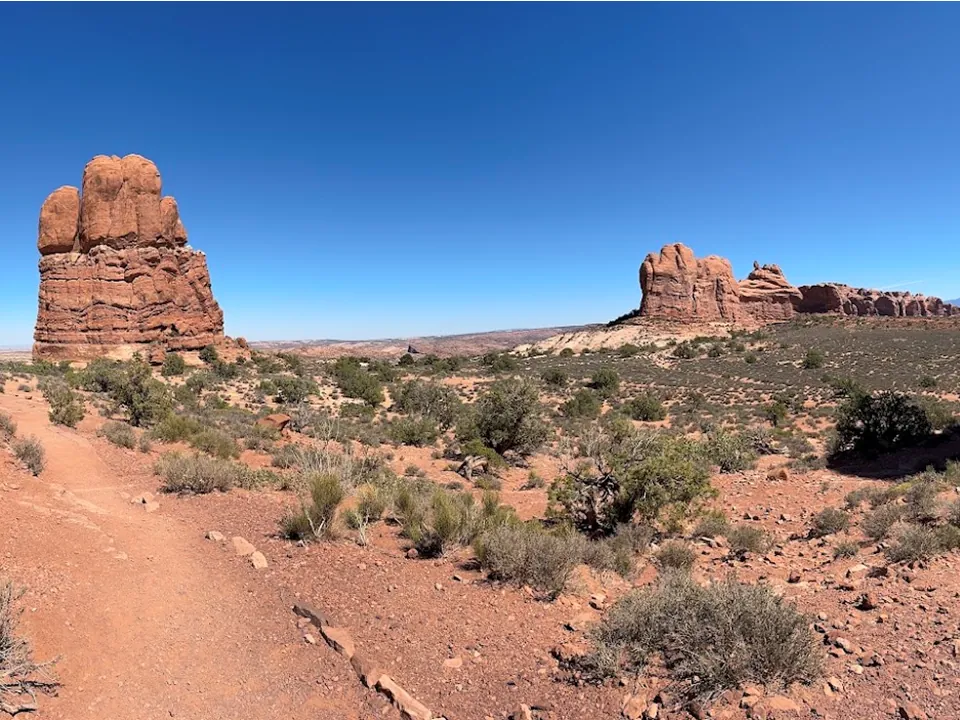
Dinétah is high desert country, with red rock mesas, deep canyons like Canyon de Chelly, pine-covered mountains, and grasslands. Summers are hot, winters can be snowy, and rain comes mostly in late summer storms.
Homes Homes
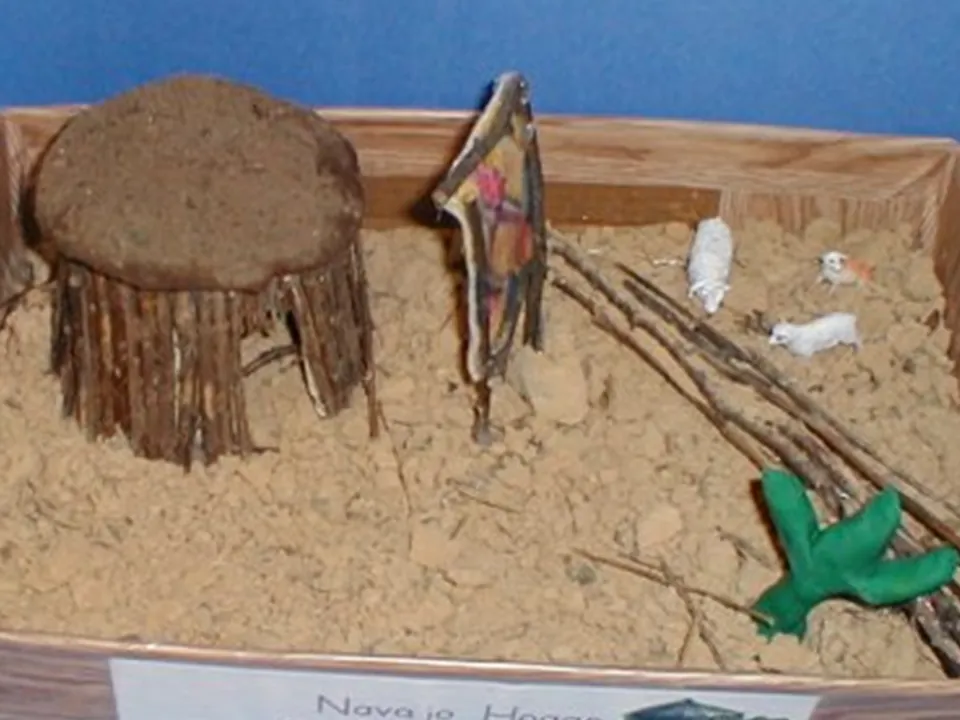
The traditional Diné home is the hogan. Early hogans were cone-shaped, built from three forked poles leaned together and covered with bark and earth. Later hogans were round or had six or eight sides, with walls of stacked logs and a dome-shaped roof covered with earth. A hogan has one room, a fire in the center with a smoke hole above, and a door that always faces east to greet the rising sun.
Families lived far apart so their sheep had enough grass. A family homestead might have a hogan, a brush shelter for summer, a sheep corral, and a loom set up outside. Many Diné families live in modern houses today but keep a hogan for ceremonies and family gatherings.
Clothing Clothing
Long ago, the Diné wore clothing of deerskin and woven yucca fiber. After they began weaving wool, women wore a blanket dress made of two woven panels joined at the shoulders and tied with a woven sash.
In the 1860s, while they were held at Fort Sumner, Diné women began wearing long, full cotton skirts and velvet blouses. That style became the traditional outfit worn today, along with silver and turquoise jewelry, a concho belt of silver disks, and moccasins. Both men and women wear their hair in a traditional bun tied with white yarn.
A Diné reader, Bernadette M. Wright of Phoenix, Arizona, shared how traditional clothing is worn today: a woman wears a long cotton skirt and a velvet blouse with coin buttons, a woven sash belt, and often a silver concho belt on top. A man wears cotton pants, a velvet shirt, and a concho belt, and may tie a folded scarf around his head. A husband and wife often wear matching outfits.
Food Foods
The Diné hunted deer, pronghorn, and rabbits and gathered piñon nuts, wild plants, seeds, and berries. They also learned to farm corn, beans, and squash, and in Canyon de Chelly they grew orchards of peach trees.
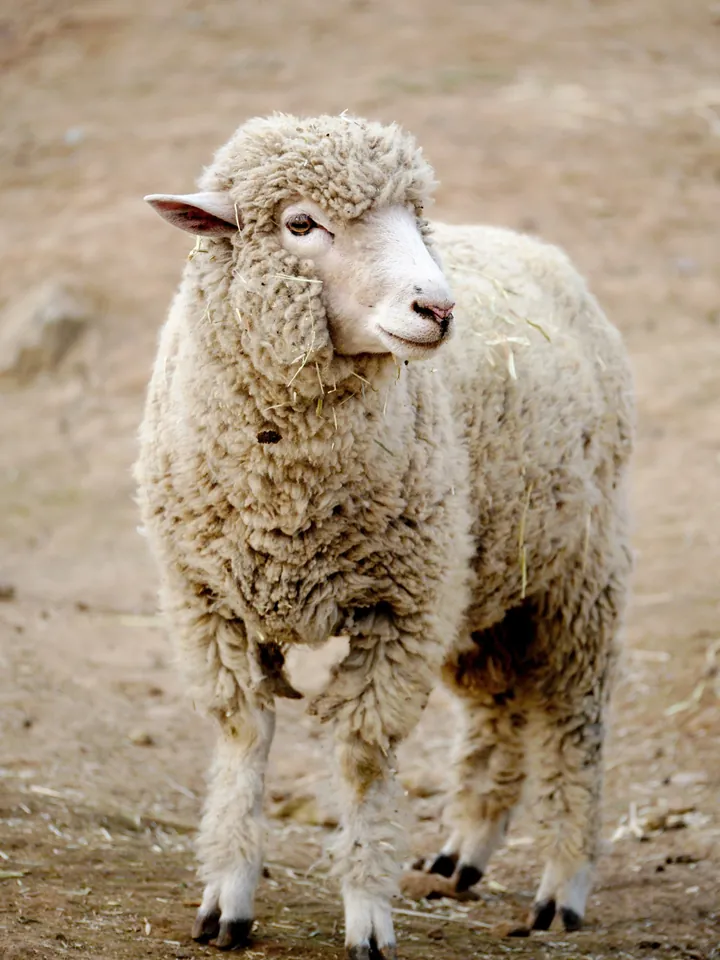
After the Spanish brought sheep and goats in the 1600s, raising sheep became the center of Diné life. Sheep gave meat for mutton stew and wool for weaving. Sheep traditionally belonged to the women of the family.
Frybread began during the Long Walk, when the Diné were given flour, lard, and sugar instead of the foods they grew. It became a popular food, but it is also a reminder of a hard time.
Customs and Beliefs Villages Book
Diné people belong to their mother's clan and are "born for" their father's clan. When Diné people introduce themselves, they often name four clans: their mother's, their father's, and those of their two grandfathers.
An important Diné idea is hózhó: balance, harmony, and beauty in all things. Ceremonies are led by a hataałii, a singer and healer, to restore balance when someone is sick or troubled. Some ceremonies last up to nine nights. The Kinaaldá is a four-day ceremony that celebrates a girl becoming a young woman.
Showing Respect: Some Diné ceremonies use sacred drypaintings made of colored sand and other natural materials. They are made for healing, used, and then destroyed in the same day. The Diné ask that they not be photographed or copied.
The Long Walk
In 1863 and 1864, the U.S. Army, led by Kit Carson, burned Diné crops and orchards and killed their sheep to force them to surrender. Then about 9,000 Diné were forced to walk more than 300 miles to Bosque Redondo, a camp near Fort Sumner, New Mexico. Hundreds died on the way, and many more died at the camp from hunger and disease. The Diné call this the Long Walk.
In 1868, Diné leaders signed a treaty that let them return to part of their homeland. The Diné were one of the few Native nations allowed to go back to the land they had been removed from.
Tools and Travel
The Diné used bows, arrows, and spears for hunting and digging sticks for farming. After the Spanish arrived, they also raised horses, which helped them herd sheep and travel long distances. Weavers use a simple upright loom of wooden poles, a wooden comb, and a batten, a flat stick that pushes each row of yarn into place.
Art Art
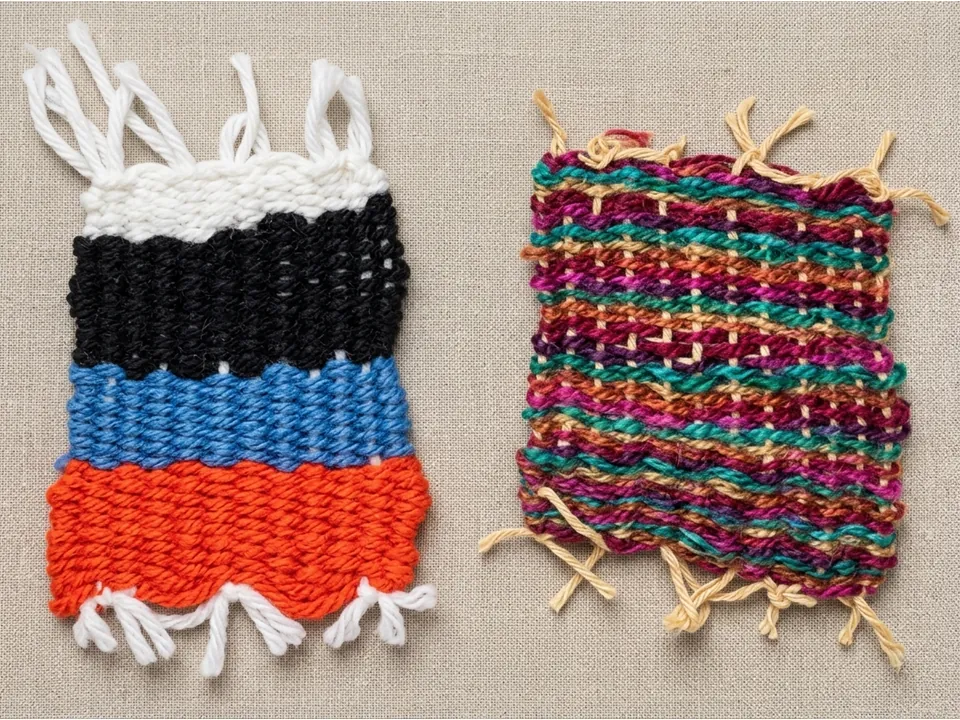
Weaving: Historians believe the Diné learned to weave from their Pueblo neighbors in the 1600s. Diné tradition teaches that Spider Woman taught the People to weave. Weavers shear the sheep, card and spin the wool, dye it with plants, and weave it on an upright loom. Early blankets had stripes; later weavers added diamonds and zigzags. Today Navajo rugs are collected around the world.
Silverwork: In the mid-1800s, Diné men learned silversmithing from Mexican smiths. At first they hammered coins into buttons and bracelets. By the 1880s, they were setting turquoise in silver, creating the jewelry many people picture today.

The Diné Today
The Navajo Nation covers more than 27,000 square miles in Arizona, New Mexico, and Utah, making it the largest reservation in the United States. About 400,000 people are enrolled citizens. The Nation has its own government, with a president and a council, based in Window Rock, Arizona.
Navajo is one of the most widely spoken Native languages in the United States. Diné College, founded in 1968, was the first college created and run by a tribe.
Activities

The Navajo Code Talkers
Learn how Navajo Marines created a code no enemy could break, decode secret messages, and write your own.
For teachers: Code-word matching, decoding with the 1945 code chart, and writing coded messages. Shows Native history continuing into the 1900s.
Start the ActivityWord Match
Drag each word to its definition, or tap a word and then tap its definition.