Squanto (Tisquantum)
Squanto at a Glance
Squanto
- Name: Tisquantum
- People: Patuxet (part of the Wampanoag)
- Home: Patuxet, where Plymouth was later built
- Known for: Helping the Pilgrims
- Died: 1622
Key Facts
- Kidnapped by an English captain in 1614.
- Learned English while in Europe.
- Came home in 1619 to find his people gone.
- Served as a translator for the Pilgrims and Massasoit.
- Taught the Pilgrims to plant corn.
Tap or hover over the card to flip it. Students can copy this information into their organizer before reading.
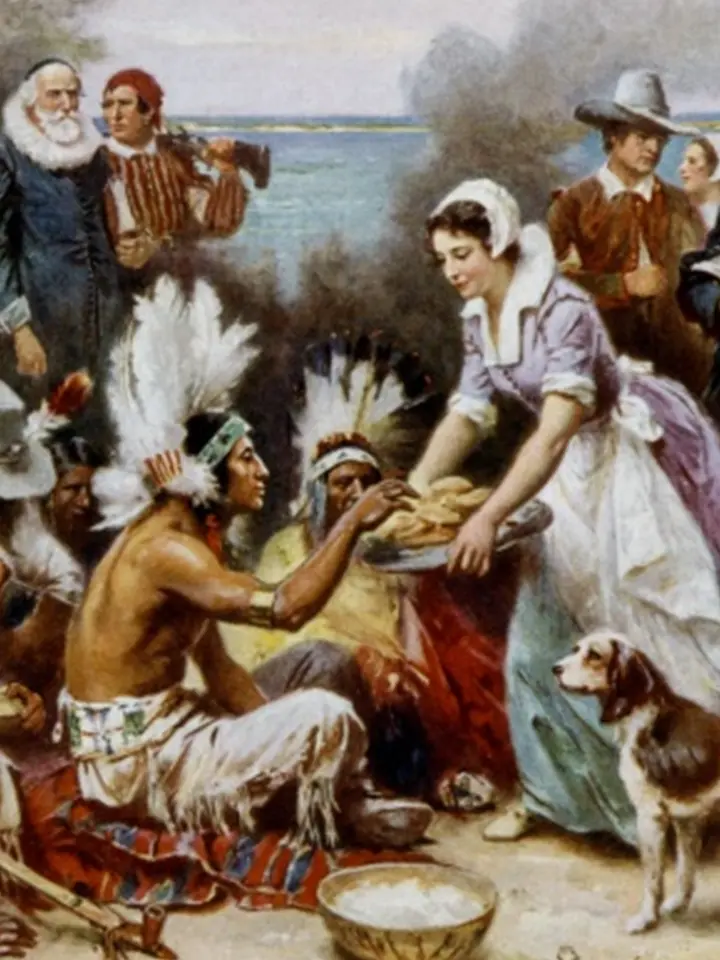
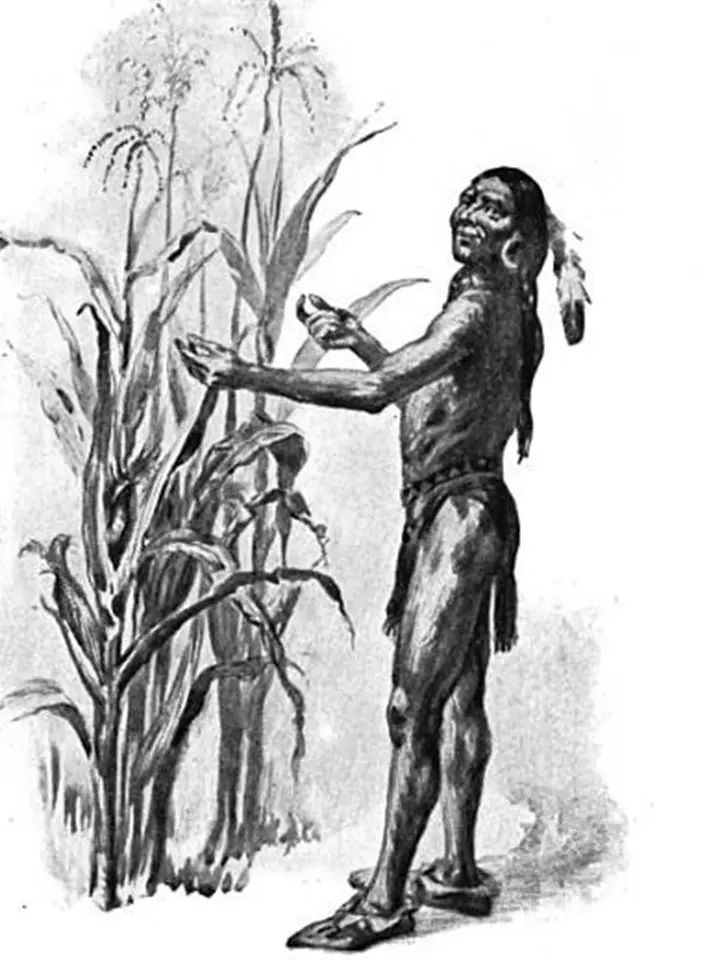
Look Closely: Neither picture on this page was made by someone who saw Squanto. Read the caption under the painting at the top. Jean Leon Gerome Ferris painted it around 1915, almost 300 years after the harvest feast of 1621. Look at the feathered headdresses some of the Native men are wearing. Headdresses like these belonged to Plains nations far to the west. The Wampanoag did not wear them. The picture on the flip card comes from a 1911 book about teaching farming. It was made by a company that sold fertilizer, and it shows Squanto teaching the Pilgrims to plant corn. Why might a fertilizer company want to tell the story of Squanto burying fish to feed the soil? What mistakes might an artist make when painting something that happened 300 years earlier?
A Patuxet Childhood
Squanto’s real name was Tisquantum. He grew up in a village called Patuxet, on the coast of what is now Massachusetts. The Patuxet were one of many groups in the Wampanoag nation. They fished in the bay, hunted deer in the forests, and grew corn, beans, and squash in fields near the shore.
Kidnapped
In 1614, an English sea captain named Thomas Hunt sailed along the coast to trade. Instead, he tricked about twenty Patuxet men, including Squanto, onto his ship and carried them across the ocean to Spain to be sold as slaves. Squanto somehow got free and made his way to England. He lived in London for a time and learned to speak English. Later he sailed with English explorers to Newfoundland, hoping to find a way home.
Coming Home to an Empty Village
In 1619, after about five years away, Squanto finally reached his homeland. What he found was heartbreaking. From 1616 to 1619, a terrible disease brought by European sailors had swept along the coast. Nearly everyone in Patuxet had died. Squanto was one of the last of his people. He went to live with Massasoit, the leader of the Wampanoag, whose people lived nearby. Massasoit did not fully trust him at first.
Meeting the Pilgrims
In December 1620, the Pilgrims began building Plymouth on the very spot where Patuxet had stood. In March 1621, a Native American named Samoset walked into Plymouth alone and greeted the settlers in English. A few days later, he returned with Squanto and Massasoit. With Squanto translating, Governor John Carver and Massasoit agreed to live in peace and to help each other if either was attacked. The agreement lasted for more than fifty years.
Teaching the Pilgrims
Squanto chose to stay at Plymouth. He showed the Pilgrims how to plant corn in small hills and how to bury fish in each hill to feed the soil. He taught them where to catch fish and eels and how to find food in the forest. He also acted as a guide and translator on trading trips. Governor William Bradford later wrote that Squanto was a special help to the colony. With his help, the Pilgrims had a good harvest in the fall of 1621 and held a harvest feast with Massasoit and about ninety Wampanoag men.
Trouble and a Sudden Death
Squanto’s position was not easy. He stood between two very different peoples, and he tried to use his role to gain power of his own. In 1622, he spread false rumors that Massasoit was planning an attack. Massasoit was furious and demanded that the Pilgrims hand Squanto over, but Governor Bradford refused. Later that year, while guiding Bradford on a trading trip on Cape Cod, Squanto became sick with a fever and died.
Remembering Squanto
Squanto is often remembered as the “friendly Indian” who helped the Pilgrims. His real story is more complicated. He survived being kidnapped, lost his entire village, and used the English he had learned to find a new place for himself. Without him, the Pilgrims might not have survived their first year.
Word Match
Drag each word to its definition, or tap a word and then tap its definition.