Pontiac
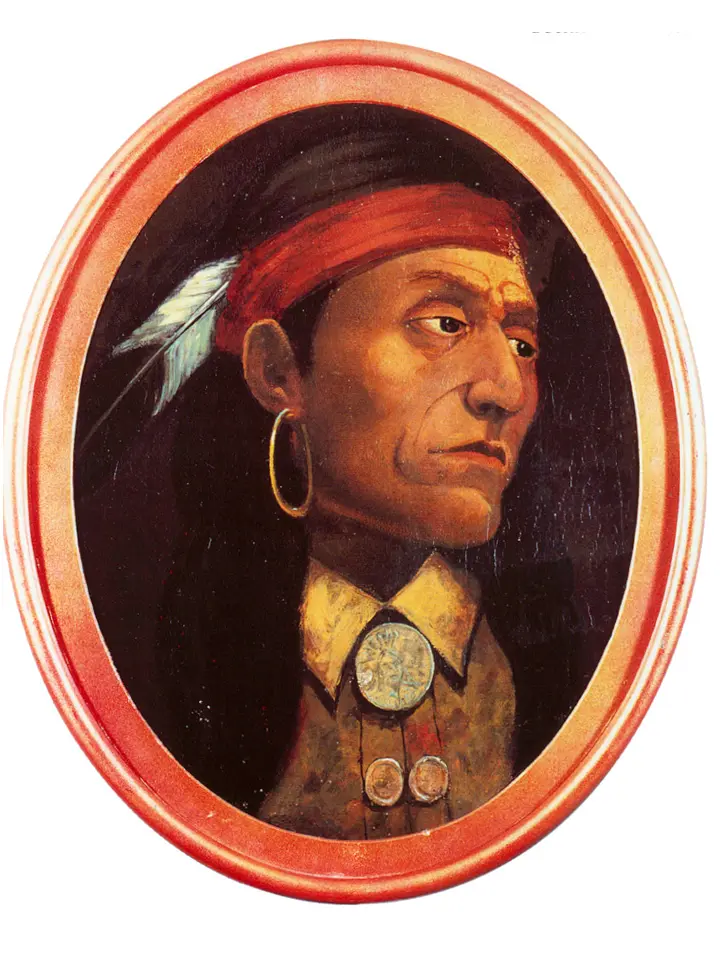
Pontiac at a Glance
Pontiac
- Name: Obwandiyag (Pontiac)
- People: Odawa (Ottawa)
- Home: Near Fort Detroit, in the Great Lakes region
- Known for: Pontiac’s War (1763–1766)
- Died: 1769
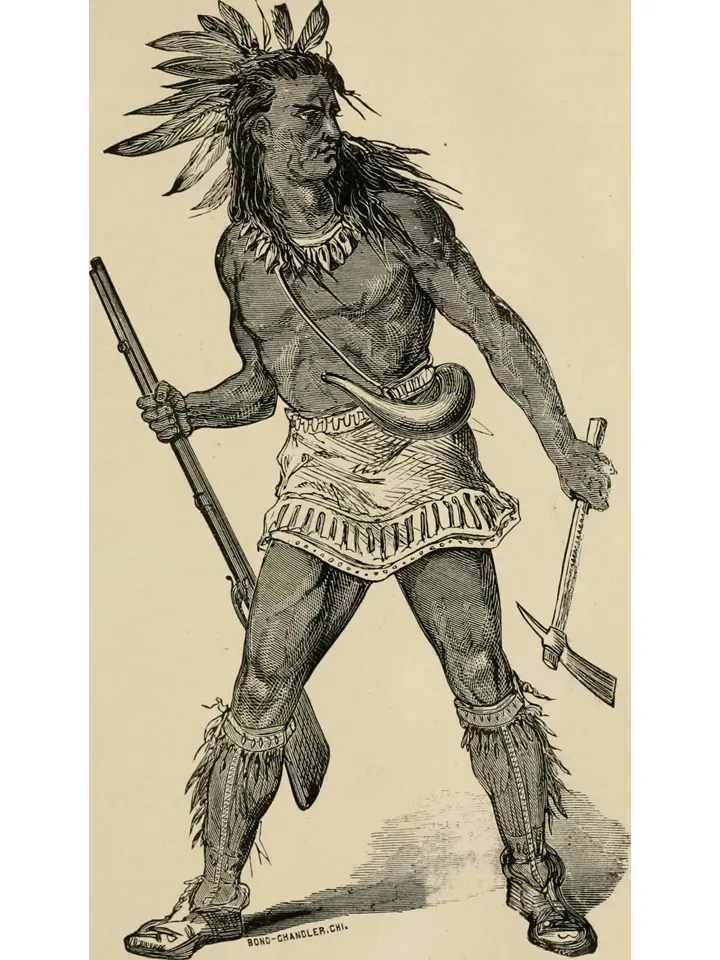
Key Facts
- Was an ally and trading partner of the French.
- Angry at how the British treated Native nations after 1760.
- Led the siege of Fort Detroit in 1763.
- Native warriors captured eight British forts.
- His war helped lead to the Proclamation of 1763.
Tap or hover over the card to flip it. Students can copy this information into their organizer before reading.
Look Closely: Read the caption under the picture at the top. It tells you something important: no one painted Pontiac while he was alive. Both pictures on this page were made long after his death, by artists who never saw him. Compare the painting at the top with the engraving on the flip card. They look like two different men! If two artists imagined the same person so differently, how much can a picture tell us about what Pontiac really looked like? What can it tell us about the artist?
Life Among the Odawa
Pontiac was born around 1720 into the Odawa (Ottawa) nation of the Great Lakes. The Odawa were known as skilled traders. In winter, families moved to hunting grounds to trap beaver, deer, and other animals. In summer, they lived in villages of bark-covered lodges and grew corn, beans, and squash. Many Odawa villages stood near Fort Detroit, where they traded furs with the French for metal knives, kettles, cloth, and guns.
Friends of the French
The French and the Odawa had been trading partners and allies for many years. French traders often married into Native families and gave gifts to Native leaders as a sign of respect. Pontiac grew into a respected warrior and speaker. During the French and Indian War, he and his warriors fought on the side of France against Great Britain.
New Rulers, New Rules
In 1760, the French gave up Fort Detroit and other forts in the Great Lakes region to the British. The British treated Native nations very differently. General Jeffery Amherst stopped the custom of giving gifts. He limited how much gunpowder Native hunters could buy, which made it hard to feed their families. British settlers also began moving onto Native land. Many Native people felt the British saw them as a conquered people.
A Plan to Drive Out the British
A Lenape (Delaware) spiritual leader named Neolin told Native people to turn away from European goods and drive the British out of their lands. Pontiac used these ideas to bring many nations together. In the spring of 1763, he called a great council near Detroit. Odawa, Ojibwe, Potawatomi, Huron, and other nations agreed to fight.
The Siege of Fort Detroit
In May 1763, Pontiac and his warriors entered Fort Detroit with weapons hidden under their blankets. The British commander had been warned of the plan, and his soldiers were armed and waiting. Pontiac called off the attack. A few days later, his warriors surrounded the fort and began a siege that lasted about six months. Meanwhile, Native warriors across the region attacked other British forts and captured eight of them.
The End of the War
Pontiac hoped the French would return to help him. He did not know that France had already signed a peace treaty in February 1763 and given its land to Britain. When he learned this news in October, he ended the siege. That same month, King George III issued the Proclamation of 1763, which said colonists could not settle west of the Appalachian Mountains. In 1766, Pontiac signed a peace agreement with the British.
Pontiac’s Death and Legacy
Pontiac’s fame made some Native leaders jealous, and he lost much of his influence. In 1769, while visiting the village of Cahokia, near St. Louis, he was killed by a man from the Peoria nation. Today, Pontiac is remembered as a leader who brought many nations together to defend their land and way of life. A city in Michigan is named after him.
Word Match
Drag each word to its definition, or tap a word and then tap its definition.