Sacagawea
Sacagawea at a Glance
Sacagawea
- Name: Sacagawea (also spelled Sacajawea)
- People: Lemhi Shoshone
- Home: Lemhi River Valley, in present-day Idaho
- Known for: Traveling with Lewis and Clark
- Died: about 1812
Key Facts
- Captured by Hidatsa raiders at about age 12.
- Joined the Corps of Discovery in 1805 with her baby son.
- Saved important supplies when a boat tipped.
- Helped the explorers get horses from the Shoshone.
- Appears on the U.S. golden dollar coin.
Tap or hover over the card to flip it. Students can copy this information into their organizer before reading.
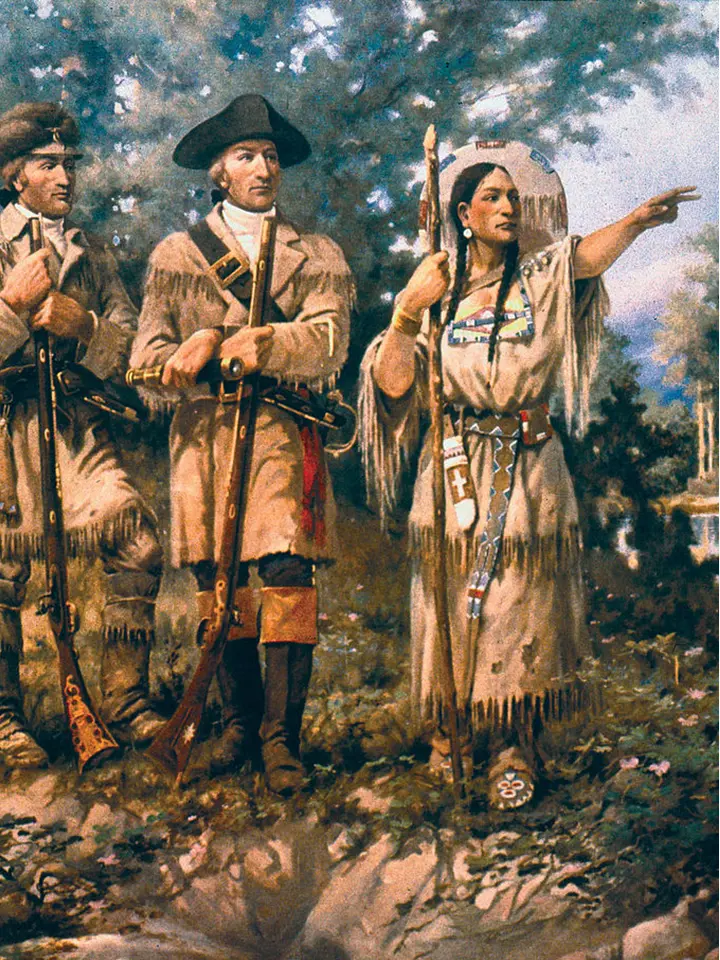
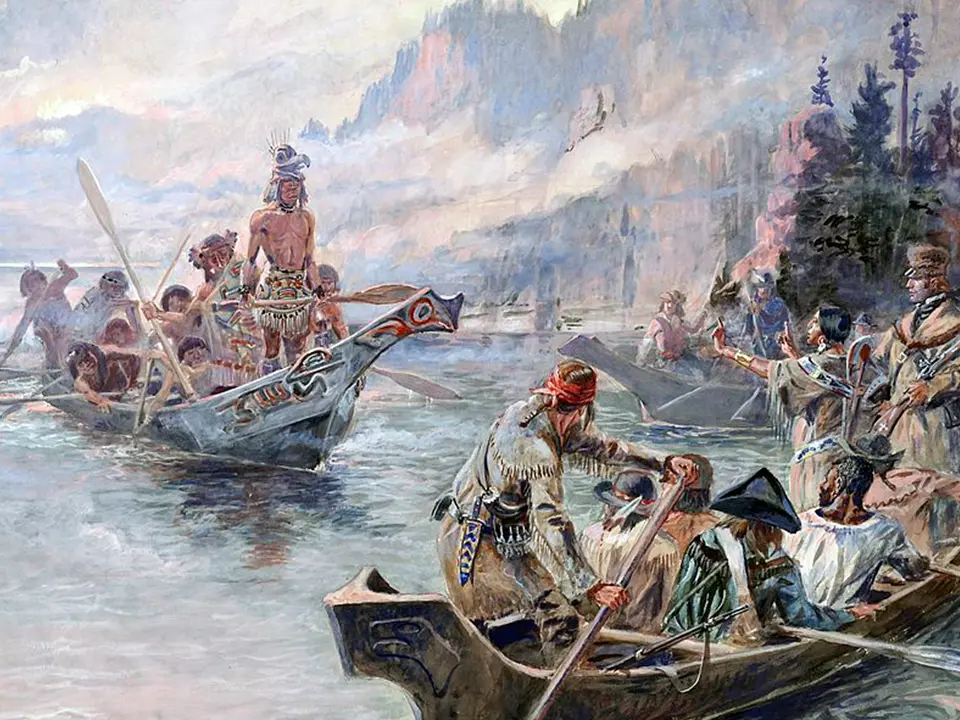
Look Closely: The painting at the top was made about 100 years after the journey, and the painting on the flip card was made about the same time. No picture of Sacagawea was ever made during her life. Many paintings, like this one, show her pointing the way for Lewis and Clark. In fact, she was not the expedition’s main guide. She helped by translating, finding food, and recognizing landmarks from her childhood. Why do you think so many artists chose to paint her pointing the way? How does a painting like this change the way people remember her?
A Shoshone Girl
Sacagawea was born around 1788 among the Lemhi Shoshone, in the Rocky Mountains of what is now Idaho. The Shoshone moved with the seasons. They fished for salmon in the rivers, gathered roots and berries, and crossed the mountains each year to hunt buffalo on the plains. Horses were very important to them.
Captured
When Sacagawea was about 12 years old, her family was camped near the Three Forks of the Missouri River. Hidatsa warriors attacked the camp. Sacagawea was captured and taken hundreds of miles east to the Hidatsa villages along the Knife River, in present-day North Dakota. Later, a French Canadian fur trader named Toussaint Charbonneau took her as one of his wives.
Joining Lewis and Clark
In the fall of 1804, Meriwether Lewis and William Clark arrived near the Hidatsa and Mandan villages with a group called the Corps of Discovery. President Thomas Jefferson had sent them to explore the land of the Louisiana Purchase and find a route to the Pacific Ocean. The captains hired Charbonneau as an interpreter because Sacagawea could speak Shoshone. They knew they would need horses from the Shoshone to cross the mountains. In February 1805, Sacagawea gave birth to a son, Jean Baptiste. Clark nicknamed him “Pomp.”
Brave and Quick-Thinking
In April 1805, the group set off up the Missouri River, with Sacagawea carrying her baby. In May, a strong wind nearly tipped over one of the boats. Sacagawea calmly grabbed the journals, instruments, and medicine that were floating away. Lewis praised her courage and named a river after her. Sacagawea also found roots and berries to eat and recognized landmarks from her childhood. Her presence helped in another way. A woman with a baby showed other Native nations that the group was not a war party.
A Surprise Reunion
In August 1805, the explorers finally met a band of Shoshone. When Sacagawea was brought in to translate, she recognized the chief. He was her brother, Cameahwait! She was overjoyed. With her help, the Shoshone traded horses to the explorers so they could cross the Rocky Mountains.
To the Pacific and Back
The Corps of Discovery crossed the mountains and followed the rivers west, reaching the Pacific Ocean in November 1805. When the group voted on where to build their winter fort, Sacagawea was allowed to give her opinion, something unusual for a woman at that time. On the return trip in 1806, she guided Clark’s group through a mountain pass in present-day Montana. Clark later wrote that she deserved a greater reward than they could give her.
Later Life and Legacy
After the journey, Sacagawea and Charbonneau lived for a time near St. Louis, and Clark helped pay for Pomp’s schooling. Most historians believe Sacagawea became ill and died in December 1812, when she was only about 25. Some Shoshone stories say she lived to old age in Wyoming. Today, more statues honor Sacagawea than almost any other American woman, and her picture appears on the U.S. golden dollar coin.
Word Match
Drag each word to its definition, or tap a word and then tap its definition.