Tecumseh
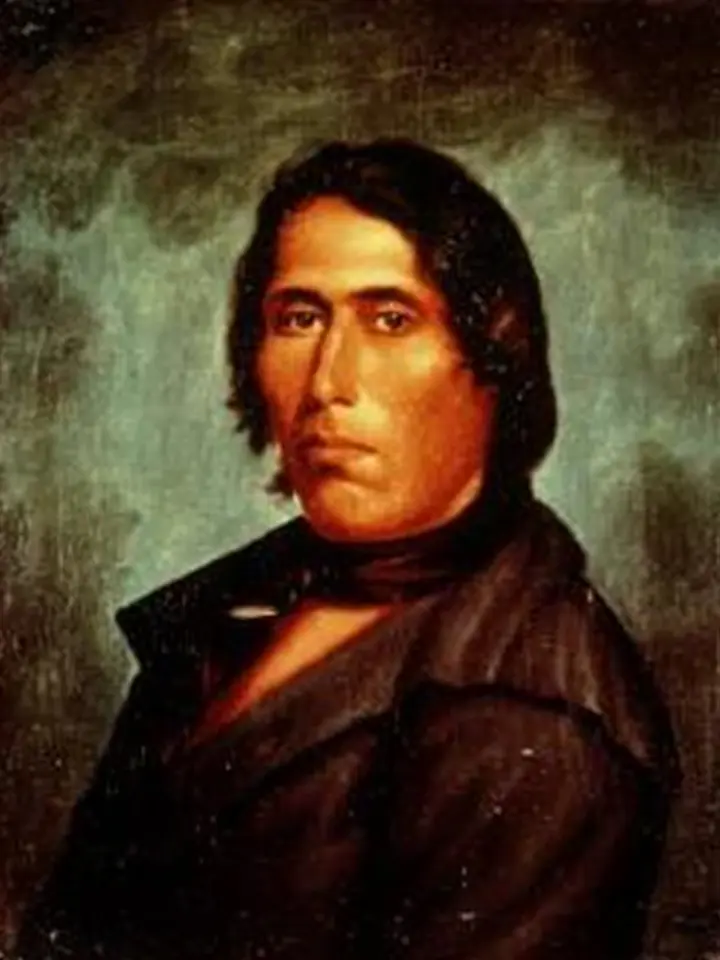
Tecumseh at a Glance
Tecumseh
- Name: Tecumseh (“Shooting Star”)
- People: Shawnee
- Home: Ohio country
- Known for: Uniting Native nations; War of 1812
- Died: 1813, Battle of the Thames
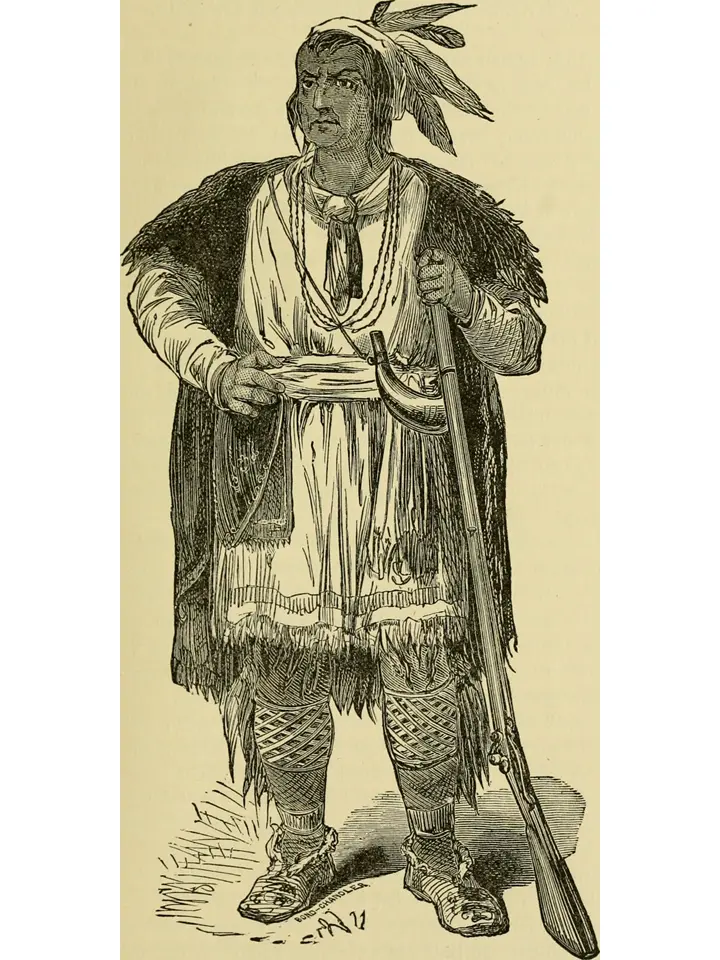
Key Facts
- Lost his father in battle when he was a small boy.
- Refused to sign the Treaty of Greenville (1795).
- Started Prophetstown with his brother Tenskwatawa.
- Helped the British capture Detroit in 1812.
- Killed at the Battle of the Thames in Canada.
Tap or hover over the card to flip it. Students can copy this information into their organizer before reading.
Look Closely: Read the caption under the picture at the top. No confirmed portrait of Tecumseh was made while he was alive. Artists created pictures of him years after his death, using descriptions from people who had known him. Compare the painting at the top with the engraving on the flip card. Look at his face, his hair, and his clothing. What is the same in both pictures? What is different? Why might two artists picture the same person in different ways?
A Shawnee Childhood
Tecumseh was born around 1768 in the Ohio country. His name means “Shooting Star” or “Panther Crossing the Sky.” The Shawnee lived in villages, grew corn, beans, and squash, and hunted in the forests. When Tecumseh was about six, his father was killed in a battle with Virginia soldiers who wanted Shawnee land. His older brother Chiksika taught him to hunt and fight.
Growing Up at War
During Tecumseh’s youth, American settlers kept pushing into the Ohio country, and Shawnee villages were burned more than once. Tecumseh became a skilled warrior and a powerful speaker. He was known for treating prisoners kindly at a time when many did not. In 1794, American soldiers defeated a group of Native nations at the Battle of Fallen Timbers. The next year, many chiefs signed the Treaty of Greenville, giving up most of Ohio. Tecumseh refused to sign.
Two Brothers, One Dream
Tecumseh’s younger brother, Tenskwatawa, became a religious leader known as “the Prophet.” He told Native people to give up alcohol and European ways and return to their traditions. In 1808, the brothers started a village called Prophetstown near the Tippecanoe River in Indiana. Thousands of people from many nations came to live there. Tecumseh believed the land belonged to all Native people together, so no single nation had the right to sell it. He dreamed of uniting the nations from the Great Lakes to the Gulf of Mexico.
Standing Up to Harrison
William Henry Harrison was governor of the Indiana Territory. In 1809, he got a few chiefs to sign the Treaty of Fort Wayne, which sold about three million acres of land. Tecumseh was furious. He met Harrison at Vincennes in 1810 and warned him that the treaty was unfair. Then Tecumseh traveled south to ask the Creek, Choctaw, and other nations to join his alliance.
The Battle of Tippecanoe
While Tecumseh was away in 1811, Harrison marched about 1,000 soldiers toward Prophetstown. Tenskwatawa told his warriors that his spiritual power would protect them. They attacked Harrison’s camp before dawn, but they lost the battle, and Harrison’s troops burned Prophetstown. Tecumseh returned to find his dream badly damaged.
The War of 1812
When war broke out between the United States and Great Britain in 1812, Tecumseh joined the British. He hoped a British victory would protect Native land. At Fort Detroit, he had his warriors pass through a clearing again and again, so the Americans thought his force was much larger than it was. The American commander surrendered the fort without a fight. In 1813, after the Americans won the Battle of Lake Erie, the British general Henry Procter retreated into Canada. Tecumseh begged him to stand and fight.
Tecumseh’s Last Battle
On October 5, 1813, Harrison’s army caught up with the British and Native forces at the Thames River in Canada. The British soldiers quickly fled, but Tecumseh and his warriors kept fighting. Tecumseh was killed in the battle. With his death, his dream of a united Native nation came to an end. Harrison later became President of the United States. Tecumseh is remembered as one of the greatest Native American leaders in history.
Word Match
Drag each word to its definition, or tap a word and then tap its definition.