The Berlin Wall: A Divided City
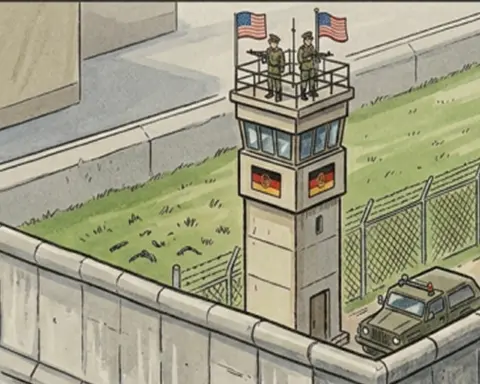
Fast Facts: A City Divided
The Berlin Wall
- Location: Berlin, Germany
- Built: August 12–13, 1961
- Height: About 12 feet tall
- Length: Over 100 miles of barriers
- Stood For: 28 years
Hover or tap to see more facts!
More Fast Facts
- Sides: East Berlin (communist) and West Berlin (democratic)
- Escapes: About 5,000 people escaped
- Deaths: Around 200 people were killed trying to escape
- Famous Speech: Ronald Reagan in 1987
- Wall Falls: November 9, 1989
The Berlin Wall: A Divided City
A City Split in Two
After World War II, Germany was divided into East and West. The capital city, Berlin, was also split, even though it was inside the Soviet‑controlled East. West Berlin was democratic, while East Berlin was controlled by a communist government. Many people preferred life in the West, and between 1949 and 1959, more than 2 million people left East Berlin.
Building the Wall
To stop people from leaving, East German soldiers began building a barrier on August 12–13, 1961. At first, it was only barbed wire, but it was soon replaced with a 12‑foot‑high concrete wall. Streets, train lines, and neighborhoods were suddenly cut in half. Families woke up to find they could no longer cross to the other side of the city.
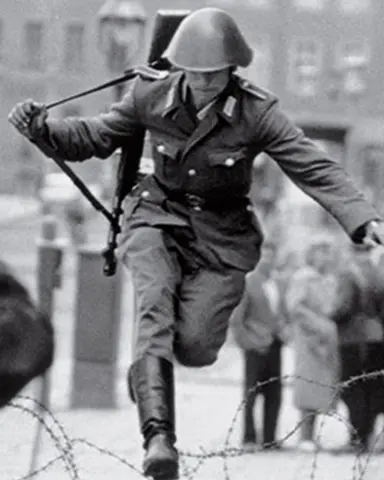
Guard Towers and Escape Attempts
East Germany added guard towers along the wall. Soldiers were ordered to stop anyone trying to escape. Even with the danger, many people still tried. Some dug tunnels or climbed over the wall. Over the 28 years the wall stood, about 5,000 people escaped, and around 200 people were killed trying to reach freedom.
A Symbol of the Cold War
The Berlin Wall became a powerful symbol of the Cold War. It showed the sharp divide between communist East Germany and democratic West Germany. In 1987, U.S. President Ronald Reagan visited West Berlin and called on the Soviet leader to remove the wall.
The Wall Falls
By the late 1980s, people across Eastern Europe demanded more freedom. On November 9, 1989, East German officials announced that the borders would open. Crowds gathered at the wall, celebrating as people crossed freely between East and West Berlin. Soon after, Germany began the process of reunification, becoming one nation again.
Word Match
Drag the vocabulary words to their correct definitions!
Vocabulary Words
Definitions
Lesson 2 — The Berlin Wall Quiz
Activities & Extensions
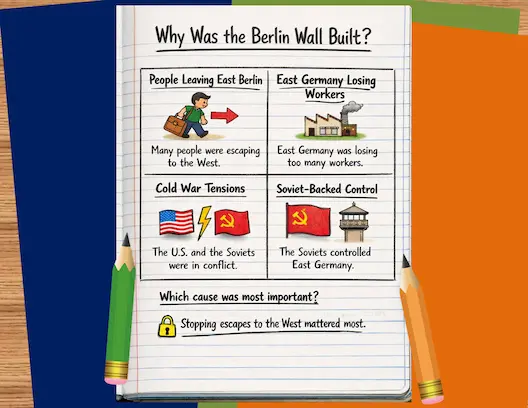
Students create a simple four‑corner cause chart to understand why the Berlin Wall was built. This helps them see how different Cold War pressures led East Germany to close the border and divide the city.
How to Do It: Students divide a notebook page into four sections and title it “Why Was the Berlin Wall Built?” They label the four corners: People Leaving East Berlin, East Germany Losing Workers, Cold War Tensions, and Soviet‑Backed Control of the East. In each section, they write one sentence explaining the cause and add a small symbol or sketch.
Optional Extension: At the bottom of the page, students answer the question “Which cause mattered most, and why?” using evidence from the article.
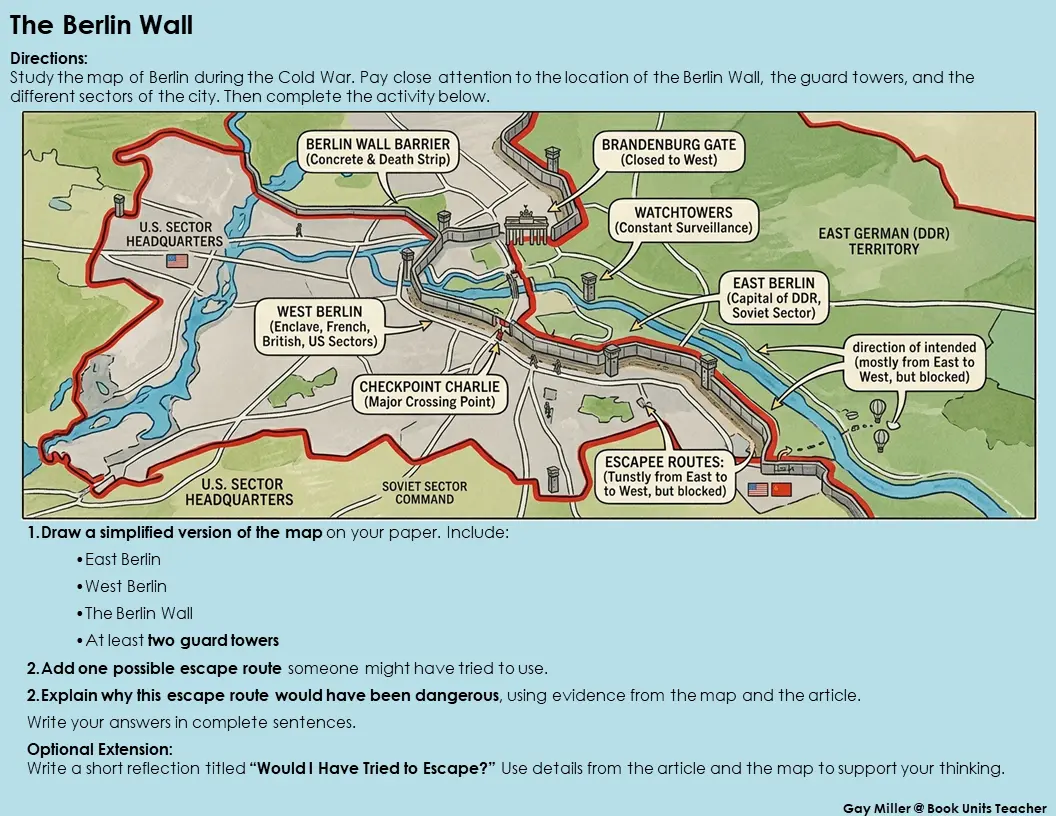
Students examine a simple map of Berlin to understand why the wall’s location made escape so difficult. This activity helps students visualize how the wall cut through neighborhoods and why guard towers were placed where they were.
How to Do It: Students draw a basic map showing East Berlin, West Berlin, the Berlin Wall, and at least two guard towers. Then they mark one possible escape route and explain why it would have been dangerous.
Optional Extension: Students write a short reflection titled “Would I Have Tried to Escape?” using evidence from the article.
1960s America Navigation
Explore the Full 1960s America Unit
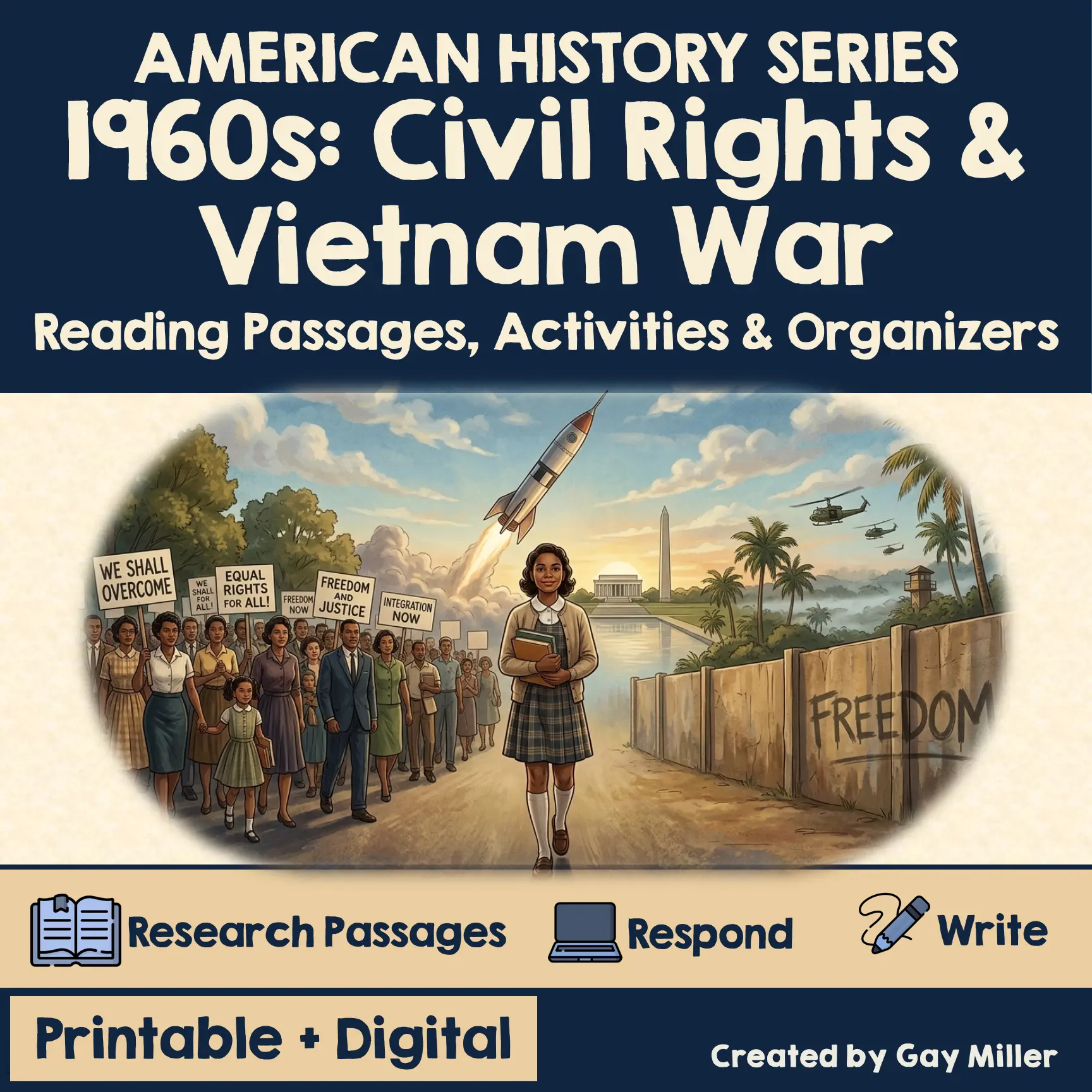
This complete history unit includes research passages, organizers, writing tasks, quizzes, activities, and website research — all in printable and digital formats. Everything you need to teach the 1960s America with confidence.
View the Full Unit on TPT