The Cuban Missile Crisis
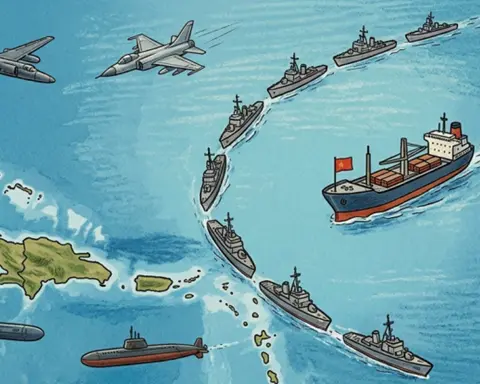
Fast Facts: U.S.–Cuba Tensions
U.S.–Cuba Tensions
- New Leader: Fidel Castro (1959)
- Cold War Rival: Soviet Union
- Failed Invasion: Bay of Pigs (1961)
- Major Threat: Soviet missile bases in Cuba
- U.S. Response: Naval blockade (1962)
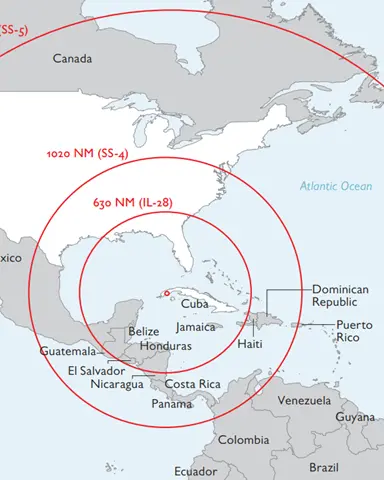
U.S.–Cuba Tensions at a Glance
- Castro’s revolution brought a communist government to Cuba, only 90 miles from Florida.
- The United States trained Cuban exiles hoping to remove Castro from power.
- The Bay of Pigs invasion failed, increasing Cold War tensions.
- American spy planes discovered Soviet nuclear missiles being built in Cuba.
- President Kennedy ordered a naval blockade, leading to a peaceful agreement.
Cuba’s New Government
Cuba is an island nation only 90 miles south of Florida. In the 1950s, Cuba went through a revolution. A new leader, Fidel Castro, took control in 1959. Castro became friends with the Soviet Union, a communist country and a major rival of the United States during the Cold War.
Growing Tensions
Many Cubans did not like Castro’s government and fled to the United States. American leaders worried about having a communist nation so close to home. President Eisenhower approved a plan to train Cuban exiles in guerrilla warfare. When John F. Kennedy became president, he continued the plan.
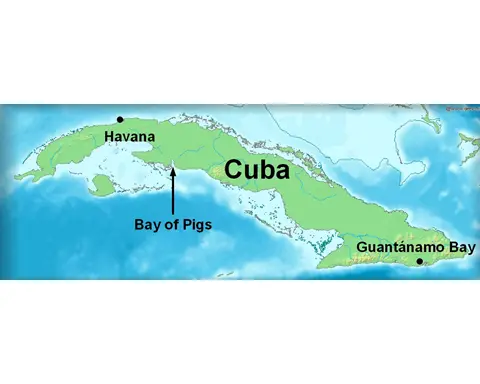
The Bay of Pigs
In April 1961, the United States helped the exiles invade Cuba. About 1,500 men landed at the Bay of Pigs. The plan failed quickly. Cuban planes sank the invaders’ ships, and Castro’s forces surrounded the exiles. Most were captured, and the failed invasion embarrassed the United States.
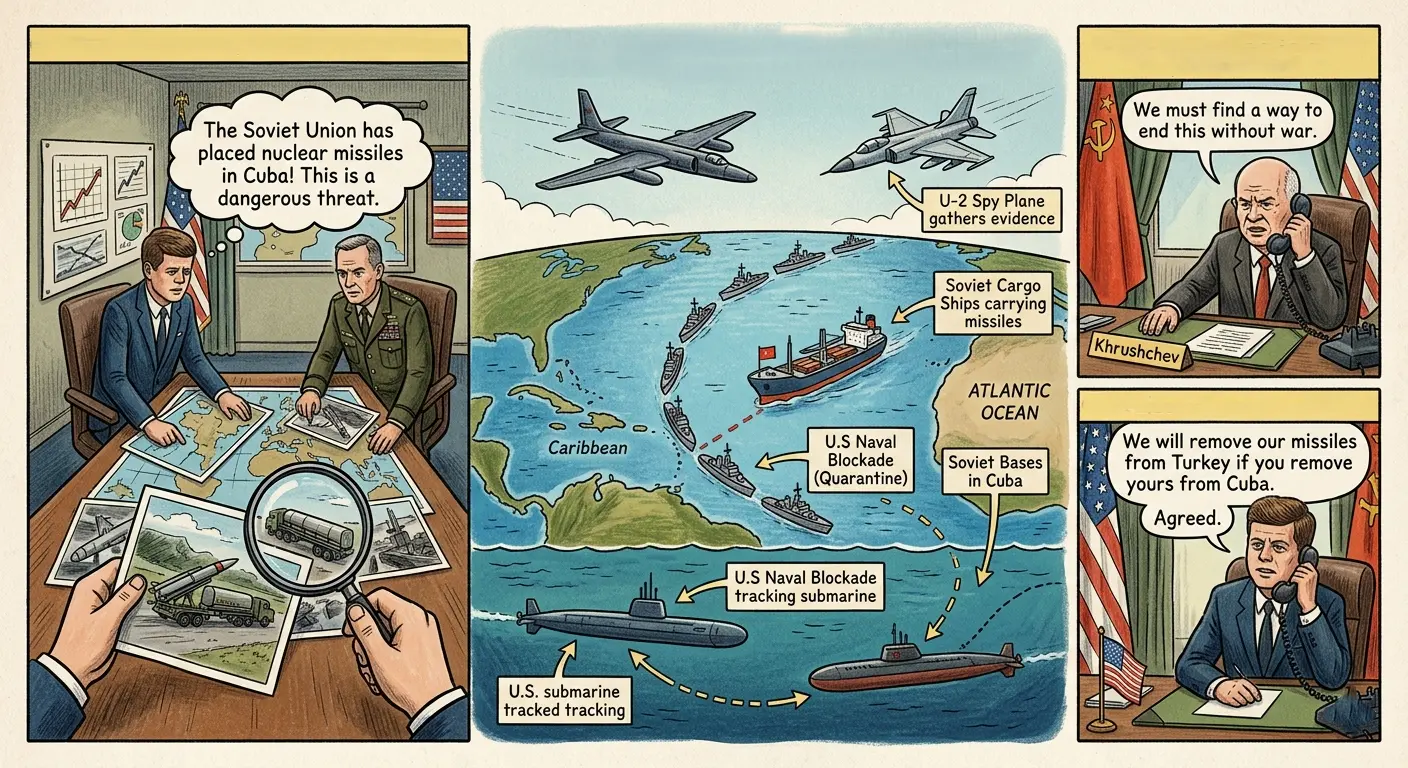
Missiles in Cuba
In 1962, American spy planes discovered that the Soviet Union was building missile bases in Cuba. These missiles could reach the United States in minutes. President Kennedy ordered a blockade around Cuba to stop any ship carrying missiles.
A Dangerous Standoff
For several days, the world watched as Soviet ships approached the blockade. Many feared a nuclear war. Finally, the Soviet ships turned back. The Soviet Union agreed to remove its missiles from Cuba, and the United States later removed its missiles from Turkey.
A Peaceful Ending
The Cuban Missile Crisis lasted only 13 days, but it was one of the most dangerous moments of the Cold War. Thanks to careful negotiation, the crisis ended peacefully.
Word Match
Drag the vocabulary words to their correct definitions!
Vocabulary Words
Definitions
Lesson 1 — The Cuban Missile Crisis Quiz
Activities & Extensions
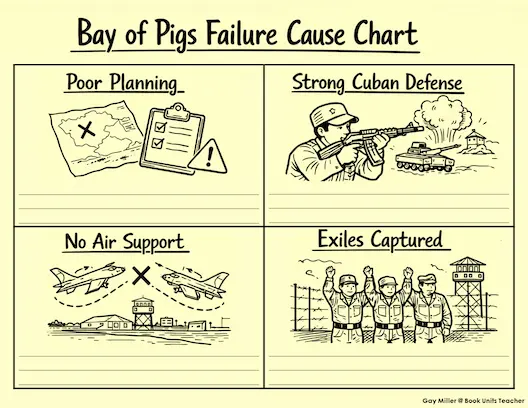
Students create a simple four‑box cause chart to understand why the Bay of Pigs invasion failed. This helps them move beyond just “what happened” to thinking about the reasons the plan did not work.
How to Do It: Students draw a 2×2 chart in their notebooks titled “Why Did the Bay of Pigs Fail?” and label the four boxes: Poor Planning, Strong Cuban Defense, No Air Support, and Exiles Captured. In each box, they write a short explanation and add a small symbol or sketch.
Optional Extension: Students add a fifth box at the bottom titled “What Was the Biggest Reason?” and explain which cause they think mattered most and why.
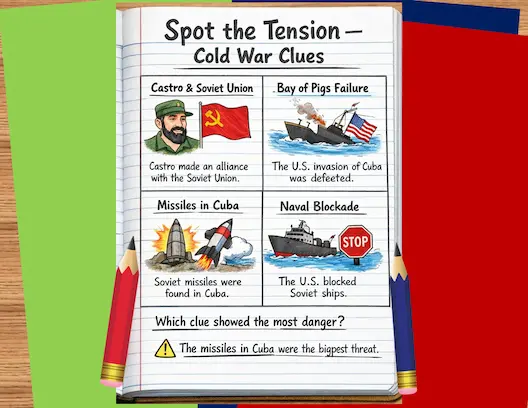
Students identify key clues from the article that show rising tension between the United States, Cuba, and the Soviet Union. This activity helps them see how several events connected to create a dangerous situation.
How to Do It: Students divide a notebook page into four sections and title it “Spot the Tension — Cold War Clues.” Using the reading, they choose four clues such as Castro’s alliance with the Soviet Union, the failed Bay of Pigs invasion, the discovery of missiles in Cuba, and the U.S. naval blockade. For each clue, they write one sentence explaining it and draw a small symbol.
Optional Extension: At the bottom of the page, students answer the question “Which clue showed the most danger?” and support their answer with evidence from the article.
1960s America Navigation
Explore the Full 1960s America Unit

This complete history unit includes research passages, organizers, writing tasks, quizzes, activities, and website research — all in printable and digital formats. Everything you need to teach the 1960s America with confidence.
View the Full Unit on TPT