Sitting Bull
Sitting Bull at a Glance
Sitting Bull
- Name: Tatanka Iyotake (Sitting Bull)
- People: Hunkpapa Lakota (Sioux)
- Home: The northern Great Plains
- Known for: Leading the Lakota; the Battle of the Little Bighorn
- Died: 1890, Standing Rock Reservation
Key Facts
- His boyhood name was “Slow.”
- Earned the name Sitting Bull at age 14.
- Was both a war leader and a holy man.
- Had a vision of victory before the Little Bighorn.
- Traveled with Buffalo Bill’s Wild West show in 1885.
Tap or hover over the card to flip it. Students can copy this information into their organizer before reading.
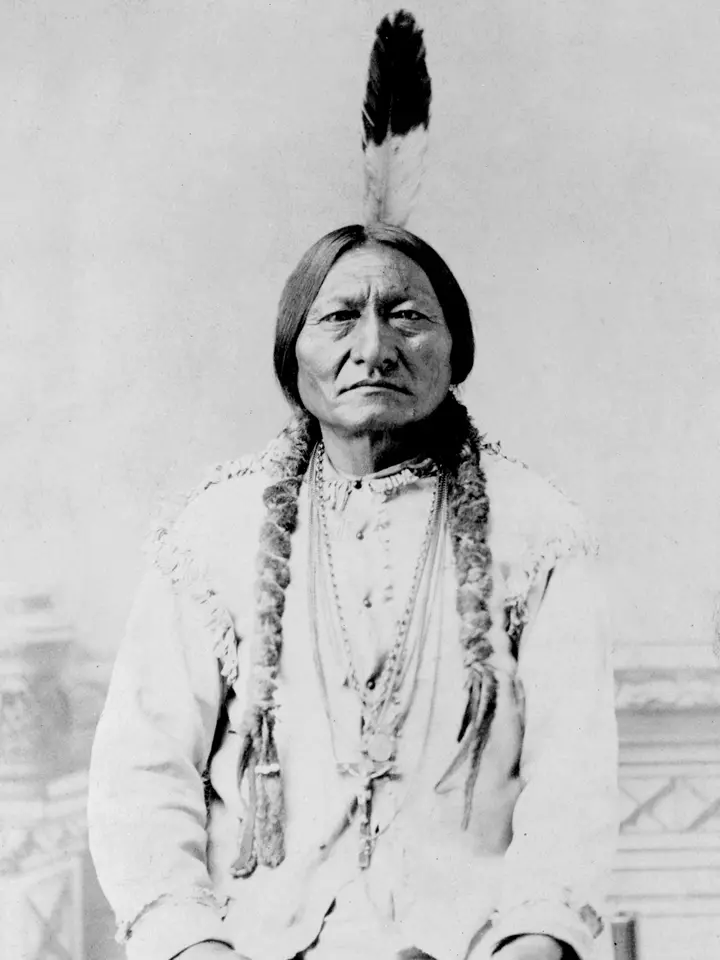
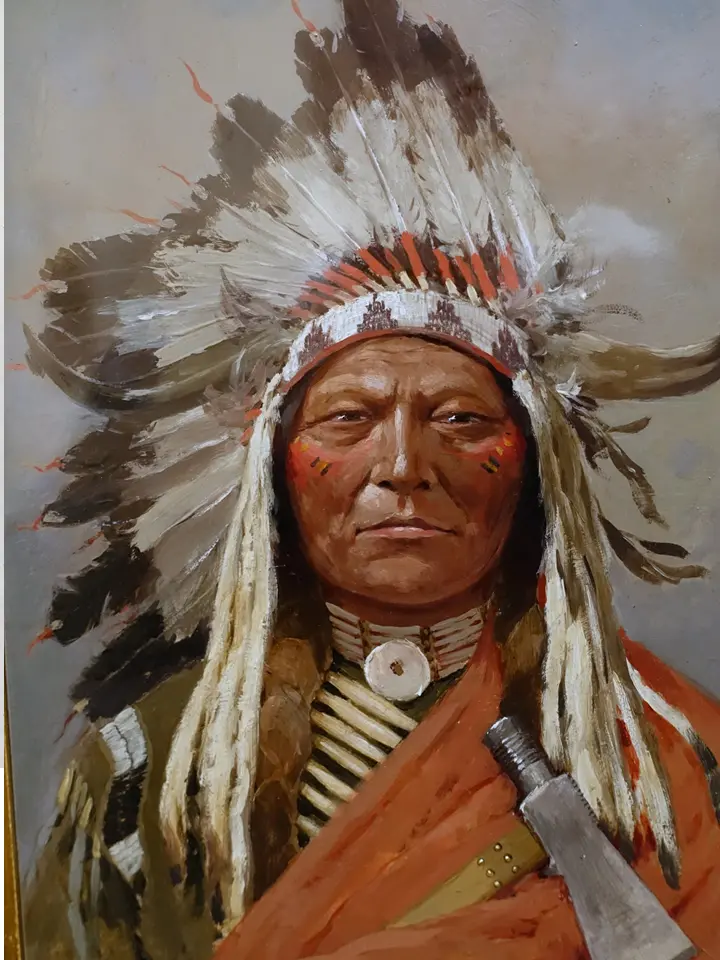
Look Closely: The painting on this card was made by artist Henry Farny in 1899, nine years after Sitting Bull died. Farny had met Sitting Bull, but he painted this picture from a photograph. In that photograph, Sitting Bull wore just one feather in his hair. Farny painted him in a full feather headdress instead. Compare the painting with the photograph at the top of this page. Why do you think the artist added the headdress? How can paintings change the way people picture someone from history?
A Boy Called Slow
Sitting Bull was born around 1831 along the Grand River, in present-day South Dakota. He was a member of the Hunkpapa band of the Lakota, part of the people often called the Sioux. As a boy he was called “Slow” because he was careful and took his time. When he was 14, he rode bravely into battle against the Crow and touched an enemy with a stick, an act called “counting coup.” To honor him, his father gave him his own name: Tatanka Iyotake, or Sitting Bull.
Life on the Plains
The Lakota followed the great buffalo herds across the plains. Buffalo gave them almost everything they needed. They ate the meat, made tipis and clothing from the hides, and turned bones and horns into tools and cups. Sitting Bull became a respected warrior and a member of the Strong Heart society. He was also a wičháša wakȟáŋ, or holy man, known for his visions and his prayers for his people.
A Leader Who Would Not Sell
As more settlers, soldiers, and railroads came west, the buffalo began to disappear. In 1868, the Treaty of Fort Laramie promised the Lakota a large reservation that included the Black Hills, a place sacred to them. Sitting Bull did not sign the treaty, and he refused to live on a reservation. Around this time, several Lakota bands chose him as their leading chief.
Gold in the Black Hills
In 1874, an Army expedition led by George Armstrong Custer found gold in the Black Hills. Thousands of miners rushed onto Lakota land, breaking the treaty. The government ordered all Lakota to move onto the reservation. Many Lakota, Cheyenne, and Arapaho people gathered with Sitting Bull instead.
The Battle of the Little Bighorn
In June 1876, during a Sun Dance ceremony, Sitting Bull had a vision of soldiers falling upside down into the Lakota camp. He believed it meant a great victory was coming. A few weeks later, on June 25, Custer’s soldiers attacked the large camp along the Little Bighorn River in Montana. Lakota and Cheyenne warriors, led by Crazy Horse, Gall, and others, defeated them. Custer and all of the soldiers with him were killed.
Canada and Surrender
After the battle, the Army sent many more soldiers to the plains. Sitting Bull led his followers north to Canada. There were few buffalo, and his people grew hungry. In 1881, he returned to the United States and surrendered at Fort Buford. He had his young son hand over his rifle. After two years as a prisoner, he was sent to the Standing Rock Reservation. In 1885, he toured with Buffalo Bill’s Wild West show for four months, where he became friends with sharpshooter Annie Oakley.
The Ghost Dance and Sitting Bull’s Death
Life on the reservation was hard. In 1890, a Paiute man named Wovoka taught a religion called the Ghost Dance. Its followers believed the dance would bring back the buffalo and the old way of life. Government agents feared it would lead to war. On December 15, 1890, Lakota police were sent to arrest Sitting Bull. A fight broke out, and Sitting Bull was shot and killed. Two weeks later, U.S. soldiers killed hundreds of Lakota at Wounded Knee. Sitting Bull is remembered as a leader who never stopped protecting his people’s freedom.
Word Match
Drag each word to its definition, or tap a word and then tap its definition.