Osceola
Osceola at a Glance
Osceola
- Name: Osceola (born Billy Powell)
- People: Seminole; born Creek (Muscogee)
- Home: Born in Alabama; lived in Florida
- Known for: Leading resistance in the Second Seminole War
- Died: 1838, at Fort Moultrie, South Carolina
Key Facts
- Moved to Florida as a boy after the Creek War.
- Spoke out against the Treaty of Payne’s Landing.
- Became a leader of the Second Seminole War (1835–1842).
- Captured in 1837 while under a flag of truce.
- Died in prison in January 1838.
Tap or hover over the card to flip it. Students can copy this information into their organizer before reading.
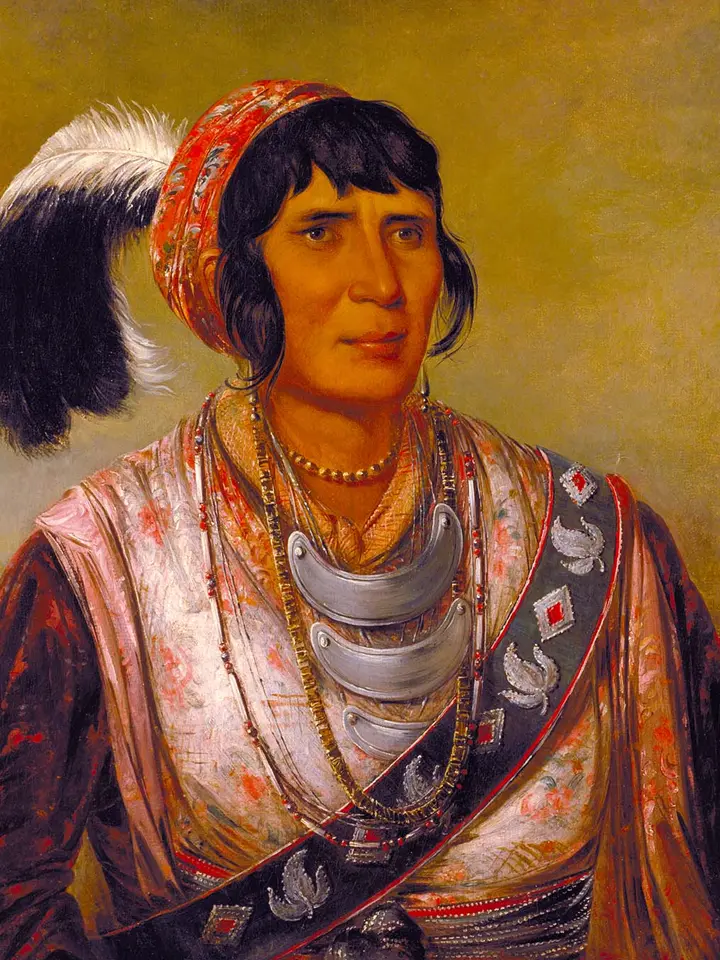
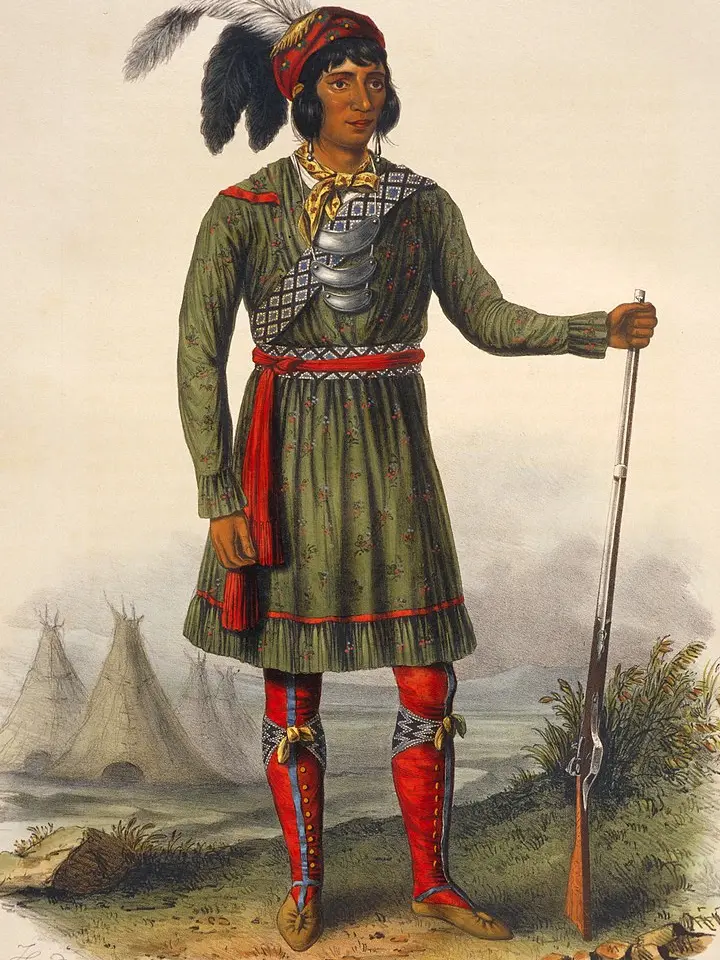
Look Closely: Read the caption under the picture at the top. George Catlin painted Osceola from life in January 1838, while Osceola was a prisoner at Fort Moultrie and very sick. He died just days later. Look at the details: the feathers in his headwrap, the silver crescents hanging around his neck, and his colorful clothing. Catlin also painted the full-length picture on the flip card. Osceola was a sick prisoner, yet he is dressed in fine clothing. What do you think Osceola wanted people to remember about him?
A Creek Boy
Osceola was born in 1804 in a Creek (Muscogee) town called Tallassee, in what is now Alabama. As a boy he was called Billy Powell. His mother was Creek, and his family was of mixed Creek, Scottish, and English ancestry. He was raised in the Creek way of life. In 1813 and 1814, war broke out among the Creek. One side, called the Red Sticks, fought against American settlers and soldiers led by Andrew Jackson. Osceola’s family was on the Red Stick side, and they lost.
A New Home in Florida
After the war, Osceola and his mother fled south to Florida. They joined the Seminole, a people made up of Creek and other Native groups who had moved to Florida. Many Africans who had escaped slavery also lived among the Seminole. As a young man, Osceola took part in a ceremony using a special “black drink.” His name comes from words meaning “black drink singer.”
Forced Off the Land
In 1823, some Seminole chiefs signed the Treaty of Moultrie Creek, which moved the Seminole onto a reservation in central Florida. The land was poor and hard to farm. Then, in 1830, President Andrew Jackson signed the Indian Removal Act. The government wanted all Native nations in the Southeast to move west of the Mississippi River. In 1832, a few Seminole leaders signed the Treaty of Payne’s Landing, agreeing to move west. Many Seminole said they had been tricked.
“The Only Treaty I Will Make”
Osceola was not a chief by birth, but he became a powerful voice for staying in Florida. A famous story says that when U.S. officials pushed the leaders to agree to move, Osceola stabbed the treaty paper with his knife and said, “This is the only treaty I will make.” No one knows whether this exact event happened, but the story shows how strongly he felt.
The Second Seminole War
In December 1835, the Seminole began fighting to stay in Florida. This was the start of the Second Seminole War. Osceola became one of its most famous leaders. The Seminole knew the swamps and forests well. They hid in the Everglades and made surprise attacks, then disappeared. The U.S. Army had more soldiers and supplies, but it could not defeat them.
Captured Under a White Flag
In October 1837, Osceola came near St. Augustine to talk with the U.S. Army under a white flag of truce. A white flag meant the meeting should be safe. Instead, General Thomas Jesup had him seized and taken prisoner. Many Americans were angry that the Army had broken the rules of a truce. Osceola was sent to Fort Moultrie in South Carolina. He was already sick with malaria, and he died there on January 30, 1838.
A Fight That Did Not End
The war went on until 1842. It was one of the longest and most costly wars the United States fought against a Native nation. Most Seminole were forced to move to Indian Territory, but a few hundred stayed hidden deep in the Everglades. Their descendants still live in Florida today. Many towns, a county, and a national forest in Florida are named after Osceola.
Word Match
Drag each word to its definition, or tap a word and then tap its definition.