Black Hawk
Black Hawk at a Glance
Black Hawk
- Name: Ma-ka-tai-me-she-kia-kiak (Black Hawk)
- People: Sauk
- Home: Saukenuk, on the Rock River in Illinois
- Known for: The Black Hawk War (1832)
- Died: 1838, in Iowa
Key Facts
- Became a warrior when he was about 15.
- Said the 1804 Treaty of St. Louis was unfair.
- Fought with the British in the War of 1812.
- Led about 1,000 Sauk and Meskwaki back to Illinois in 1832.
- His life story was the first Native American autobiography published in the U.S.
Tap or hover over the card to flip it. Students can copy this information into their organizer before reading.
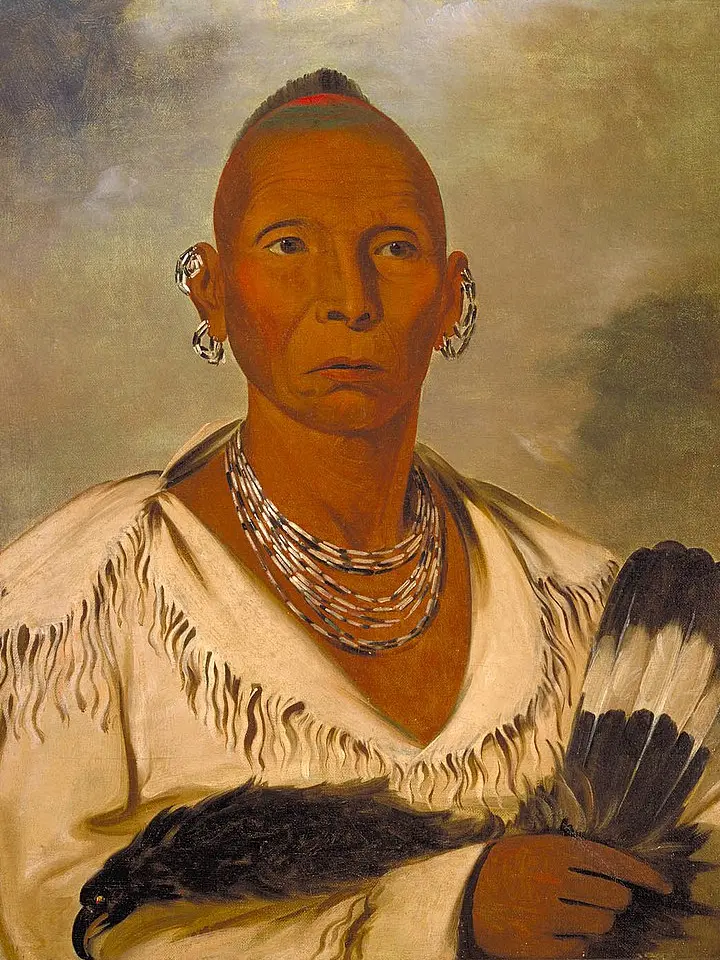
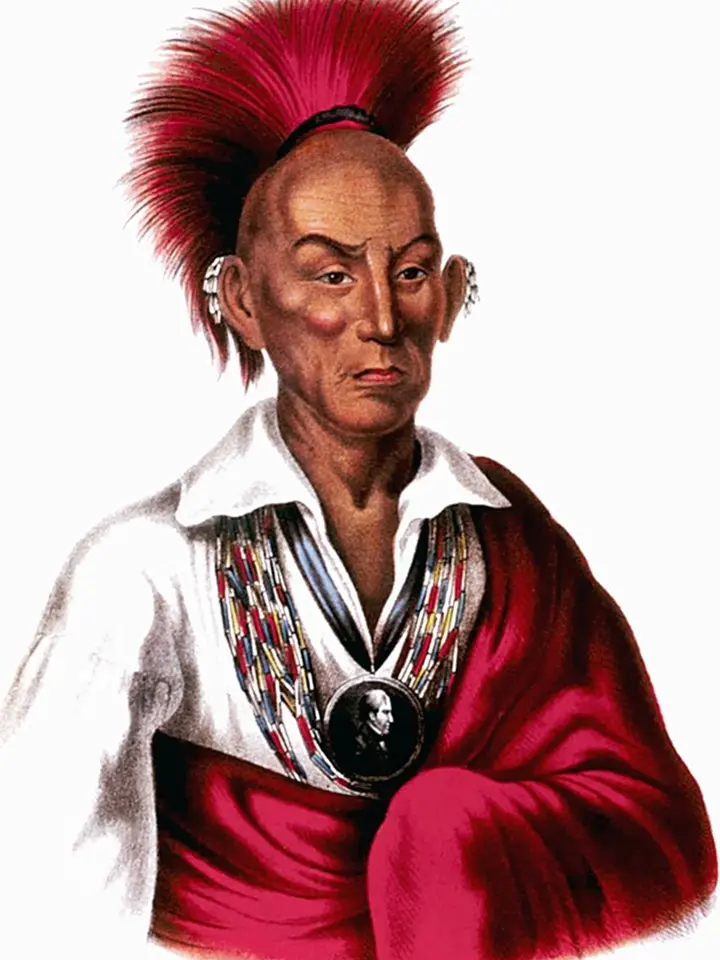
Look Closely: Read the caption under the picture at the top. George Catlin painted Black Hawk from life in 1832, while Black Hawk was a prisoner after the Black Hawk War. Look at what Black Hawk is holding: a fan made from the feathers and body of a hawk. The picture on the flip card was painted by Charles Bird King in 1837, when Black Hawk visited Washington, D.C. Later it was printed in color in a famous book about Native American leaders. Look closely at the large medal on Black Hawk’s chest. It shows a man’s face. Governments gave medals like this, called peace medals, to Native leaders. Both artists saw Black Hawk in person. What details are different in their pictures? Why might the same man look different in two portraits?
Home at Saukenuk
Black Hawk was born in 1767 in Saukenuk, a large Sauk village where the Rock River meets the Mississippi River in present-day Illinois. Thousands of people lived there. In the summer, Sauk women grew huge fields of corn, beans, and squash. In the winter, families traveled west to hunt. Black Hawk’s father, Pyesa, was a keeper of the tribe’s sacred medicine bundle. Black Hawk became a warrior when he was only about 15.
A Treaty He Never Accepted
In 1804, a few Sauk and Meskwaki (Fox) men went to St. Louis to settle a dispute. While there, they signed a treaty with William Henry Harrison that gave away all their land east of the Mississippi River. The men had no permission from their nations to sell land. Black Hawk said the treaty was a trick and refused to accept it for the rest of his life.
Choosing Sides
When the War of 1812 began, Black Hawk joined the British and fought beside Tecumseh. He believed the British would protect Native land better than the Americans would. His followers became known as the British Band. Another Sauk leader, Keokuk, chose to work with the Americans instead. The two men became rivals.
Losing Saukenuk
After the war, American settlers moved onto Sauk land in Illinois. Each spring, Black Hawk’s people returned from hunting to find settlers living in their homes and plowing their cornfields. Keokuk led many Sauk west across the Mississippi into Iowa. In 1831, U.S. soldiers forced Black Hawk’s band to leave Saukenuk as well. That winter in Iowa, his people went hungry.
The Black Hawk War
In April 1832, Black Hawk led about 1,000 Sauk and Meskwaki men, women, and children back across the Mississippi to plant corn on their old land. The settlers and soldiers believed they had come to fight. When Black Hawk saw how many soldiers were coming, he sent men with a white flag to talk, but the nervous militia opened fire. The Black Hawk War had begun. A young militia captain named Abraham Lincoln served in this war, though he never fought in a battle.
The Bad Axe Massacre
For months, soldiers chased Black Hawk’s band through Illinois and Wisconsin. Many of his people were starving. In August 1832, as they tried to cross the Mississippi River at the mouth of the Bad Axe River, they were trapped between soldiers on land and an armed steamboat called the Warrior. Hundreds of Sauk and Meskwaki people, including women and children, were killed.
Prisoner and Author
Black Hawk surrendered and was held as a prisoner. In 1833, he was taken on a tour of eastern cities and met President Andrew Jackson. Crowds came to see him. That same year, he told his life story to an interpreter, and it became the first Native American autobiography published in the United States. Black Hawk spent his last years in Iowa and died in 1838. Today, many places are named for him.
Word Match
Drag each word to its definition, or tap a word and then tap its definition.