Chief Joseph
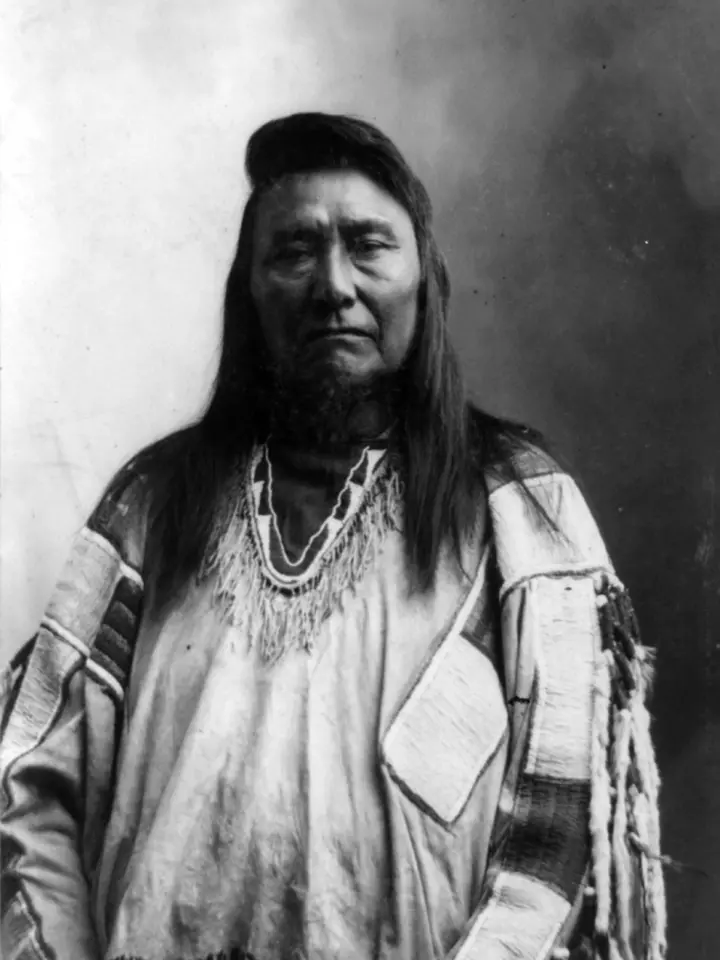
Chief Joseph at a Glance
Chief Joseph
- Name: Hinmatóowyalahtq̓it (“Thunder Rolling Down the Mountain”)
- People: Nez Perce (Nimiipuu)
- Home: Wallowa Valley, Oregon
- Known for: The Nez Perce War of 1877; “I will fight no more forever”
- Died: 1904, Colville Reservation, Washington
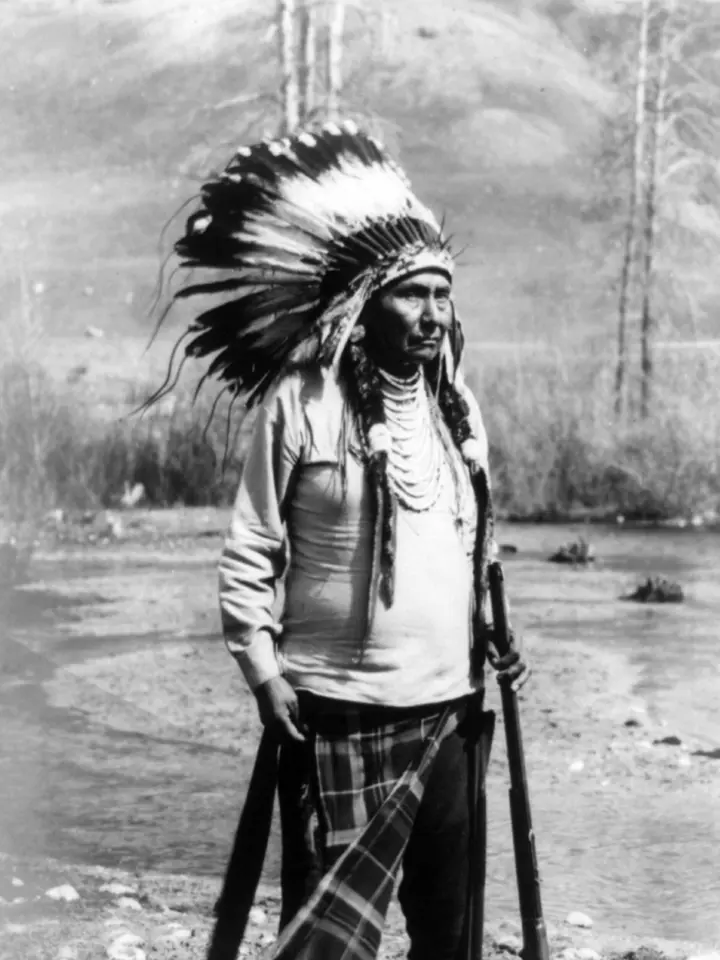
Key Facts
- His father refused to sell the Wallowa Valley.
- Became chief in 1871.
- His people traveled about 1,170 miles in 1877.
- Surrendered just 40 miles from Canada.
- Spent the rest of his life asking to return home.
Tap or hover over the card to flip it. Students can copy this information into their organizer before reading.
Look Closely: The pictures on this page are photographs, not paintings. A camera records what is in front of it, so photographs can show us what a person really looked like. But photographs are not always the whole story. The photographer and the person being photographed chose the clothing, the pose, and the background. Compare the photograph at the top with the one on the flip card. How is Joseph dressed in each picture? Which one do you think shows how he looked in everyday life? Why might he have chosen to wear a headdress for a photograph?
The Valley of Winding Waters
Chief Joseph was born in 1840 in the Wallowa Valley of northeastern Oregon. His Nez Perce name, Hinmatóowyalahtq̓it, means “Thunder Rolling Down the Mountain.” The Nez Perce call themselves Nimiipuu, which means “The People.” They fished for salmon, gathered camas roots, and hunted. They were also famous for raising fine herds of horses.
“Never Sell the Bones of Your Father”
Joseph’s father, also called Joseph, was a Nez Perce leader. In 1863, the U.S. government made a new treaty that took away about 90 percent of the Nez Perce reservation, including the Wallowa Valley. Joseph’s father had not signed it and refused to leave. Before he died in 1871, he told his son never to sell their homeland. Young Joseph became chief and kept that promise.
Ordered to Leave
As more settlers moved into the Wallowa Valley, the government decided the Nez Perce must go. In 1877, General Oliver O. Howard ordered Joseph’s band to move to a small reservation in Idaho within 30 days. Joseph wanted to avoid war, so his people gathered their families and herds and began to move. Just before they reached the reservation, a few angry young warriors killed several settlers. Joseph knew the Army would now come after them.
A Long Journey
About 800 Nez Perce, including many children and elders, set out to escape. They hoped to find safety with the Crow, and later in Canada. For more than three months, they traveled about 1,170 miles through Idaho, Montana, and Wyoming, crossing mountains and passing through Yellowstone National Park. Several leaders guided the group. Joseph cared for the camp, the families, and the horses. Again and again, the Nez Perce outsmarted and fought off the larger Army.
The Battle of the Bear Paw
In late September 1877, the tired Nez Perce stopped to rest in the Bear Paw Mountains of Montana, only about 40 miles from Canada. Soldiers led by Colonel Nelson Miles attacked. After five days of fighting in the cold and snow, many leaders had been killed, including Joseph’s brother Ollokot. The people were freezing and starving. Some escaped to Canada, but on October 5, 1877, Joseph surrendered.
“I Will Fight No More Forever”
Joseph’s surrender speech became famous. He spoke of his people freezing in the hills with no blankets and no food, and of children he could not find. He ended with the words, “From where the sun now stands, I will fight no more forever.” The Army had promised the Nez Perce could return to Idaho. Instead, they were sent to Kansas and then to Indian Territory, in present-day Oklahoma, where many became sick and died.
Speaking for His People
Joseph traveled to Washington, D.C., and spoke to leaders about fairness. He said that all people should be free to live and travel where they choose. In 1885, the Nez Perce were finally allowed to return to the Northwest, but Joseph was sent to the Colville Reservation in Washington, not to his beloved Wallowa Valley. He died there in 1904. His doctor said he died of a broken heart.
Word Match
Drag each word to its definition, or tap a word and then tap its definition.