Text Structures

Anchor Charts, Organizers & Activities


Text structures are the organizational patterns authors use to present information. Teaching students to recognize these patterns improves both reading comprehension and writing. Use the anchor charts, organizers, and activities here to build that foundation.

Text Structures Anchor Chart

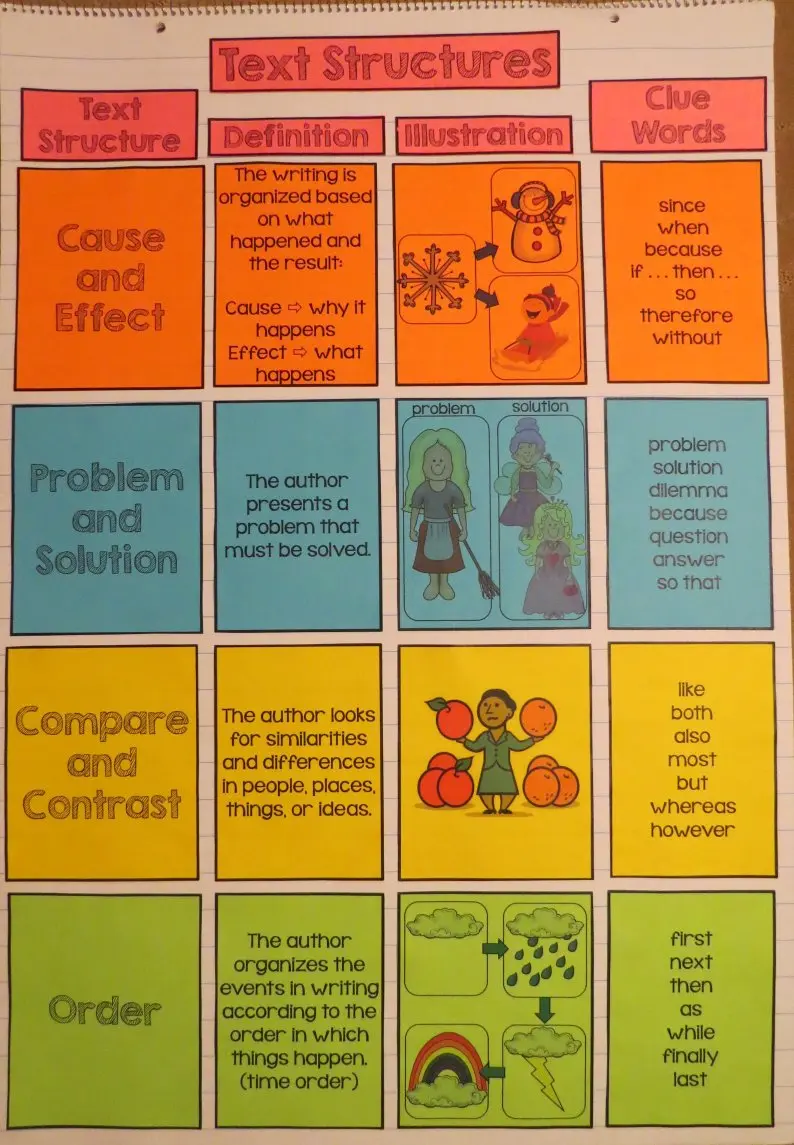
Text Structures Anchor Charts

This is one of my favorite anchor charts, so I wanted to share a quick and easy printable version so you could make your own in minutes. Both colored and blacklined images are included.

Text Structures Anchor Chart
Text Structures Anchor Chart version 2

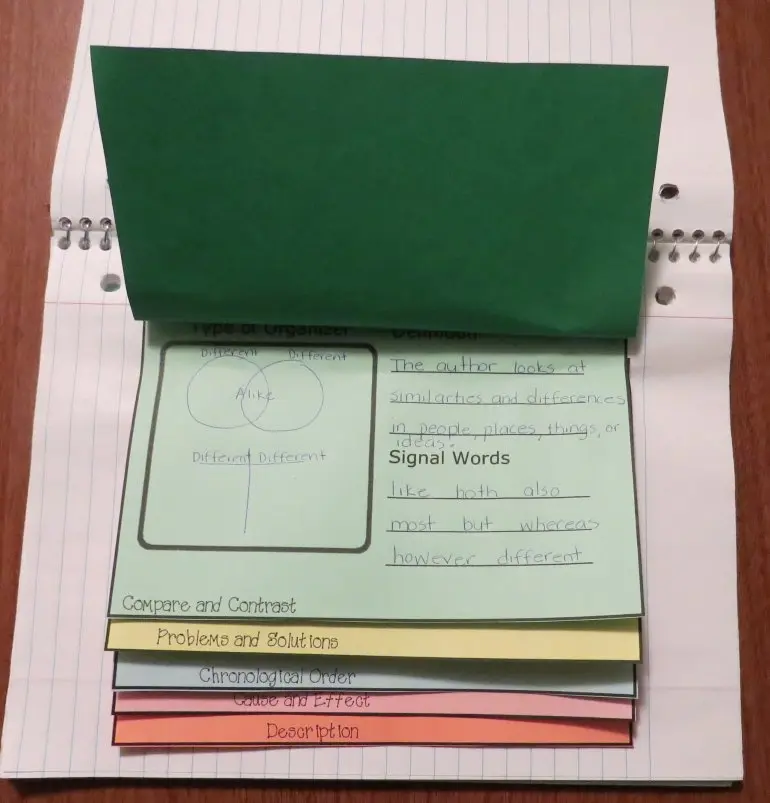
Text Structures Staggered Flip Organizer

How to Assemble the Flip Book

In each box, have students write the definition for the text structure and some signal words. In the rounded box, students draw and label a graphic organizer for that structure.

  1. Print the cover and information pages onto colored paper.
  2. Cut out the rectangles.
  3. Begin with the bottom page. Turn it face down and place a thin line of glue across the top only. Glue it toward the bottom of the organizer notebook.
  4. On the back of the next page, place glue along the top.
  5. Glue this page directly above the first, shifted up approximately one-fourth of an inch.
  6. Continue adding pages until all are glued down.
  7. The pages should lift up so students can read the information underneath.

Each page of the flip book corresponds to one text structure. Students can use it as a reference tool throughout the unit.

Explore Each Text Structure

Using Text Structure Posters & Interactive Charts

Text Structure Posters

Design a series of posters for each text structure. Each poster should include the definition, key characteristics, signal words, and a visual representation or graphic organizer. Display these around the classroom for quick reference while students are reading and writing.

Interactive Anchor Charts

Create interactive anchor charts that students contribute to. Start with definitions and key points, then allow students to add examples, signal words, and illustrations as they encounter them in reading. Using sticky notes keeps charts student-centered and reusable year after year.

Comprehensive Resource on TPT

Sequencing Text Structure on TPT

Informational Writing Cause-Effect, Problem-Solution, Compare-Contrast, Sequence

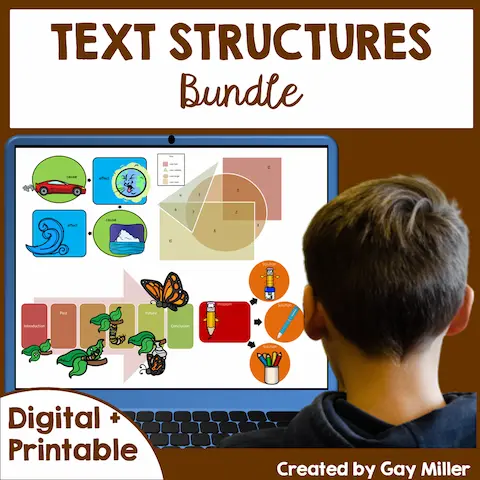
Take care of all your text structure lessons with this one bundle. Students learn how to write cause and effect, problems and solutions, compare and contrast, and sequence essays. Lessons include nonfictional passages for all text structure types and both nonfiction and fiction passages for compare and contrast and sequencing structures covering many Common Core State Standards.

View on TPT