Escalation and the Tet Offensive
Fast Facts: Escalation & Tet Offensive
Escalation & Tet Offensive
- Key President: Lyndon B. Johnson
- Major Event: Gulf of Tonkin incident (1964)
- U.S. Response: Large-scale troop deployment
- Turning Point: Tet Offensive (1968)
- Public Reaction: Growing protests in the U.S.
Escalation & Tet Offensive at a Glance
- President Johnson increased U.S. involvement after the Gulf of Tonkin incident.
- Congress passed the Gulf of Tonkin Resolution, giving Johnson broad military powers.
- By 1968, over 500,000 American troops were fighting in Vietnam.
- The Tet Offensive was a surprise attack on more than 100 cities in South Vietnam.
- The attack shocked Americans and increased opposition to the war.
The Gulf of Tonkin Incident
By the early 1960s, the conflict in Vietnam was growing more serious. The United States was already sending advisors to help South Vietnam, but everything changed in 1964. That summer, an American ship called the USS Maddox reported being attacked by North Vietnamese patrol boats in the Gulf of Tonkin. The details were unclear, but the event caused great concern in Washington.
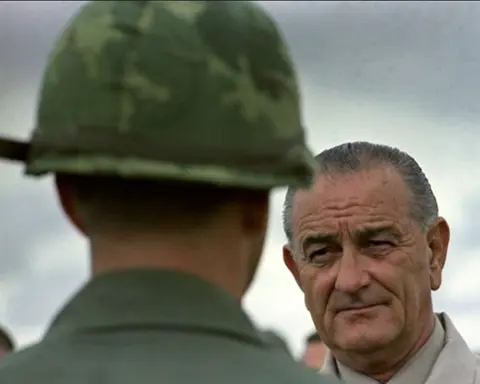
In response, Congress passed the Gulf of Tonkin Resolution. This gave President Lyndon B. Johnson the power to use military force in Vietnam without declaring war. It marked the beginning of major U.S. involvement in the conflict.
America Sends Combat Troops
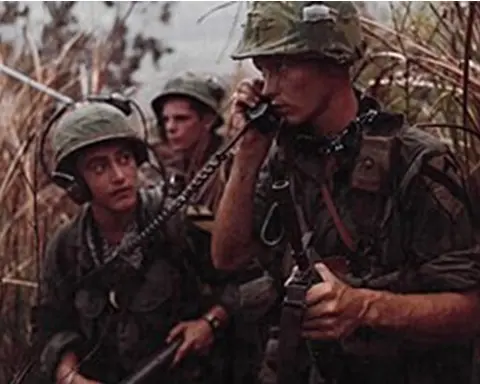
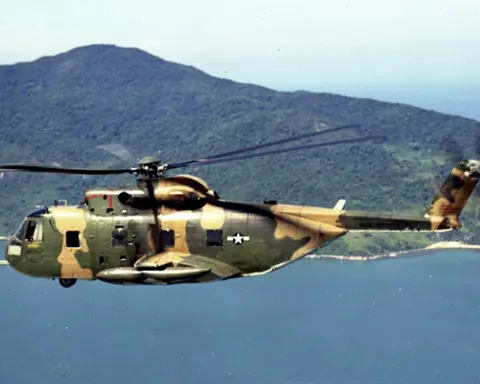
After the Gulf of Tonkin Resolution, President Johnson ordered the first official U.S. combat troops to Vietnam in 1965. More soldiers arrived each month. By 1968, more than 500,000 Americans were fighting in Vietnam. The United States hoped that its powerful military could defeat the Vietcong and protect South Vietnam.
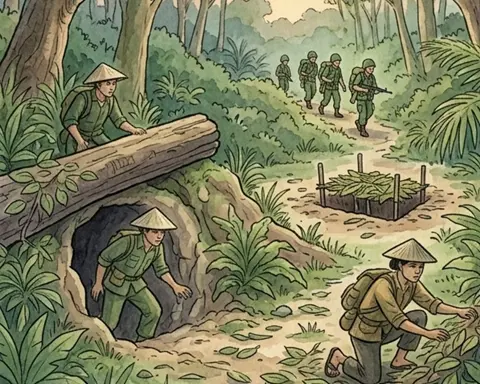
However, the Vietcong used guerrilla tactics—ambushes, traps, and hidden tunnels—that made the war extremely difficult. The thick jungles and unfamiliar terrain added to the challenge.
A Difficult War to Fight
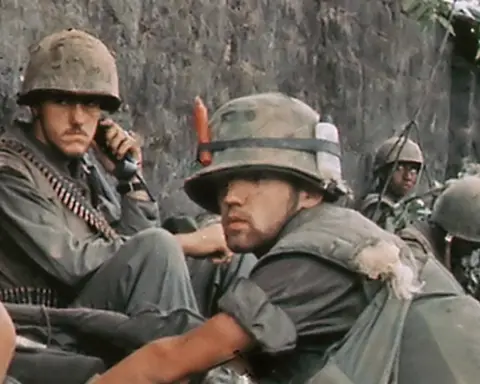
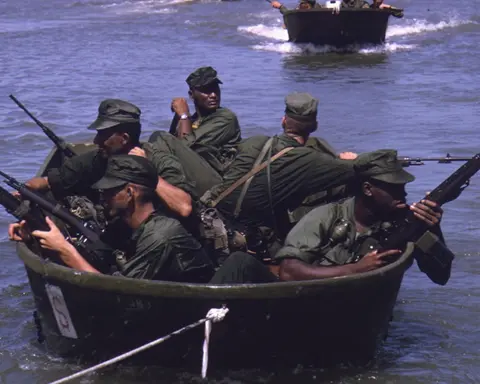
American soldiers faced many hardships. The Vietcong blended in with local villagers, making it hard to know who was a friend and who was an enemy. The hot, humid climate and dense forests made travel slow and dangerous. Even with advanced weapons, the United States struggled to stop the Vietcong’s hit‑and‑run attacks.
The Tet Offensive
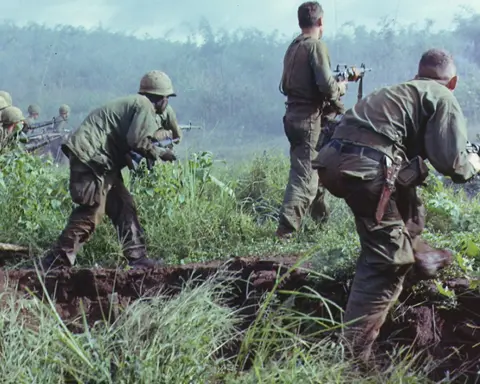
In January 1968, during the Vietnamese holiday of Tet, North Vietnam and the Vietcong launched a massive surprise attack. They struck more than 100 cities and military bases across South Vietnam. Although U.S. and South Vietnamese forces eventually pushed back the attacks, the Tet Offensive shocked Americans.
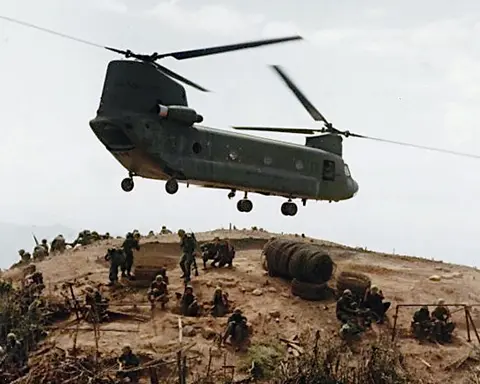
Many people had believed the United States was close to winning the war. Tet showed that the enemy was still strong and determined. Support for the war began to decline, and protests in the United States grew louder.
A Turning Point
The Tet Offensive became a major turning point in the Vietnam War. Even though the United States won the battles, it lost confidence at home. Many Americans began to question whether the war could be won at all. President Johnson faced increasing pressure and eventually announced that he would not run for re‑election. The war was far from over, but the country was changing.
Word Match
Drag the vocabulary words to their correct definitions!
Vocabulary Words
Definitions
Lesson 3 — Life During the War Quiz
Activities & Extensions
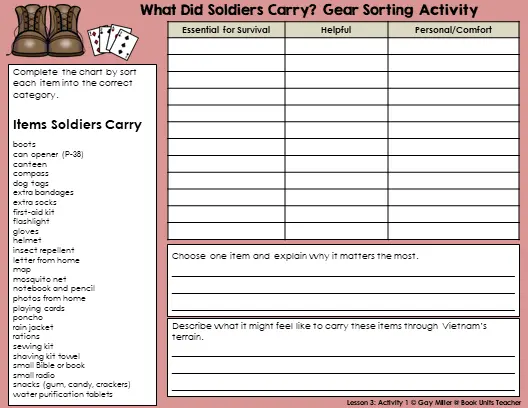
Students explore why the Vietnam War was so difficult for U.S. soldiers by labeling a simple “challenge map” showing terrain features and Vietcong tactics described in the article.
How to Do It: Students draw a basic outline of Vietnam in their notebooks. They add symbols or small sketches to represent major challenges: dense jungle, hidden tunnels, Vietcong blending with villagers, monsoon rains, and unfamiliar terrain. Students label each symbol and write one sentence explaining why it made the war hard.
Materials:
- Notebook
- Pencil (optional: AI‑generated icons)
Optional Extension: Students add a final label titled “Which Challenge Was the Worst?” and explain their reasoning.
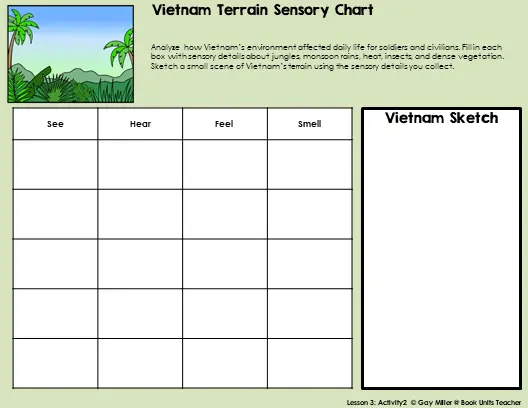
Students examine how the Tet Offensive changed American views of the war by sorting simple statements or icons into “Before Tet” and “After Tet.” This helps students understand why Tet was a major turning point.
How to Do It: Provide students with 6–8 short statements or icons (or display them on the board). Students sort them into two notebook columns: Before Tet and After Tet. They then write a brief summary explaining how the Tet Offensive changed public opinion.
Examples students might sort:
- Many Americans believed the U.S. was close to winning.
- Large surprise attacks on over 100 cities.
- Confidence in the war effort decreases.
- Protests in the U.S. grow louder.
- Enemy appears stronger than expected.
- U.S. troop numbers continue to rise.
Materials:
- Notebook
- Pencil (optional: AI‑generated icons)
Optional Extension: Students write a short paragraph titled “Why Tet Was a Turning Point.”
Vietnam War Navigation
Explore the Full Vietnam War Unit

This complete history unit includes research passages, organizers, writing tasks, quizzes, activities, and website research — all in printable and digital formats. Everything you need to teach the Vietnam War with confidence.
View the Full Unit on TPT