Cross-Curricular Illustrations: Where the Red Fern Grows

One Novel, Three Subjects, Real Student Work


Students were split into three groups — Language Arts, Math, and Science — and each created an illustration proving a skill from their subject through the lens of the novel. Below are real student examples, plus a template you can adapt for any book, dog-themed or otherwise.

Math Illustrations

Connecting Mathematical Thinking to Literature

Each math illustration includes an expression tied to the story, a sentence explaining what it means, and three evaluated examples — hidden under lift-able sticky notes so students (and now, you) can check the answer after solving.

Click each image to see the full illustration.

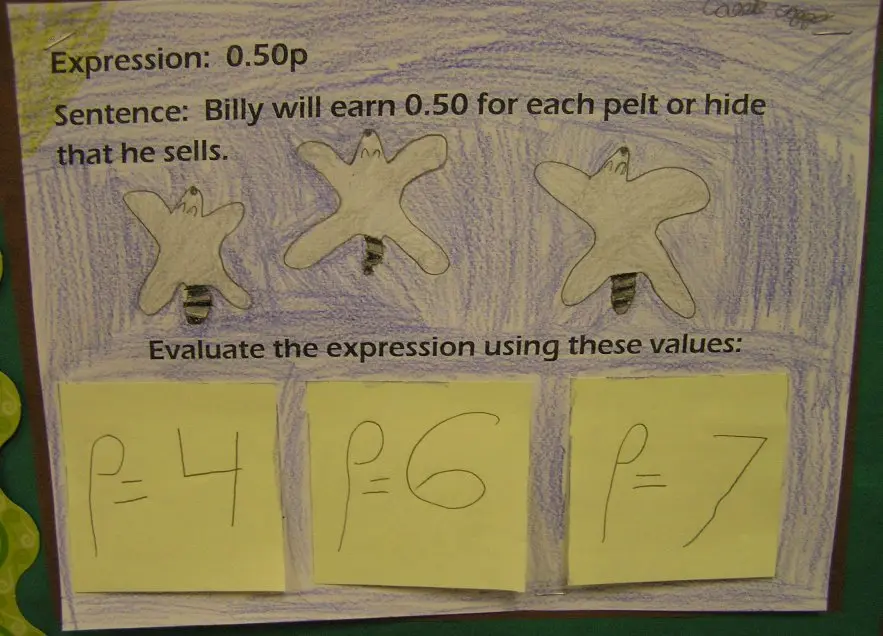
Raccoon pelts math expression illustration
Raccoon Pelts
0.50p

Billy earns 50 cents for each pelt he sells.

p = 4, 6, 7
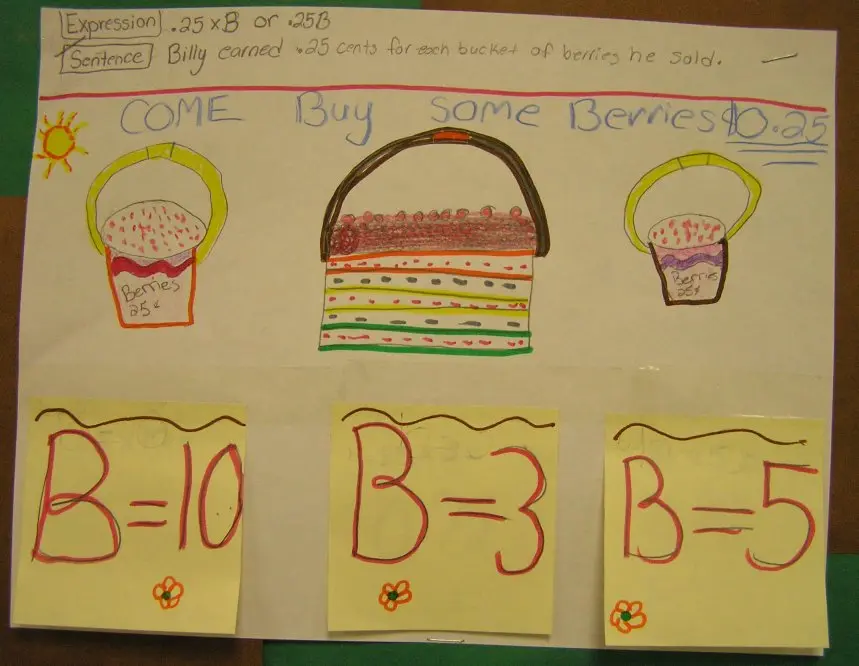
Berry buckets math expression illustration
Berry Buckets
0.25B

Billy earns 25 cents for each bucket of berries he sells.

B = 10, 3, 5
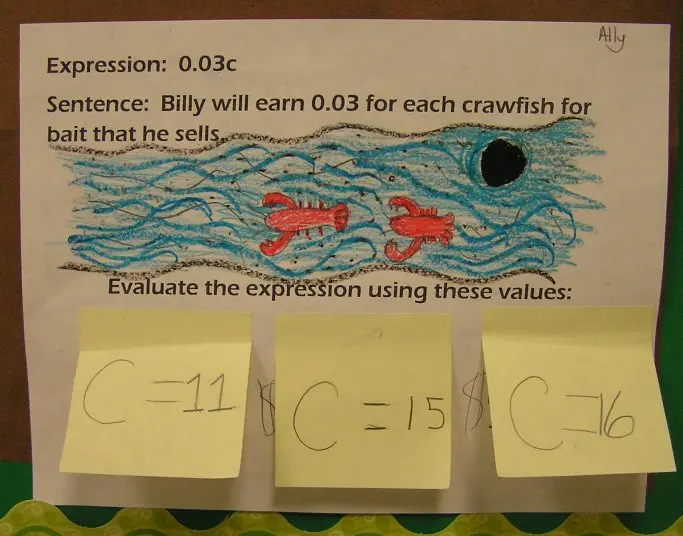
Crawfish for bait math expression illustration
Crawfish for Bait
0.03c

Billy earns 3 cents for each crawfish he sells for bait.

c = 11, 15, 16
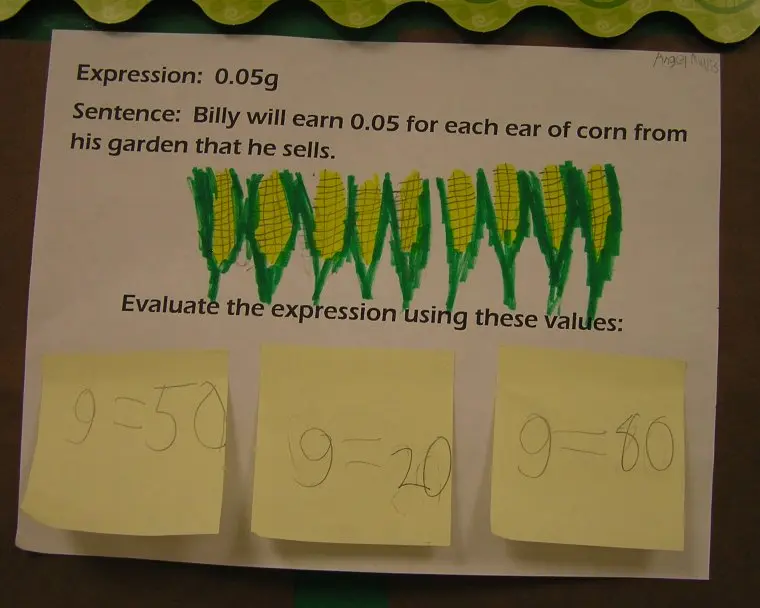
Garden corn math expression illustration
Corn from the Garden
0.05g

Billy earns 5 cents for each ear of corn he sells from his garden.

g = 50, 20, 80
Try It Yourself

How the Sticky-Note Reveal Works

The student projects use real sticky notes taped over each answer. Here's the same idea, digitally — click a note to flip it over and reveal the evaluated expression.

0.50p

Billy earns 50 cents for each pelt he sells. Evaluate the expression for each value of p below.

Click a note to reveal the answer
p = 4
0.50 × 4
= $2.00
p = 6
0.50 × 6
= $3.00
p = 7
0.50 × 7
= $3.50

In class, students solve on paper first, then lift the note to self-check.

Science Illustrations

Using Ecology Concepts to Explore the Story's Setting

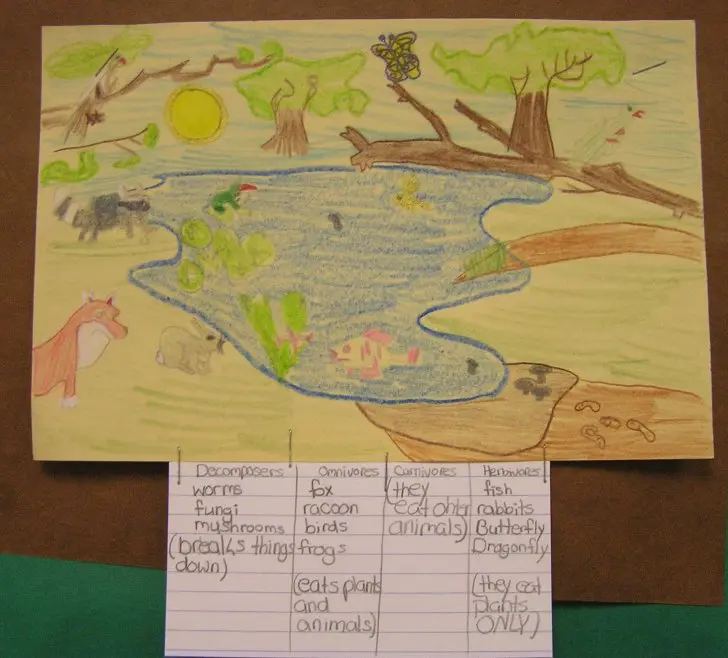
Students illustrated producers, consumers, decomposers, and animal classifications (herbivore, carnivore, omnivore) as they appear in the Ozark ecosystem of the novel.

Click on the images for a close-up view.

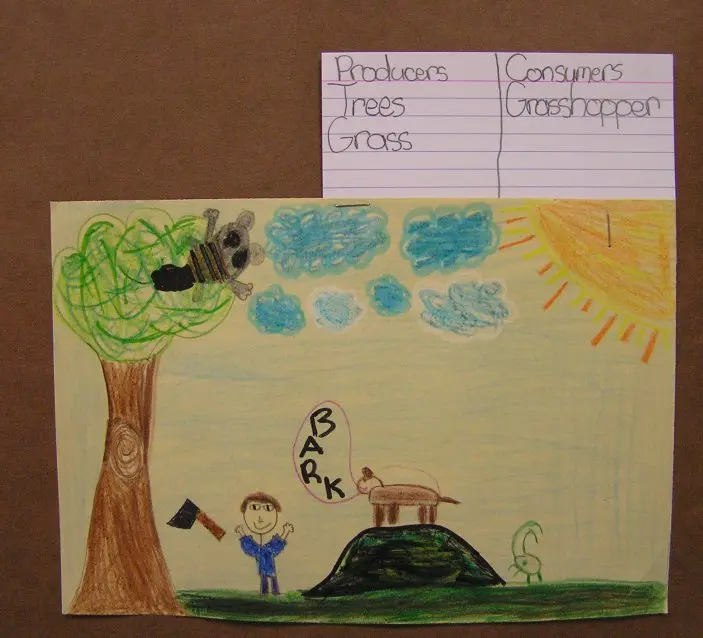
Producers and consumers forest scene illustration
Producers & Consumers

A forest scene featuring a dog, a bee, a grasshopper, and Billy with an axe — labeled to show trees and grass as producers and the grasshopper as a consumer.

Food chain illustration with decomposers, herbivores, carnivores, and omnivores
Food Chain Roles

Decomposers (fungi, bacteria), herbivores (deer, rabbits), carnivores (mountain lions, raccoons), and omnivores (dogs, humans) — connecting the Ozark ecosystem to the events of the novel.

Language Arts Illustrations

Visualizing Literary Elements Through Art

These illustrations capture key scenes and character moments, naturally touching on character motivation, symbolism, and cause and effect.

Click each image for an up-close view.

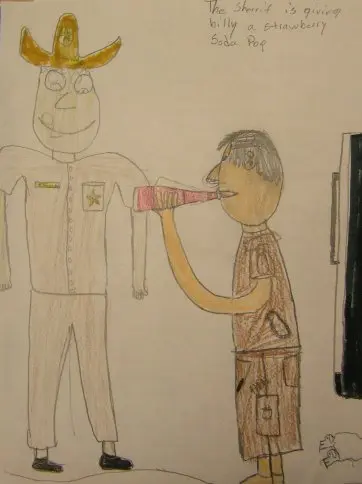
The sheriff giving Billy a strawberry soda illustration
Chapter 5

The sheriff gives Billy a strawberry soda.

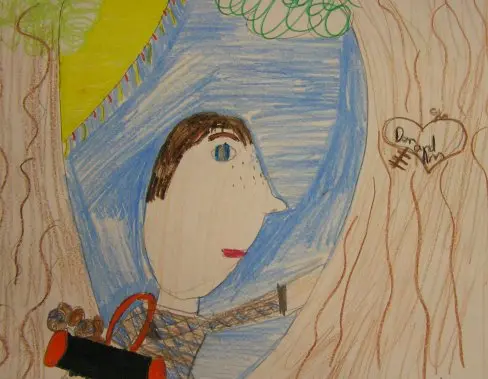
Billy discovering Ann and Dan carved into the tree illustration
Chapter 6

Billy discovers "Ann" and "Dan" carved into the tree — a symbol worth a class discussion.

Ann and Dan learning to hunt illustration
Chapter 7

Ann and Dan learn to hunt.

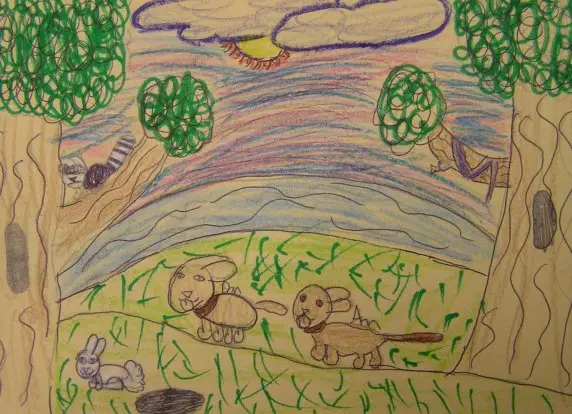
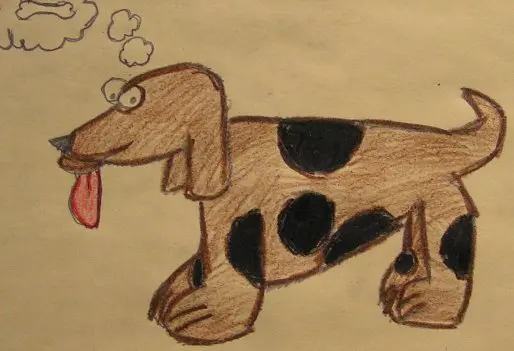
A hound dreaming of a bone illustration
Character Moment

A hound dreaming of a bone.

Adapt This for Any Novel

Why This Project Works With Any Book

The structure travels well beyond Where the Red Fern Grows. Here's how to adapt each subject, especially for dog-themed novels.

Decorative hound drawing

Math

  • Money earned per chore (walking dogs, feeding animals)
  • Distance traveled (miles hiked, tracked, or run)
  • Multiplying supplies (dog food cans, training treats)
  • Time spent (minutes training, days on a journey)

Science

  • Food chains based on the book's setting
  • Animal classification (easy with dog novels)
  • Habitats — forest, farm, mountain, neighborhood
  • Adaptations: how dogs survive, hunt, or work

Language Arts

  • Character trait or symbol illustrations
  • Scene visualizations tied to a specific chapter
  • Theme illustrations and conflict diagrams
  • Character relationships (easy with dog novels)
1

Divide students into three groups

Language Arts, Math, and Science.

2

Assign each group a skill

LA: a literary element. Math: an expression with examples. Science: an ecological concept.

3

Students create

A labeled illustration, a written explanation, three worked examples or labeled items, and a clear connection to the novel.

4

Display everything together

A gallery showing how one novel supports learning across every subject.