10 Interesting Facts About the Civil War
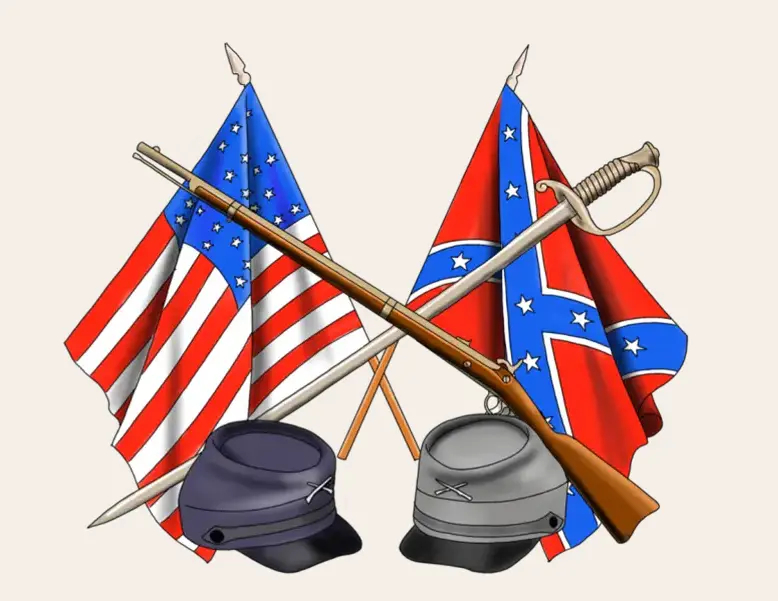
From a bullet through a president's hat to soldiers who marched into battle without matching uniforms, the Civil War is full of details that don't always make it into the textbook. Explore ten of them below, along with the maps, timelines, and data that go with them.
The War by the Numbers
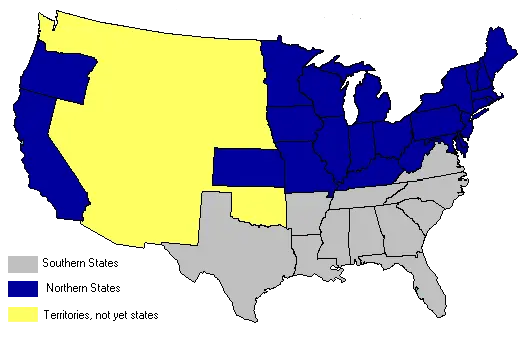
The divided nation: Union states, Confederate states, and border states in 1861.
Ten Facts
Lincoln's Hat Shot
In August 1864, while riding alone toward the Soldiers' Home outside Washington, D.C., President Lincoln was fired at by an unknown gunman. The bullet passed through his stovepipe hat. Lincoln asked the soldier who found the hat to keep quiet about it, not wanting to worry his wife, Mary.
Fort Sumter
The first shots of the Civil War were fired on April 12, 1861, when Confederate forces opened fire on Fort Sumter in Charleston Harbor. The war ended almost exactly four years later, on April 9, 1865, when General Lee surrendered to General Grant at Appomattox Court House.
Deaths
For more than a century, historians estimated Civil War deaths at around 620,000. A 2011 study using digitized census records revised that number upward to roughly 750,000 — meaning the true toll may be even higher than long believed. Either figure makes the Civil War the deadliest conflict in American history.
| War | U.S. Deaths | Dates |
|---|---|---|
| American Revolutionary War | 25,000 | 1775–1783 |
| Civil War | ~750,000 | 1861–1865 |
| World War I | 116,516 | 1917–1918 |
| World War II | 405,399 | 1941–1945 |
| Korean War | 36,516 | 1950–1953 |
| Vietnam War | 58,209 | 1955–1975 |
| Gulf War | 258 | 1990–1991 |
| Afghanistan War | 2,325 | 2001–2021 |
| Iraq War | 4,800 | 2003–2011 |
Size of the Armies
Roughly 2.1 million men served in the Union Army over the course of the war — almost twice the size of the Confederate Army's estimated 1.06 million.
Number of Enslaved People
Of the roughly 9 million people living in the Southern states in 1860, about 3.4 million were enslaved. In two states — Mississippi and South Carolina — enslaved people actually outnumbered the free population.
Uniforms
Early in the war, neither side had standardized uniforms. Some units chose their own colors, which occasionally made it dangerously difficult for soldiers to tell friend from enemy in the chaos of battle.
Disease
More soldiers died from disease than from combat. Dysentery, typhoid, and pneumonia spread quickly through crowded camps with poor sanitation, killing thousands who never saw a battlefield.
| Cause | Confederacy | Union |
|---|---|---|
| 1. Killed in action | 54,000 | 67,000 |
| 2. Dysentery / Diarrhea | 50,000 | 45,000 |
| 3. Wounds | 40,000 | 43,700 |
| 4. Typhoid | 30,000 | 34,800 |
| 5. Prison | 26,100 | 31,200 |
| 6. Pneumonia | 17,000 | 20,000 |
| 7. Malaria | 20,000 | 10,000 |
| 8. Smallpox | 8,000 | 7,000 |
| 9. Tuberculosis | 7,000 | 7,000 |
| 10. Measles | 6,000 | 5,200 |
Worst Battles
The single bloodiest day in American military history was the Battle of Antietam on September 17, 1862, near Sharpsburg, Maryland — over 22,000 men were killed, wounded, or went missing in about twelve hours of fighting.
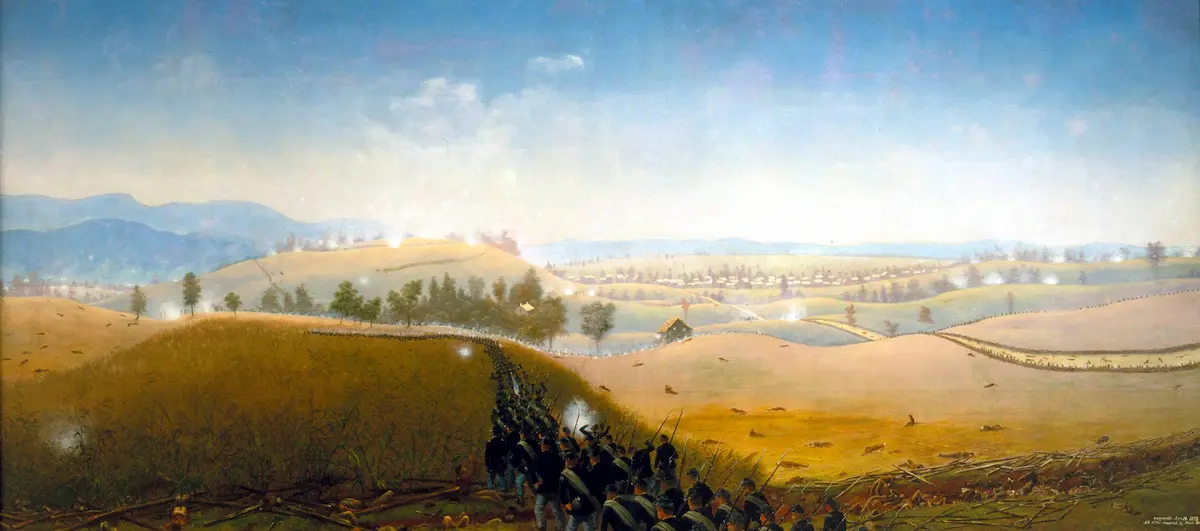
The Antietam battlefield near Sharpsburg, Maryland.
| Battle / Date / Place | Winner | Total Casualties |
|---|---|---|
| Gettysburg — July 1–3, 1863 — PA | North | ~51,000 |
| Chickamauga — Sept 19–20, 1863 — GA | South | ~34,600 |
| Chancellorsville — May 1–4, 1863 — VA | South | ~30,100 |
| Spotsylvania — May 8–19, 1864 — VA | South | ~27,400 |
| Antietam — Sept 17, 1862 — MD | Draw | ~22,700 |
| Wilderness — May 5–7, 1864 — VA | Draw | ~29,800 |
Casualty totals include killed, wounded, and missing, and are traditionally-cited estimates that vary slightly by source.
Age of the Soldiers
The average Civil War soldier was about 23 years old, stood roughly 5'8" tall, and weighed around 143 pounds — figures historians know because of detailed Union enlistment records kept at the time.
Enslaved People Escaping
Before the war, several thousand enslaved people attempted escape each year. Once the Civil War began and Union lines offered a path to freedom, the pace of escape increased dramatically, with thousands more fleeing to Union-held territory each month.
Full Civil War Timeline
Every date above fits into the larger story of the war. Explore the complete year-by-year timeline below.
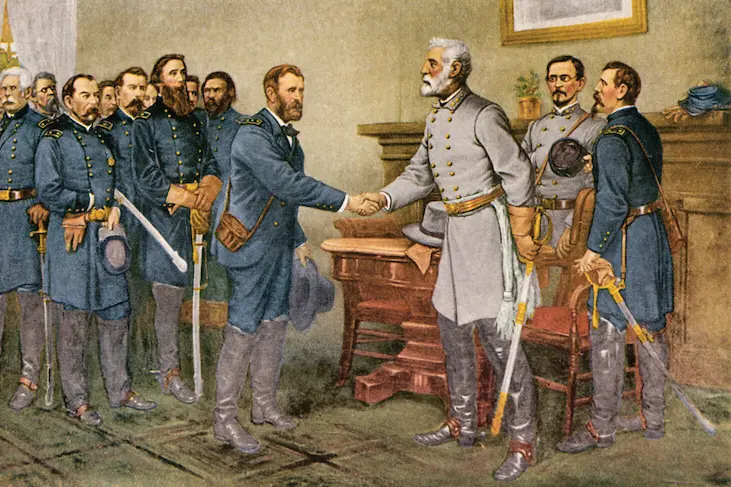
Lee's surrender to Grant at Appomattox Court House, April 9, 1865, effectively ended the war.
Want the Printable Version?
A printable version of these facts and the timeline foldable organizer is available as a free handout.
Get the HandoutsCivil War Navigation
Explore the Full Civil War Unit

This complete history unit includes research passages, organizers, writing tasks, quizzes, activities, and website research — all in printable and digital formats.
View the Full Unit on TPT