
Description
Three hundred and forty species of sharks live in the oceans. These are divided into eight groups. The body shape, tail shape and teeth differ greatly from one family to another.
The largest shark is the whale shark. The whale shark grows up to 60 feet in length and can weigh up to 20 tons. The smallest shark is the dwarf shark. It is less than 6 inches long. Most sharks are six to seven feet long. Most sharks are gray and have a leathery skin.
The bones of the shark are soft and made of cartilage. Their bodies are covered with small tooth-like spikes called denticles instead of scales.
A shark must keep moving to keep afloat. Other fish have balloon-like sacks inside them called swim bladders which fill with air or gas to keep them afloat. Sharks do not have swim bladders.
Habitat
Sharks live in all seas. One kind even lives in the Arctic Ocean. Most live in mild or warm oceans. There are large numbers of sharks in tropical areas. Many sharks migrate up rivers. Some sharks live at the bottom of deep underwater canyons. Others live in shallow reefs only a few feet from the shore. Large sharks are found between 100 feet deep and the surface. Large sharks don't like to come close to shore.
Food
The largest sharks are filter feeders. They eat plankton. Plankton is tiny plants and animals that float near the surface. Gill rakers filter out the food from the water to help these large sharks eat. Many sharks actively chase their food. Only 25 kinds of sharks eat big fish and mammals. These eat sea mammals and even other sharks.
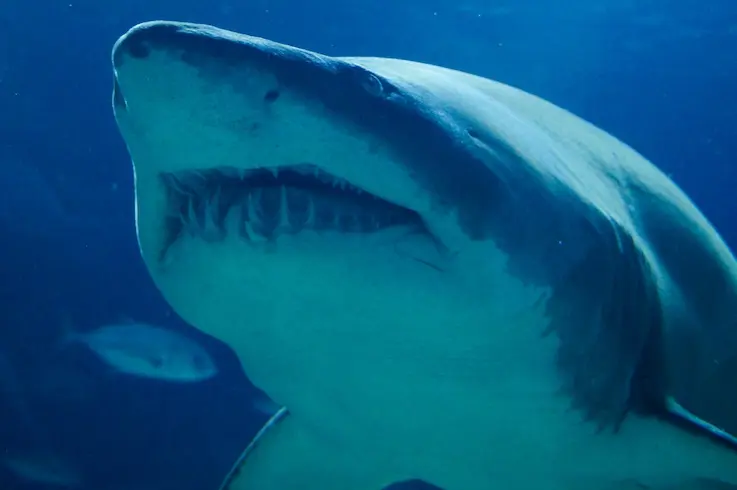
Sharks have 5 to 20 rows of teeth. They loose worn out teeth about every 8 days. Some new ones grow in. The shark moves its jaw from side to side to chew. This motion helps move the food to the back of its mouth where it can be swallowed whole.
Sharks have a good sense of smell. They have excellent vision and good hearing. Sharks can also feel vibrations in the water made by other fish. These sharp senses help the shark find food.
Young
Most sharks are born live. Some sharks have 100 babies at once. Other sharks may only have two. The babies care for themselves as soon as they are born.