Three hands-on teaching ideas for exploring how different animals grow and change — from frog life cycle projects to insect metamorphosis crafts to a free printable comparison chart.
Teaching Idea 1
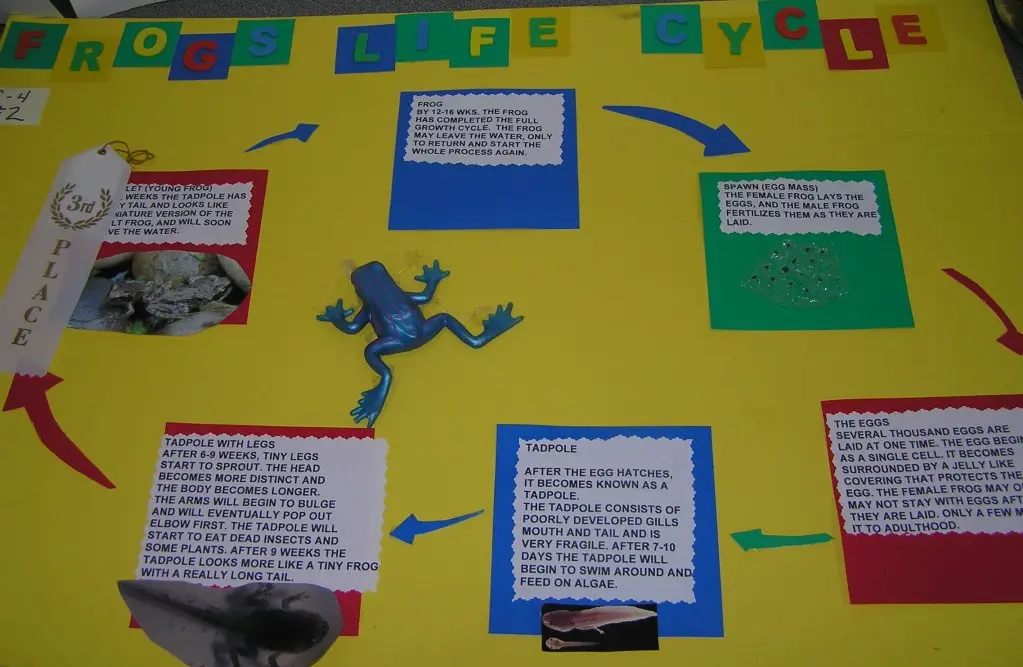
These student science fair projects show a creative way to display the frog life cycle — a spinning circle that reveals one stage at a time. The rotating design makes the cyclical nature of the life cycle visible in a way that a flat poster does not.
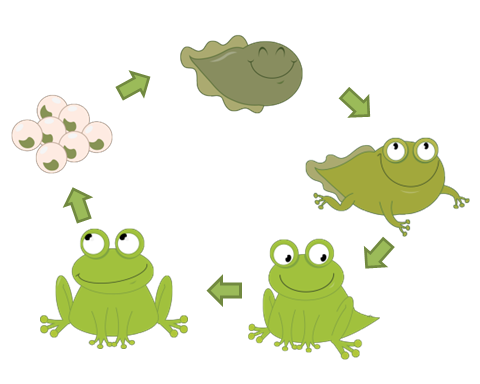
Student project — spinning wheel design
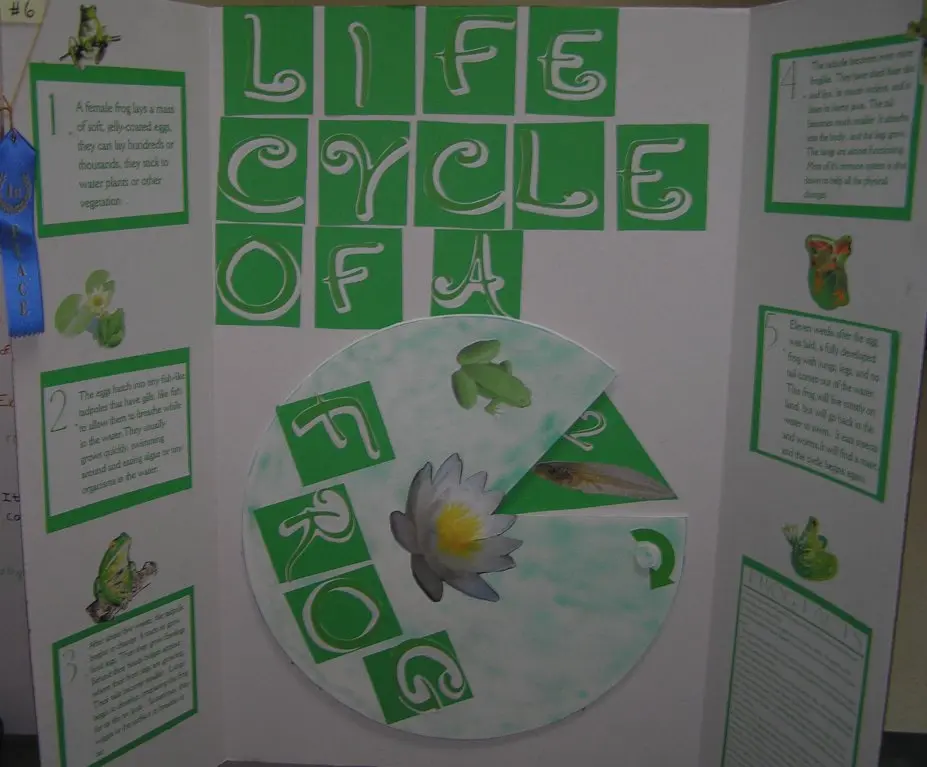
Second student example
Teaching Idea 2
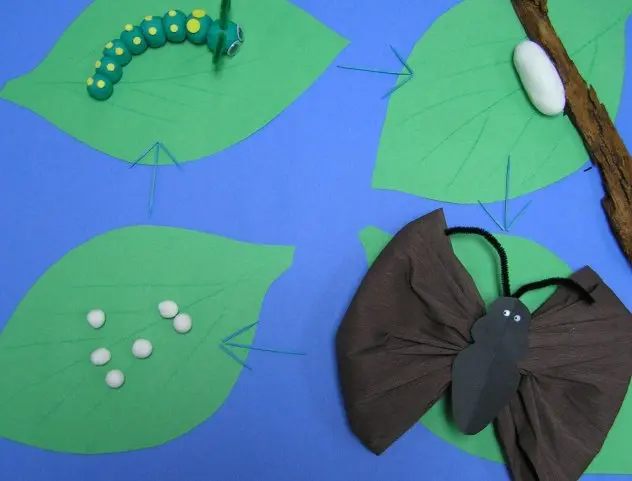
Teach students the difference between complete and incomplete metamorphosis with this hands-on craft project. Most insects — including bees, ladybugs, ants, wasps, butterflies, and moths — go through complete metamorphosis:
egg → larva → pupa → adult
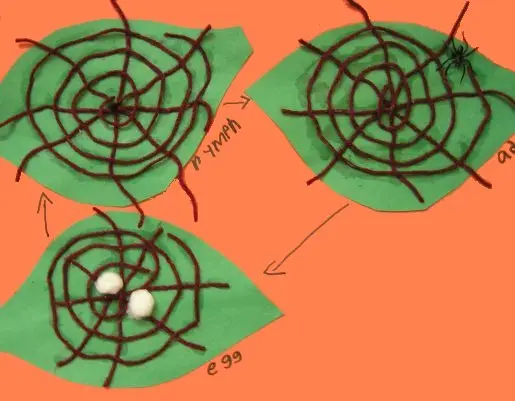
About 12% of all insects, as well as spiders, go through incomplete metamorphosis. These include grasshoppers, crickets, dragonflies, and cockroaches:
egg → nymph → adult
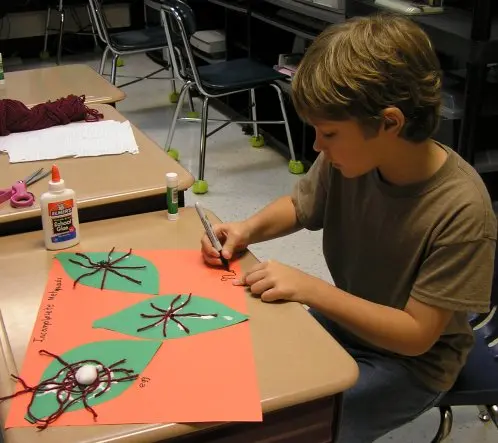
Provide students with a large (12 by 18 inch) piece of construction paper. Students cut out leaves — one for each stage — using four leaves for complete metamorphosis and three for incomplete. Yarn, pipe cleaners, clay, cotton balls, wiggle eyes, construction paper, and crepe paper are used to create the insects at each stage of development.
Complete Metamorphosis
Incomplete Metamorphosis
Teaching Idea 3
This printable chart helps students compare how the life cycles of amphibians, reptiles, birds, fish, and mammals differ from one another. Completing the chart gives students a clear side-by-side reference they can refer back to throughout the unit.
Download the life cycle comparison chart as a printable PDF — ready to use in your classroom.
Download Free Printable