Discover four spring bulletin board ideas that span grade levels and subject areas from a kindergarten butterfly mosaics to a fifth grade genetics project.
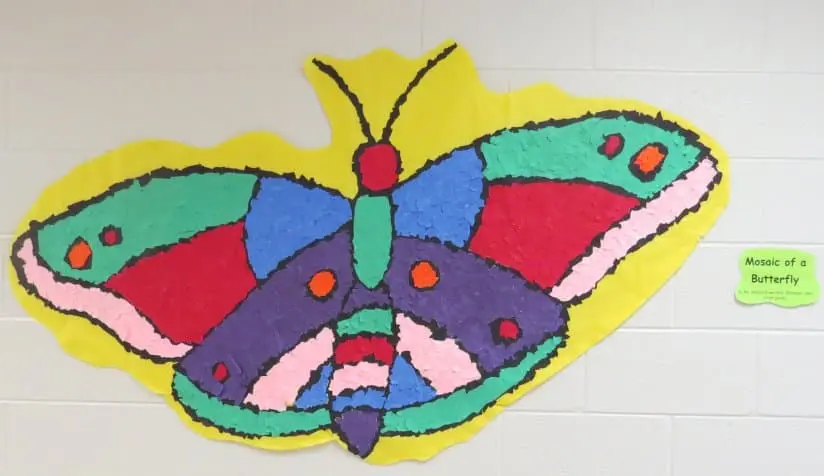
Kindergarteners enjoyed the winter snowman mosaic project so much that this butterfly version was created using the same technique — small pieces of colored paper glued onto butterfly sections to build the mosaic pattern.
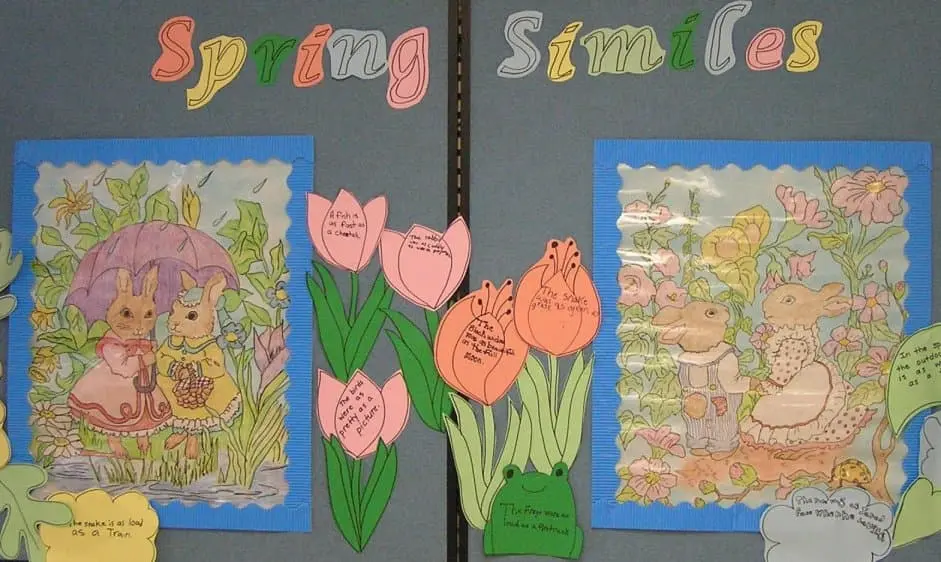
Students wrote spring-themed similes on flower, frog, and leaf shapes surrounding two rabbit pictures combining art and language arts in one display.
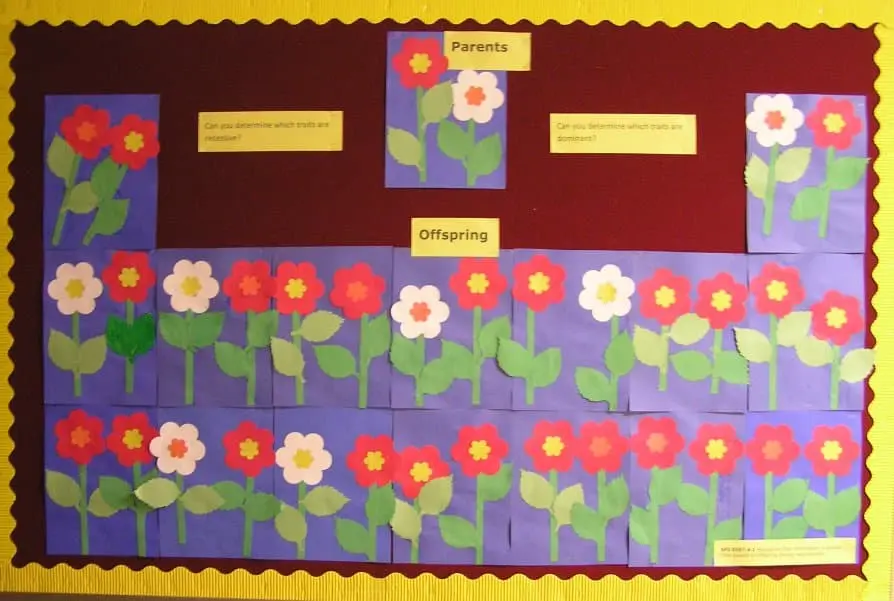
Fifth graders built flowers based on dominant and recessive gene combinations from their science lesson. Each student's flower was unique based on the color-coded trait circles they received.
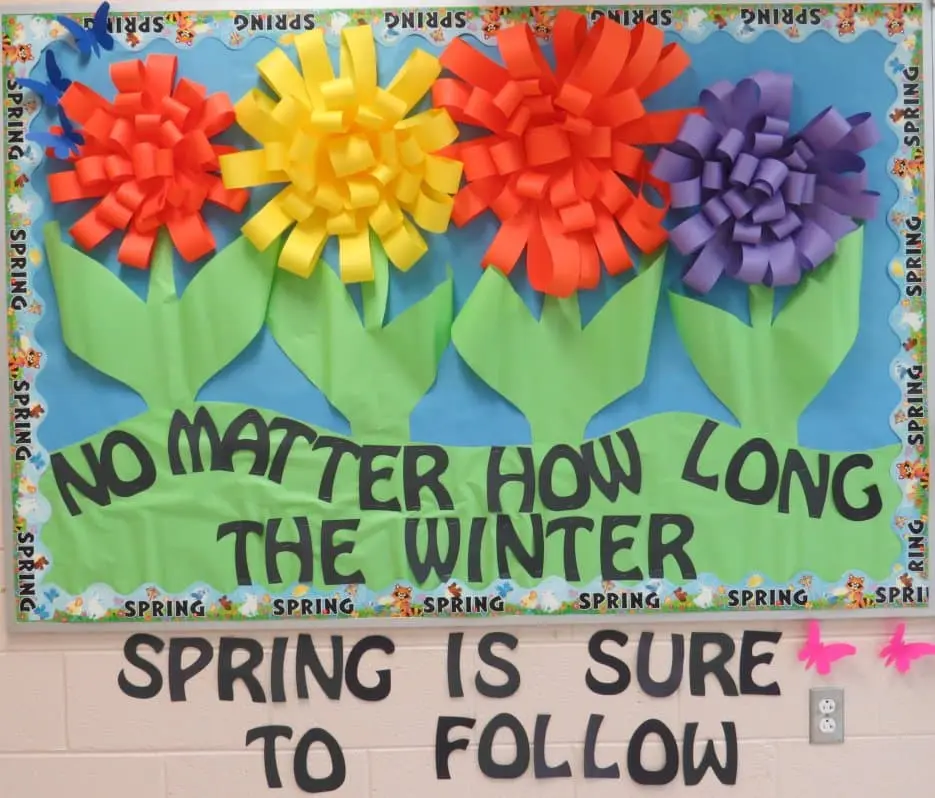
This three-dimensional flower-look was created by cutting and curling strips of bulletin board paper. This a quick decorative project turns a plain board into a vibrant spring display.
The same mosaic technique used for the winter snowman translates perfectly to spring. Students glue small torn or cut pieces of colored paper onto different sections of a butterfly outline, developing fine motor skills while exploring color, pattern, and symmetry. Connect it to a life cycles unit for an easy cross-curricular tie.
Students created spring-themed shapes — flowers, frogs, leaves, butterflies — and wrote one simile on each. The rabbit pictures at the center anchor the display while the surrounding shapes fan out like a garden. This works well after a figurative language lesson and gives students an audience for their writing beyond the teacher.
A hole punch creates small colored circles, each representing one plant trait — tall or short stem, light or dark green, red or white petals, yellow or orange center. Each student receives a small handful of circles and a chart showing which traits are dominant and which are recessive. Students analyze their circles to determine what their flower looks like, build it from construction paper, and glue it onto a background. Because every student starts with a different combination, every flower is genetically unique which makes the display genuinely interesting to look at.
Cut strips of bulletin board paper in spring colors, curl them around a pencil, and arrange them into flower shapes. This is one of the fastest decorative boards to assemble. Students can help construct it in a single class period, and the 3D texture makes it stand out from flat paper displays.