Click the images to go to the individual pages.


Click the images to go to the individual pages.

These Greek scrolls were made using paper, dowels, and wooden candle holders. The paper was painted with acrylics to give it an antique look. We used a sponge to give it the streaked appearance. The paper was then glued onto the dowels. The candle cups were glued onto the end of each dowel. Finally we wrote messages using the Greek alphabet on the scrolls.


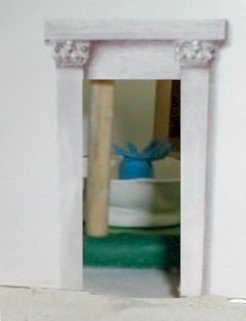
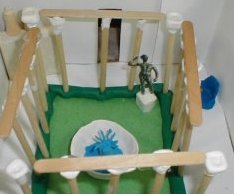
We built a model of a Greek home. We began by building the outer walls from cardboard. Wooden framing was added. The tops of the columns were molded from clay. This was placed on a piece of plywood and covered with sand. The inner courtyard was made from green paper. The columns were made using dowels. All pieces were "glued" together with clay. The fountain was also made from clay. A statue was built from paper. Furniture and accessories were also made from clay.

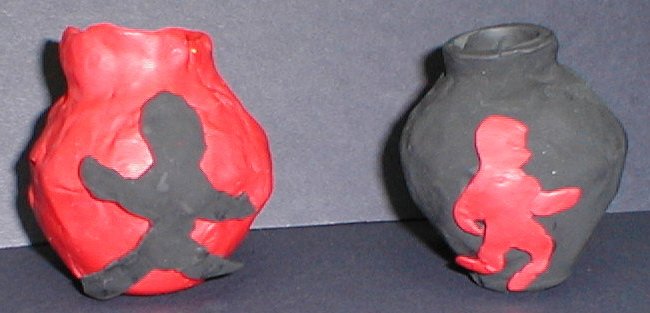
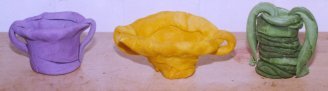
The Greeks used the large deposits of clay to make pottery. By the year 1000 BC Athens had become one of the leading cities in making pottery. The pots were both functional and beautiful. The Greeks made two basic kinds of pottery. One was the red-figured and the other was black-figured. We simply used red and black clay to form these red and black figured Greek style vases.

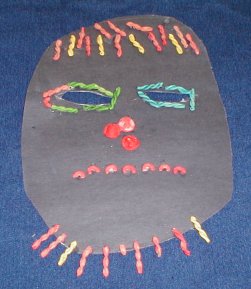
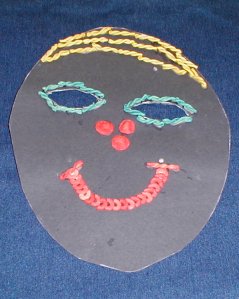
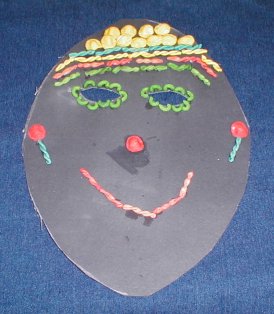
The Greeks loved drama. Large open theaters were built throughout Greece. The theaters were so large that the spectators could not see the faces of the actors. Because of this the actors wore masks to show how the characters felt during different times of the drama. We made masks simply by dyeing pasta with food coloring. We then glued the pasta to a piece of black poster board to show a mood that a Greek actor might be experiencing during a drama.

Greek women used decorative pins to hold their garments on. Try making your own pins. These were made with faux jewels.


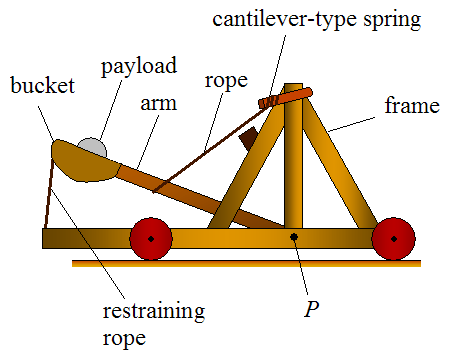
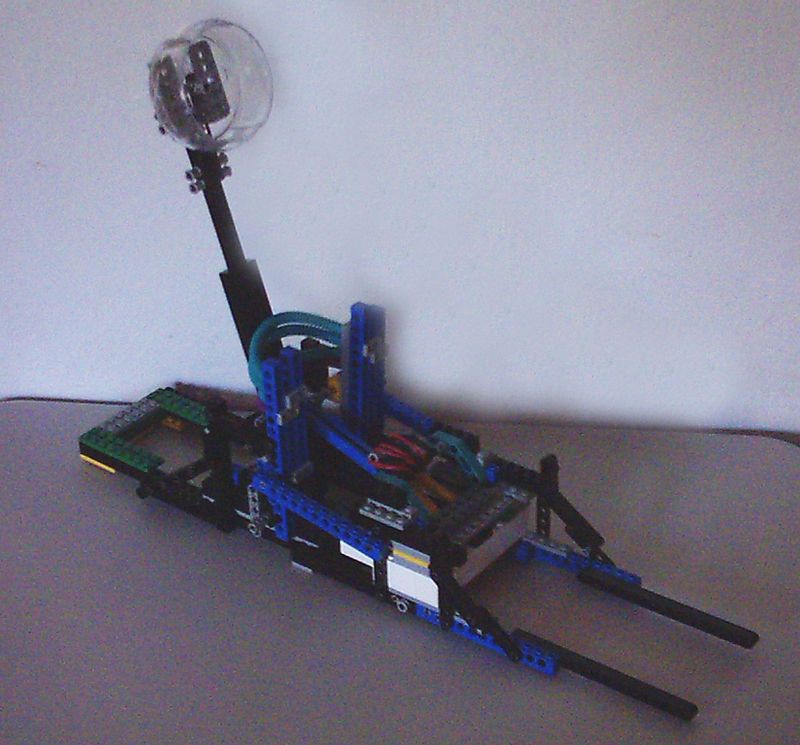
Philip hired the best engineers to help in designing military weapons. Stronger catapults that used twisted ropes were one of the new inventions that came from this. Try building your own catapult from craft sticks, string, rubber bands, or even Legos. |