World War 1
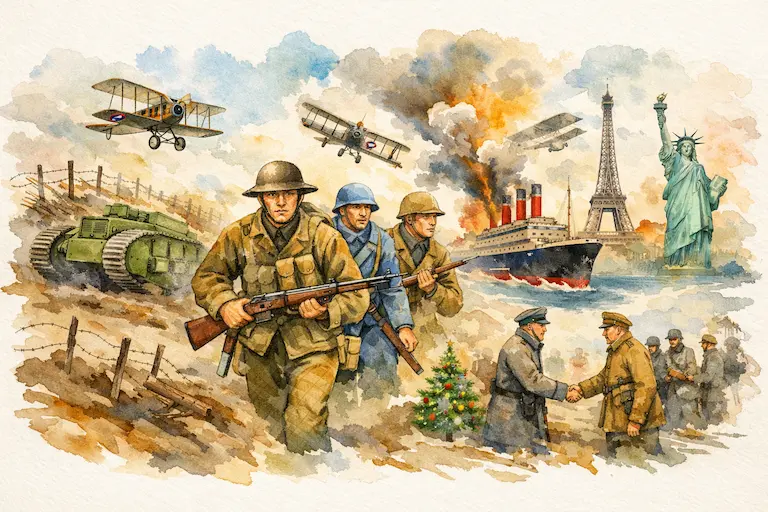
World War I was a global conflict that reshaped nations, alliances, and the balance of power. Rising tensions in Europe, combined with nationalism, militarism, and complex alliances, set the stage for a war unlike any the world had seen before.
Students will explore the causes of the war, America’s role in the conflict, life on the home front, and the lasting impact of the Treaty of Versailles. Each lesson includes a student-friendly article, organizers, and activities designed for grades 3–6.
World War 1 Lessons
These lessons guide students through the causes, major events, and lasting impact of World War I. From rising tensions in Europe to America’s role in the conflict and the Treaty of Versailles, this unit provides clear, engaging resources for grades 3–6.
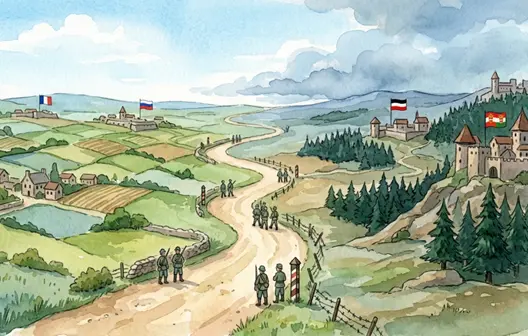
The Road to World War I
Learn how alliances, nationalism, militarism, and imperialism created rising tensions that led to the start of World War I.
View Lesson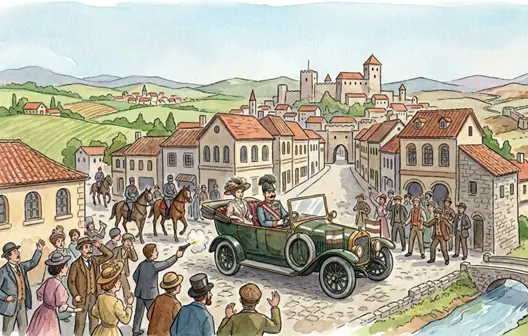
Archduke Ferdinand Is Shot
Explore how the assassination of Archduke Franz Ferdinand set off a chain reaction that pulled Europe into war.
View Lesson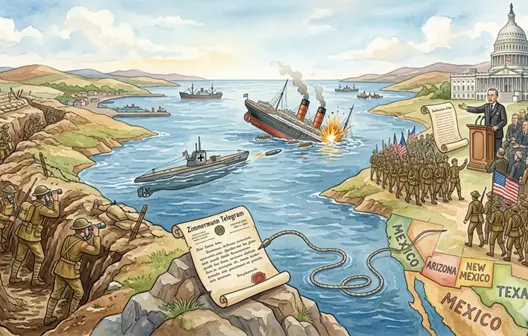
The United States and World War I
Learn why the United States entered World War I, including submarine warfare and the Zimmermann Telegram.
View Lesson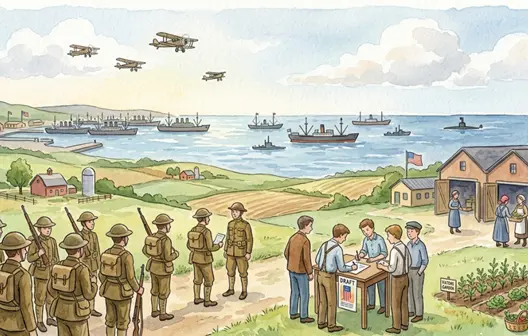
The United States Fights World War I
Discover how American soldiers trained, fought, and supported the Allies during World War I.
View Lesson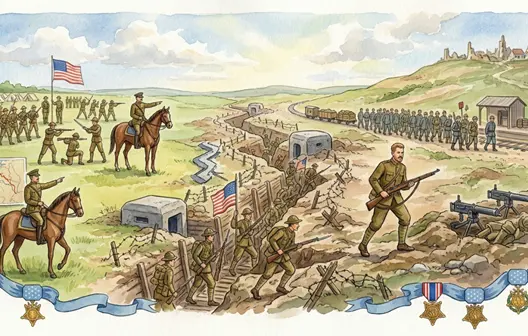
United States World War I Heroes
Meet key American heroes of World War I, including Sergeant York and General Pershing.
View Lesson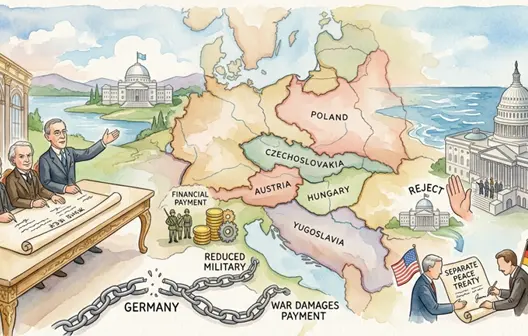
The Peace Treaty of Versailles
Examine how the Treaty of Versailles reshaped Europe and set the stage for future world events.
View LessonInteresting Facts About World War 1
Animals Served in the War
Horses, dogs, and even pigeons played important roles during World War I. Pigeons carried messages across battlefields when radios failed, and some became famous for saving entire units.
Trenches Formed a “Front Line City”
Soldiers lived in long networks of trenches that stretched for hundreds of miles. These trenches had sleeping areas, kitchens, and even dugout “rooms” carved into the walls.
New Technology Changed Warfare
World War I introduced tanks, airplanes, and submarines on a large scale. These inventions changed how battles were fought and made the war very different from earlier conflicts.
Poison Gas Changed Warfare
World War I saw the first large-scale use of poison gas in battle. Soldiers wore early gas masks to protect themselves from chlorine and mustard gas, which made the air thick and dangerous. This terrifying weapon led to new rules banning chemical warfare in later years.
Women Took On New Roles
With so many men fighting overseas, women worked in factories, drove ambulances, served as nurses, and filled jobs that kept countries running during the war.
The War Helped Create New Countries
After the war, the map of Europe changed dramatically. Nations like Poland, Czechoslovakia, and Yugoslavia were formed from old empires that broke apart.
The U.S. Army Grew Overnight
When the United States entered the war in 1917, it had a small army. The draft quickly expanded the military to millions of soldiers in just over a year.
Propaganda Posters Were Everywhere
Governments used colorful posters to encourage people to enlist, conserve food, buy war bonds, and support the troops. Many of these posters are still famous today.
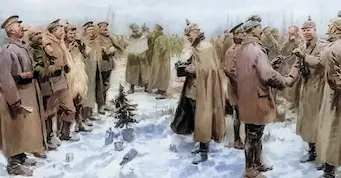
The Christmas Truce: A Moment of Peace
On Christmas Eve in 1914, soldiers on both sides of the Western Front paused the fighting. German troops began singing “Silent Night”, and British soldiers recognized the tune and joined in. The next day, many met in “No Man’s Land” to exchange small gifts, shake hands, and even play a friendly game of soccer. It was a brief but unforgettable moment of humanity during World War I.
Explore the Full World War 1 and Roaring Twenties Unit
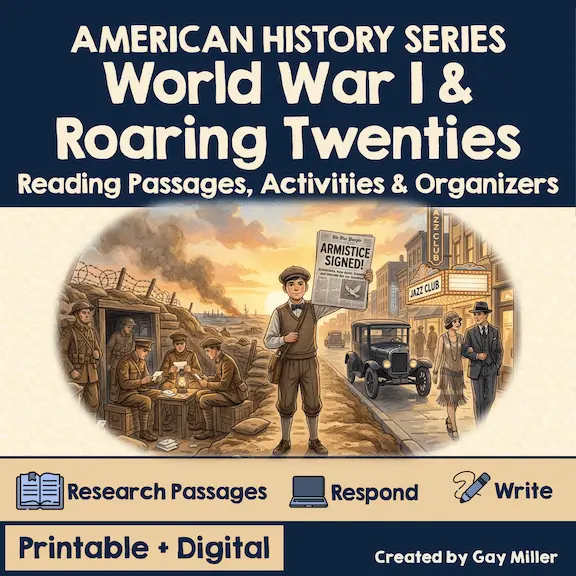
This complete history unit includes research passages, organizers, writing tasks, quizzes, activities, and website research — all in printable and digital formats. Everything you need to teach The Roaring Twenties and World War 2 with confidence.
View the Full Unit on TPT