How to Make Vocabulary Practice Fun

How to Make Vocabulary Practice Fun

Some vocabulary words just beg to be spoken out loud. They bounce, twist, and tumble off the tongue like characters in a children’s book. Words like skedaddle, borborygmus, and flibbertigibbet aren’t just fun. They’re silly vocabulary words for students that spark joy, curiosity, and classroom giggles.

But once you’ve taught those delightful words, what do you do with them?

In this post, I’ll share ten fun-to-say words your students will love, a simple method for teaching vocabulary with index cards, and a clever, no-cost way to keep those cards from disappearing under desks and backpacks.

Be sure to pick up the handout before you get started. It contains the word list, teaching ideas related to the list, and methods for storing the word cards.

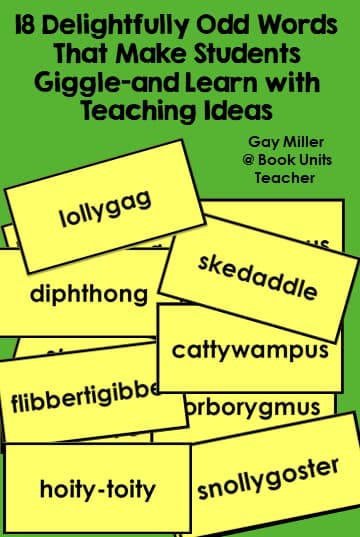
18 Delightfully Odd Words That Make Students Giggle—and Learn

Each word below includes a definition, a classroom-friendly example, and a quick origin story to keep things authentic and engaging.

Word Definition Example Origin
lollygag to fool around or procrastinate Quit lollygagging—we’re leaving in 10 minutes! blends “lolly” (tongue) and “gag” (trick), first seen in 1862
skedaddle to run away quickly The raccoon skedaddled when it saw the flashlight beam. Civil War slang turned classroom chaos
flibbertigibbet a silly, talkative person She’s a total flibbertigibbet during group work. Middle English mischief in one breathless word
cattywampus askew or out of alignment Your poster is hanging all cattywampus! Southern charm meets crooked bulletin boards
borborygmus the sound of a stomach rumbling Please excuse my borborygmus—I skipped breakfast. Greek origin for “tummy growls”
hootenanny an informal gathering with music We’re planning a hootenanny to celebrate our poetry unit. Appalachian roots and classroom celebrations
brouhaha a noisy commotion or fuss There was a real brouhaha during the fire drill. French flair for hallway drama
bumbershoot an umbrella Don’t forget your bumbershoot—it might rain! whimsical slang from the early 20th century
snickeroodle a giggle mixed with a snort She let out a snickeroodle when the teacher said “platypus pajamas.” invented mash-up of snicker + oodle

You will find the full list of words in the hanout.

A Clever, No-Cost Storage Solution

If you’ve ever worked with index cards in the classroom, you know the struggle: students love them, but cards have a way of disappearing the second a notebook hits the floor. That’s why I’m always on the lookout for simple, no-cost storage ideas. Tea boxes and gum containers are two of my favorites. You’ll find step-by-step photos and printable cards in the handout.

Storage Boxes for Index Cards

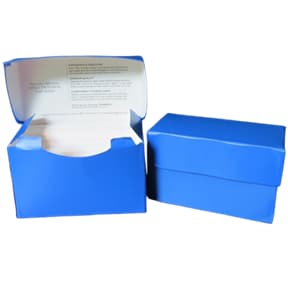
1. Tea Boxes

Twinings tea boxes are the perfect size for index cards. Add a little Con-Tact paper or washi tape, and students can personalize their own vocabulary vaults.

Storage Boxes for Index Cards

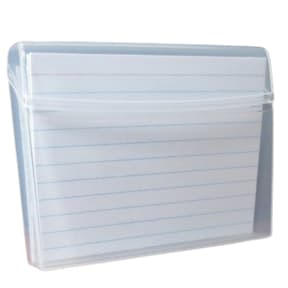
2. Extra Gum Containers

These plastic boxes are sturdy and compact. Just slide out the cardboard insert and trim your index cards to 3×4 inches—they’ll fit perfectly.

Classroom Ideas

These silly vocabulary words for students pair perfectly with index card games, charades, and creative challenges. They make practice lively while reinforcing definitions, parts of speech, and usage.

  • Word of the Week
    Introduce one fun word each week. Students add it to their box and use it in writing or conversation.
  • Vocabulary Challenge
    Let students draw a card and use the word in a sentence, skit, or comic strip.
  • Decorate-and-Store Friday
    Turn box decorating into a creative reward or indoor recess activity.
  • Grammar Hunts
     Use the cards for mentor sentence practice, parts of speech sorting, or tone analysis

 10 Ways to Use Silly Vocabulary Words for Students  

👉 These games take the basic “spread, ask for, and hold up” model and expand it into partner games, whole-class movement, and creative wordplay. They also reinforce multiple layers of word knowledge, not just definition recall, but part of speech, context, nuance, and usage.

1. Vocabulary Scoot

  • Place one card on each student’s desk (front side showing).
  • Students “scoot” from desk to desk, writing down the definition or drawing a quick sketch for each word.
  • Bonus: have them flip the card after they’ve guessed to self-check.

2. Memory Match with a Twist

  • Spread out words face up. Teacher calls out a clue (“Find the antonym for stubborn” or “Find the word that fits this sentence: The coach told us not to ___ before the game.”).
  • Students race to grab the matching card, flip it over to prove it with the definition or example sentence.

3. Speed Sort Challenges

  • Sort into categories: part of speech, syllable count, positive vs. negative connotation, silly vs. serious words, etc.
  • Do it timed, in teams, or tournament-style.

4. Vocabulary Charades

  • Student draws a card and must act out the word (no speaking).
  • Peers guess the word, then the actor flips the card to check.
  • Works especially well with your “silly words” list—cattywampus and lollygag act-outs are hysterical.

5. Back-to-Back Showdown

  • Two students stand back-to-back, each holding a card.
  • They flip when the teacher says “Go!”
  • First to use the word in a correct sentence (or say the definition) keeps the card.

6. Word Detective 

  • Teacher gives three clues that get progressively easier.
  • Example: “I am a verb. I mean to waste time. I start with L.” → lollygag.
  • Students race to hold up the right card.

[Clues for this activity can be found in the handout.]

7. Story Chain

  • Each student draws a card and must add one sentence to a collaborative story using the word on the card.
  • Encourage silly twists. It makes even dry words memorable.

8. Four Corners Vocabulary

  • Post signs in corners: “Synonym,” “Antonym,” “Part of Speech,” “Sentence.”
  • Teacher holds up a word card, students walk to the corner that matches the clue given.
  • Example: “Go to the corner that shows you know the antonym.”

9. Vocabulary Dominoes

  • On the front of each card: the word. On the back: one clue (synonym, antonym, example, or sentence with a blank).
  • Students “domino” them by matching the front of one card to the back of another.

10. Hot Seat

  • One student sits with their back to the board. Teacher (or another student) holds a vocabulary card on their forehead.
  • Classmates can’t say the word but must give clues using synonyms, antonyms, or sentences.
  • Student in the hot seat guesses the word.

Playful language builds engagement. Silly vocabulary words for students stick because they’re unexpected, vivid, and multisensory. Pairing them with hands‑on tools like index cards and personalized storage boxes turns vocabulary into something students own, not just memorize.

And let’s be honest: sometimes we all need a little lollygagging to remember why we love words in the first place.
Visit all the posts in this series.

Check out the full collection here:

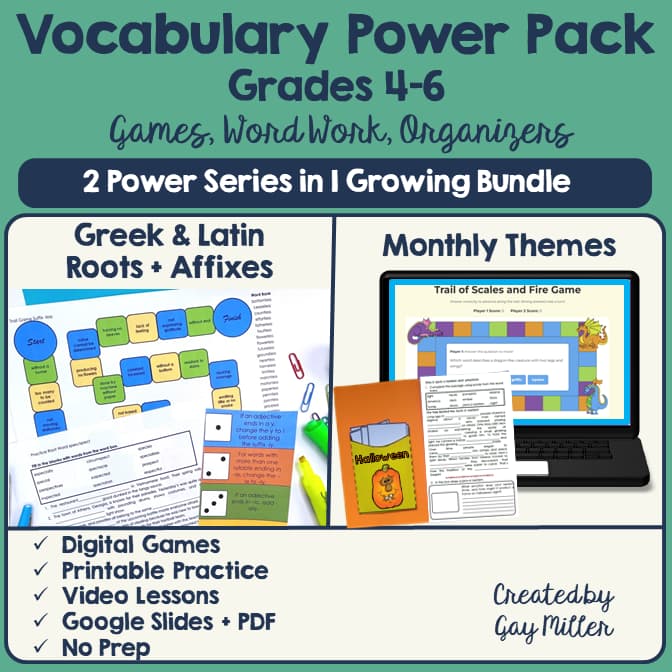
Vocabulary Activities Bundle Grades 4–6 | Games, Word Work, Roots, Monthly Theme

Yearlong Vocabulary Practice Growing Bundle Printable & Digital Grades 4–6

Gay Miller

Permanent link to this article: https://bookunitsteacher.com/wp/?p=7328