Teaching Prefixes Activities and Ideas [Upper Elementary]

Last updated: August 30, 2026
Teaching Prefixes to Upper Elementary Students

Vocabulary doesn’t have to feel like drill work. When students learn how prefixes work, they suddenly realize they can unlock dozens of unfamiliar words, and they get really excited about it. Teaching prefixes is one of the fastest ways to build vocabulary, strengthen decoding, and prepare students for the complex texts they’ll encounter in upper elementary and beyond.

Grade Level4th–6th
Skill FocusPrefixes
Activities7 Included
FormatVideo & Printable

Jump to Section

⭐ Why Teach Prefixes?

English borrows from many languages, including French, Greek, Latin, and more, resulting in a vocabulary of about one million words. While around 170,000 words are currently in use, the average adult English speaker only uses 20,000 to 35,000 words. Interestingly, about 95% of the words used in everyday media like newspapers and books come from a small pool of 3,000 words.

This limited exposure poses a challenge: How can we prepare students for standardized tests like college entrance exams, which draw from a much broader vocabulary? The answer lies in teaching students the building blocks of words, including prefixes, suffixes, and Greek and Latin roots.

Teaching prefixes gives students:
  • a decoding strategy they can use independently
  • confidence when encountering unfamiliar words
  • a deeper understanding of how words are built
  • stronger comprehension across all subjects
When students understand how prefixes change meaning, they stop guessing and start analyzing.
 

See Prefixes in Action

Click a word to watch it break apart into prefix + base word.

re- (again)
un- (not)
pre- (before)
re-again
+
playdo an activity
=
replay

Meaning: to play again.

"Can we replay that song?"

re-again
+
buildmake
=
rebuild

Meaning: to build again.

"They had to rebuild the fence after the storm."

re-again
+
visitgo see
=
revisit

Meaning: to visit again.

"Let's revisit that idea tomorrow."

un-not
+
fairright, equal
=
unfair

Meaning: not fair.

"It felt unfair that he got two turns."

un-not
+
cleareasy to understand
=
unclear

Meaning: not clear.

"The directions were unclear."

un-not
+
knownfamiliar
=
unknown

Meaning: not known.

"The cause of the noise was unknown."

pre-before
+
viewsee
=
preview

Meaning: to see something before it happens.

"We watched a preview of the movie."

pre-before
+
heatmake hot
=
preheat

Meaning: to heat something before cooking.

"Preheat the oven to 350 degrees."

pre-before
+
testcheck
=
pretest

Meaning: to test before teaching a unit.

"The class took a pretest on Monday."

Before & After: Fixing the Misconception

See how student thinking changes once the prefix gets broken apart.

Misconception

"Preview means view something, but preheat means heat something."

The base word is right — but the prefix's meaning got lost along the way.

Corrected

pre- (before) + view (see) → preview means to see something before it happens.

pre- (before) + heat (make hot) → preheat means to heat something before cooking.

Misconception

"Uncertain means certain, but more."

The prefix got read as an intensifier instead of a negation.

Corrected

un- (not) + certain (sure) → uncertain means not sure.

The 7-Step Teaching Sequence

Click any step to see how it works — the sequence runs beautifully for 4th–6th grade.

1 Introduce the Prefix
Write the prefix on the board (ex: re-) and ask students to brainstorm words they already know.
2 Break Apart a Word Together
Choose a word like rebuild and model it as a class:
  • prefix: re- (again)
  • base word: build
  • meaning: build again
3 Guided Practice
Students complete a quick organizer with four columns:
  • prefix
  • base word
  • meaning
  • sentence
4 Apply to Unfamiliar Words
Give students new words they likely haven't seen — reconsider, unzip, preplan — and have them decode using the same process.
5 Sentence Practice
Students write a sentence using the new word to show they understand it in context, not just in isolation.
6 Hands-On Activity
Choose one of the activities below — flipbook, trail game, spinner, or another hands-on option — to reinforce the concept.
7 Reinforce with Daily Warm-Ups
Use 2–3 prefix words each morning for quick, low-stakes decoding practice that keeps the skill fresh all year.

Lesson Handout

This handout includes all prefix activities listed in this post, including the Wizard of Oz organizers and trail game.

Fun Activities to Teach Prefixes

Activity #1 – Teaching Number Prefixes

Teaching Prefixes
Prefix Video Lesson
Play Video about Prefix Video Lesson

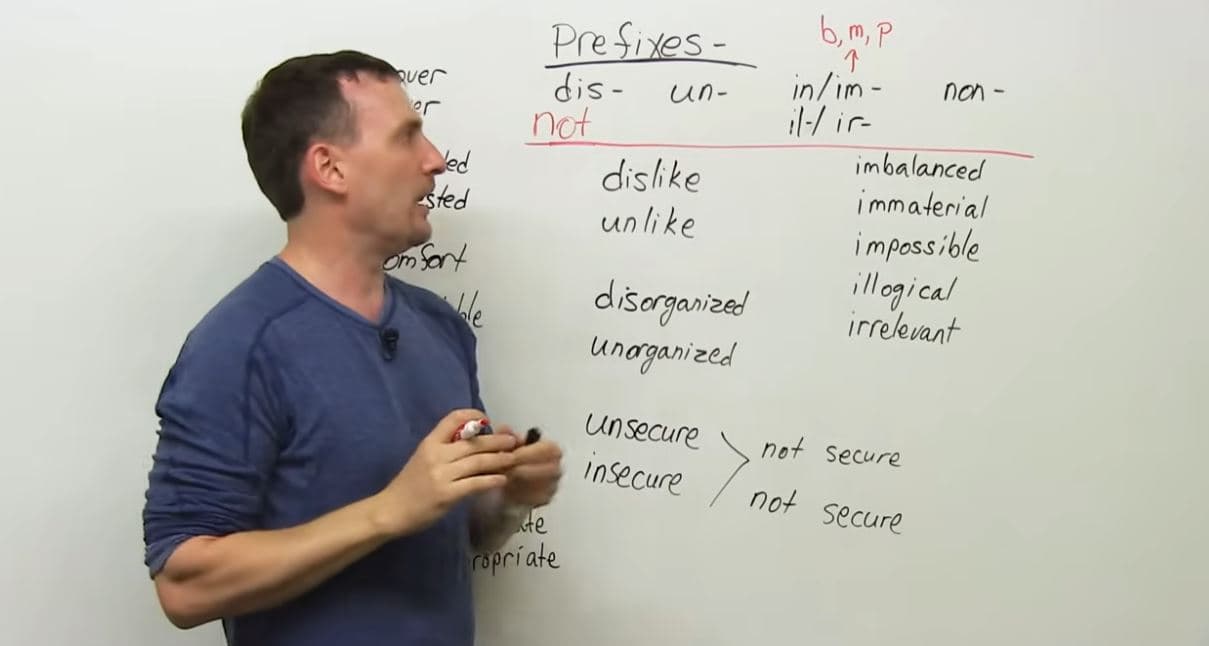
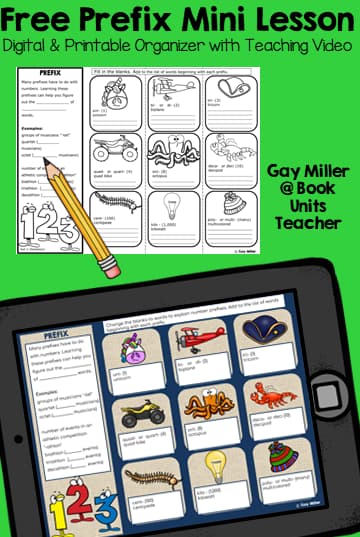
Many prefixes relate to numbers, and learning these can unlock the meaning of unfamiliar words. Here are a few examples:

  • uni- (1): unicorn, unicycle, uniform
  • bi- or di- (2): bicycle, binoculars, dialogue
  • tri- (3): triangle, tricycle, trio
  • quad- or quart- (4): quadrant, quartet
  • oct- (8): octopus, octagon
  • deca- or deci- (10): decathlon, decimal, decade
  • cent- (100): century, centipede, centimeter
  • kilo- (1,000): kilogram, kilobyte
  • poly- or multi- (many): polygon, multiply, multicolored
Students watch the video lesson, pause to complete the organizer, and check their responses. Perfect for Google Classroom.

Activity #2 – Flip Books

Teaching Prefixes
Students create flipbooks with:
  • prefix on the last page
  • base words on each page
  • combined words + meanings inside
Example:
Prefix: re‑  
Pages: build → rebuild, play → replay, visit → revisit

Activity #3 – Interactive Anchor Charts

Teaching Prefixes

Draw columns on a chart for different prefixes and have students use sticky notes with base words that form real words when combined with the prefixes. This activity makes for a great group activity or learning center task.

Activity #4 – Foldable Graphic Organizers

Teaching Prefixes

The foldable prefix organizer is a versatile, hands-on project designed to help students understand how prefixes and suffixes change the meaning of root words. By breaking down words into their individual parts, including meaning, root word, prefix, suffix, and even incorporating a visual representation, students gain a deeper understanding.

Activity #5 – Negative Prefix Booklet

Prefix Video Lesson
Play Video about Prefix Video Lesson

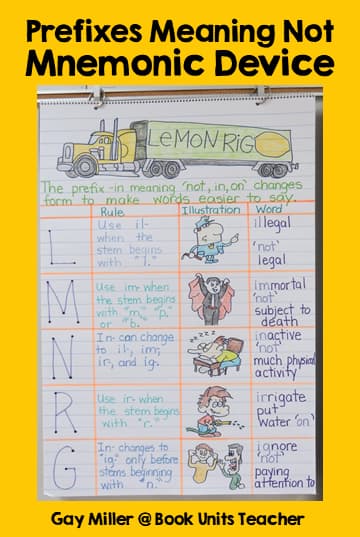
Teach students negative prefixes (il-, im-, in-, ir-, ig-) using a mnemonic device and a printable mini-booklet that students can use as a reference guide.

Teaching Prefixes
Teaching Prefixes

Activity #6 – Prefix Spinner Game

Teaching Prefixes
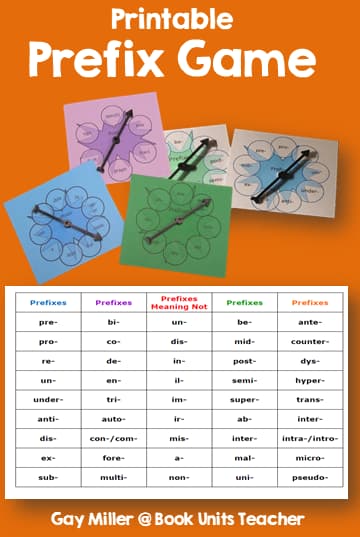
Students spin a spinner, name a word with the prefix they land on, and explain its meaning. If correct, they color a space on their board. First to get a row wins.

Activity #7 – Trail Games

Teaching Prefixes

Students play a trail game using prefixes fore‑, inter‑, and de‑.
This game reinforces how prefixes modify root words to create new meanings.
Included in the handout.

Teacher Information

⭐ Common Misconceptions

Students often:
  • guess meaning based on the base word only
  • confuse similar prefixes (bi‑ vs di‑)
  • think every “un‑” word means “not”
  • misidentify the root
  • assume prefixes always change part of speech
Addressing these early helps students decode accurately.

⭐ Differentiation Tips

Emerging Readers:  
Use picture cues and color‑coded prefix cards.
On‑Level Students:  
Have them generate their own prefix word lists.
Advanced Students:  
Challenge them with multisyllabic words (ex: unpredictable, reconsideration).
English Learners:  
Provide sentence frames and visuals.

⭐ Download the Free Prefix Lesson Pack

The handout includes:
  • number prefix organizer
  • flipbook templates
  • negative prefix booklet
  • foldable graphic organizer
  • Wizard of Oz trail game
  • Google Slides version
 

👉 Download the free lesson handout here to access all the activities and organizers.

See the product that inspired this post.

Prefixes, Suffixes, and Roots contains practice with 90 affixes and root words. This resource contains graphic organizers with accompanying video lessons, games, and printable practice to help students better understand affixes and root words.

Gay Miller

Permanent link to this article: https://bookunitsteacher.com/wp/?p=5999

4 comments

Skip to comment form

    • Theresa on December 28, 2017 at 1:13 pm

    Wow – thanks for sharing all these great resources!!!

    1. You’re welcome!

    • Diane on December 31, 2017 at 10:22 pm

    Hi Gay! Thanks for the resources! The free spinner prefix game won’t open when I click on it. Am I doing something wrong?

    1. You’re welcome. The link works for me. Here it is again: https://www.teacherspayteachers.com/Product/Free-Prefix-Spinner-Game-492466

Comments have been disabled.