Have you ever explained something so clearly that you were sure your students “got it” — only to realize the next day that it had vanished overnight? That’s where reflection activities come in. One of the simplest, most flexible options is the learning log: a journal-style tool that helps students slow down, think about what they’re learning, and make it stick.
Instead of “Dear Diary, today I had pizza,” students use learning logs to engage with content in meaningful ways, including organizing ideas and recording their thinking in a format that supports learning. And yes, these reflection activities can be fun.
By the end of this lesson, students will be able to:
use learning logs to reflect on content and deepen understanding
choose appropriate formats for different types of reflection
record thinking using process, reaction, reflection, and “better way” entries
organize ideas using graphic organizers, webs, lists, and written responses
monitor their own learning and identify areas of confusion
use learning logs as a tool for metacognition and self‑assessment
Mini-Lesson: What Are Learning Logs?
Learning logs are simple reflection tools that help students slow down and think about what they’re learning. Instead of copying notes, students process information by making connections, asking questions, and recording insights. Learning logs:
Capture thinking, not just facts
Help students remember what they learned
Show growth over time
Give teachers a quick window into understanding
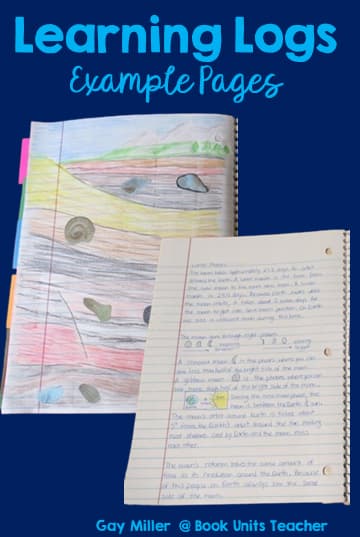
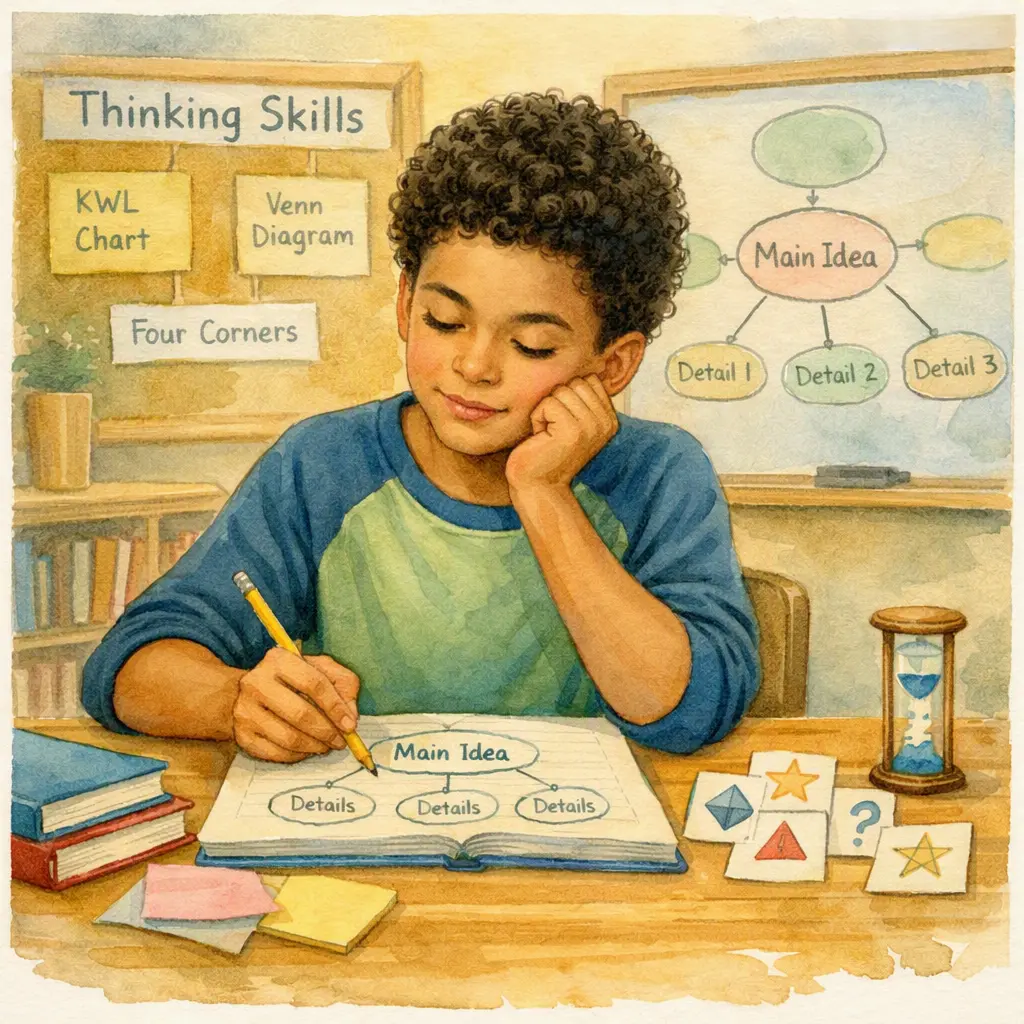
Model how an entry might look — a short paragraph, a concept web, a list of questions, or a graphic organizer. Emphasize that learning logs are snapshots, not polished essays.
Four Types of Entries
Tap a card to see the definition and an example prompt.
Process EntriesTap to flip
Reflection EntriesTap to flip
Reaction EntriesTap to flip
"Better Way" EntriesTap to flip
A quick way to introduce learning logs: Tell students, “Next week we’re studying [topic]. Design a poster that shows what you already know about it.” It’s an instant pre-assessment and a smooth entry point into reflection.
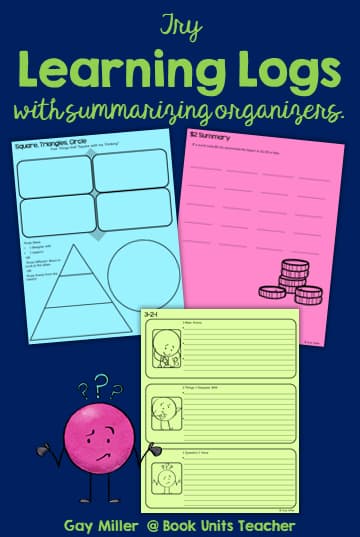
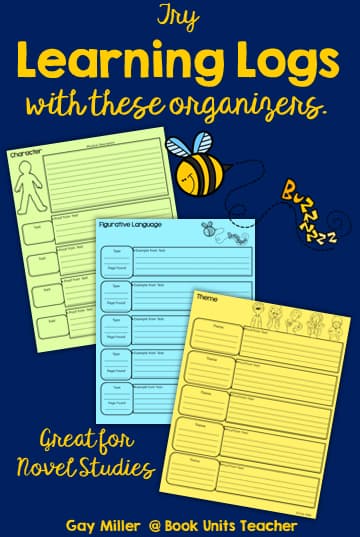
The printable handout includes multiple learning log organizers, including templates for process, reflection, reaction, and “better way” entries, plus graphic organizers that students can glue into notebooks and examples to model expectations. Use it during independent practice, small-group work, or as exit tickets.
Students use the Character Organizer to reflect on a character’s physical description, traits, and text evidence. This turns a learning log entry into a structured analysis where students:
identify meaningful traits
support ideas with proof from the text
reflect on how the character changes or influences the story
Perfect for novel studies, read‑alouds, or small‑group reading.
Activity 2 — Figurative Language Log
Using the Figurative Language Organizer, students track examples of similes, metaphors, personification, and more. They record:
the type of figurative language
the page number
the exact example from the text
This becomes a reflection entry that helps students notice the author’s craft and deepen comprehension.
Activity 3 — Theme Reflection Log
Students use the Theme Organizer to identify themes and support them with text evidence. This activity helps students:
reflect on big ideas
connect events to meaning
justify their thinking with proof
It works well after finishing a chapter, story, or poem.
Activity 4 — $2 Summary
Students summarize the lesson using the $2 Summary Organizer, where each word “costs” ten cents. This forces students to:
condense information
choose words intentionally
reflect on what truly matters
It’s a quick, high‑impact learning log entry that works for any subject.
Activity 5 — 3‑2‑1 Reflection
Students complete the 3‑2‑1 Organizer:
3 main points
2 things they disagree with or want to challenge
1 lingering question
This structure helps students reflect deeply, not just restate what they heard. It’s ideal for after a video, article, experiment, or mini‑lesson.
Activity 6 — Square, Triangle, Circle Reflection
Students use the Square/Triangle/Circle Organizer to reflect on learning in three ways:
Square: Four ideas that “square with my thinking”
Triangle: Three ideas to explore, challenge, or view from different angles
Circle: One idea still “circling” in their mind
This organizer turns reflection into a visual thinking routine that fits perfectly inside a learning log.
Activity 7 — Mix‑and‑Match Log Entries
Let students choose one organizer per day or per lesson. This builds ownership and keeps learning logs fresh:
Monday → Character
Tuesday → $2 Summary
Wednesday → Figurative Language
Thursday → 3‑2‑1
Friday → Square/Triangle/Circle
Students love the variety, and teachers get rich insight into comprehension.
Teacher Information
Differentiation
Provide sentence starters.
Offer simpler organizers.
Allow drawings instead of full paragraphs.
Use a mix of written and visual entries.
Reflect after lessons, labs, or reading.
Write multi-layer reflections.
Track learning across a unit.
Compare early and late entries to show growth.
Common Misconceptions
Students may think:
learning logs must be long
they must write full paragraphs every time
logs are graded for correctness
logs are just “journals”
Clarify that learning logs are quick, flexible thinking tools — not polished writing.
Teacher Tips
Model entries frequently. A quick sample entry saves a lot of “is this enough?” confusion.
Let students choose their format, and set clear expectations for length and complexity up front.
Keep entries short and focused. Logs don’t need the depth of an interactive notebook.
Use logs as exit tickets, and pull them out during conferences to show growth.
Blank notebooks and printed organizers both work — just plan for a little cutting, folding, and gluing if students are gluing organizers in. A mix of blank space and structured pages lets kids who like structure and kids who like to draw or write freely both thrive.
Learning logs aren’t busywork; they’re a way to help students slow down, think, and actually own their learning. And let’s be honest: when kids can explain something in their own words (or drawings), you know it’s sinking in.