Constitution for Kids

Ten Interesting Facts Constitution

Teaching the Constitution can feel a little like trying to explain why your Wi‑Fi suddenly stopped working — important, but not always exciting. This post changes that. Below you’ll find a kid‑friendly video, an organizer, hands‑on activities, and a few fun facts to help your students understand the Constitution for kids, how it was created, and why it still matters.

Lesson Handout

Before diving in, you may want to download the free resources in this PDF.

🎥 The Story of the U.S. Constitution (Student Video)

This short video walks students through the Articles of Confederation, the Constitutional Convention, the Great Compromise, the three branches, checks and balances, and the Bill of Rights, all in under ten minutes. It’s perfect for introducing your unit or reviewing before an assessment.
The Story of the Constitution Video
Play Video about The Story of the Constitution Video

📘 Video Companion Organizer

Constitution Activities for Upper Elementary Students

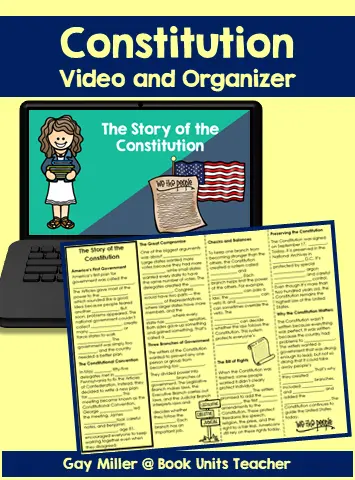
To help students follow the video, I created a companion organizer that mirrors the flow of the story:

  • America’s first government (Articles of Confederation)

  • Why it didn’t work

  • Constitutional Convention

  • The Great Compromise

  • Three branches of government

  • Checks and balances

  • The Bill of Rights

Students can complete it while watching the video or use it afterward as a summary of the lesson. It also works well in interactive notebooks.

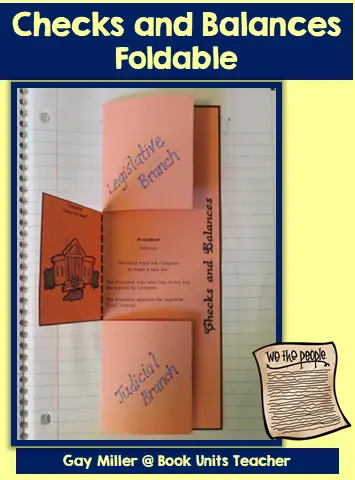
⚖️ Checks & Balances Flip Organizer

Constitution Activities for Upper Elementary Students

This foldable organizer breaks down the powers of each branch of government:

  • Legislative Branch — makes laws

  • Executive Branch — carries out laws

  • Judicial Branch — interprets laws

Students fill in responsibilities, examples, and checks each branch has on the others. It’s a great visual for understanding how the branches work together and how they keep each other from becoming too powerful.

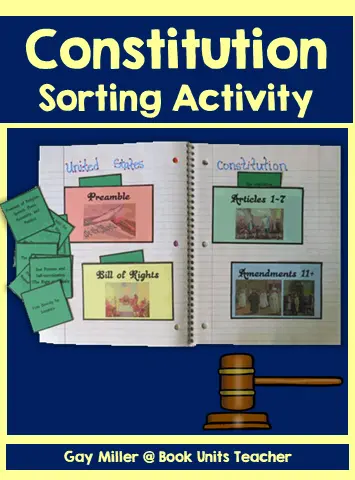
🧩 Sorting Activity: Preamble, Articles, Bill of Rights, Amendments

Constitution Activities for Upper Elementary Students

This hands‑on sorting activity helps students understand the structure of the Constitution. Students sort cards into four categories:

  • Preamble

  • Articles 1–7

  • Bill of Rights

  • Amendments

Examples include:

  • Freedom of Religion, Speech, Press, Assembly, and Petition

  • The President serves no more than 2 terms

  • How to change the Constitution

  • The right to a speedy and public trial

Use it as a center activity, partner work, or a quick assessment. It’s also perfect for review days.

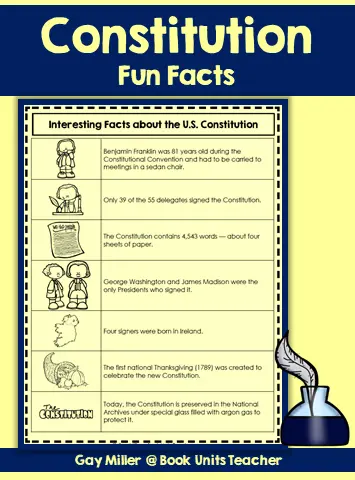
⭐ Interesting Constitution Facts (Short & Student-Friendly)

Constitution Activities for Upper Elementary Students

Here are a few fun facts to sprinkle into your lessons:

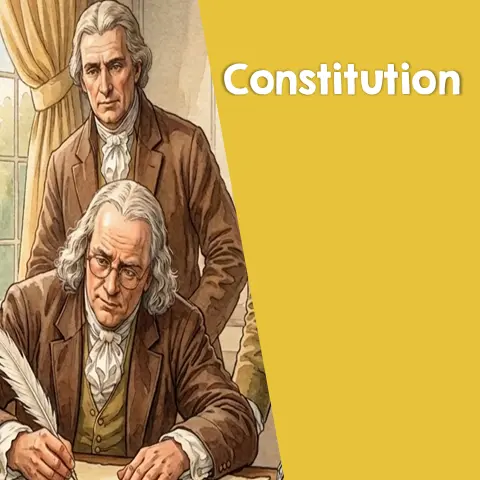
  • Benjamin Franklin was 81 years old during the Constitutional Convention and had to be carried to meetings in a sedan chair.

  • Only 39 of the 55 delegates signed the Constitution.

  • The Constitution contains just 4,543 words, about four sheets of paper.

  • The first national Thanksgiving (1789) was created partly to celebrate the new Constitution.

  • Today, the Constitution is preserved in the National Archives under protective glass filled with argon gas and kept at 67°F.

These make great discussion starters or bell‑ringer questions.

🎉 More Ways to Teach the Constitution

These activities come from your earlier notes — updated to match your current style and classroom approach.

Preamble Scramble

Cut out the words of the Preamble and let students race to assemble them in the correct order. This works beautifully as a warm‑up or small‑group challenge.

Create a Class Constitution

Students work together to write a “constitution” for your classroom. They include:

  • rules

  • rights

  • responsibilities

  • consequences

  • how decisions will be made

This activity helps students understand why the Founders needed a governing document — and it builds classroom community.

Bill of Rights Match-Up

Students match each right to a real‑life example. For example:

  • “Freedom of the press” → a newspaper printing a story

  • “No cruel and unusual punishment” → fair treatment under the law

This makes abstract rights feel concrete and relevant.

 ⭐ Teacher Tip: Constitution Day

If you’re teaching this in September, these activities work perfectly for Constitution Day on September 17. A quick video + the companion organizer + the sorting activity makes an easy, meaningful lesson.

❓Constitution Trivia Quiz (Optional Classroom Activity)

Here’s a quick 10‑question quiz you can use after the video or at the end of your unit.

Multiple Choice

  1. America’s first plan for government was called: A. The Constitution B. The Articles of Confederation C. The Bill of Rights D. The Declaration of Independence

  2. Delegates met in 1787 in: A. Boston B. Philadelphia C. New York D. Richmond

  3. The Great Compromise created: A. One branch of government B. A single house of Congress C. Two houses of Congress D. A national court system

  4. The Executive Branch: A. Makes laws B. Carries out laws C. Interprets laws D. Changes laws

  5. The Bill of Rights includes: A. The first 5 amendments B. The first 10 amendments C. The first 12 amendments D. The first 15 amendments

True or False

  1. Benjamin Franklin was in his 40s when the Constitution was signed.

  2. The Constitution is the longest governing document in the world.

  3. The President can veto laws passed by Congress.

  4. The Constitution was signed in 1776.

  5. The Bill of Rights protects freedoms like speech and religion.

📥 Download All Constitution Resources

Everything mentioned in this post is included in one easy download:

  • Video Companion Organizer

  • Checks & Balances Flip Organizer

  • Constitution Sorting Activity

  • Trivia Quiz

  • Constitution Interesting Facts

Whether you’re teaching the Constitution for the first time or refreshing your unit, I hope these resources help your students understand not just what the Constitution says, but why it was written in the first place. The Constitution wasn’t created because everything was perfect. It was created because the country faced problems, and the Founding Fathers worked together to solve them.

If you use the video or organizers in your classroom, I’d love to hear how your students respond.

See the product that inspired this post.

Constitution Unit on TPT

Check out the full Constitution Unit on Teachers Pay Teachers, including organizers, articles, and more.

Gay Miller

Permanent link to this article: https://bookunitsteacher.com/wp/?p=469

3 comments

    • Julissa on September 14, 2014 at 8:55 am
    • Reply

    There is no link to take you to the printable graphic organizer or article. Am I supposed to click somewhere? Thanks for the great resources!

    • Jeannie on September 14, 2014 at 11:57 pm
    • Reply

    Hello,

    Your two Constitution and preamble graphic organizers for interactive journals are intriguing. The site says print free but I cannot find a link to download. Can I find your activity on another site?

    Thank you for sharing,

    Jeannie Pace
    Tijeras, NM

  1. The links are now working.

Leave a Reply

Your email address will not be published.