The Goldfish Boy is a heartfelt mystery that blends emotional depth with page‑turning suspense. Through Matthew’s struggle with OCD and his unexpected role in a neighborhood investigation, readers explore themes of courage, connection, and the power of facing fears one small step at a time.
⭐ About the Book: The Goldfish Boy
The Goldfish Boy by Lisa Thompson is a gripping blend of mystery and emotional realism. Twelve‑year‑old Matthew suffers from severe OCD, leaving him afraid to leave the safety and cleanliness of his bedroom. From his upstairs window, he watches the neighbors on his quiet British cul‑de‑sac, recording their routines in a notebook as a way to manage his anxiety.
When a toddler named Teddy disappears from the house next door, Matthew becomes the last person to have seen him. Suddenly, Matthew’s observations — once a coping mechanism — become crucial clues in a real investigation. As the neighborhood searches for the missing child, Matthew must confront his fears, step outside his comfort zone, and decide how far he’s willing to go to help.
This novel is an excellent choice for teaching empathy, mental health awareness, character development, and the structure of a modern mystery. Students connect deeply with Matthew’s struggle and his courage as he learns to face the world one step at a time.
⭐ Book Details
- Publication Date: January 5, 2017
- Reading Level: Lexile 750L • Guided Reading Level W
- Interest Level: Grades 5–8
- Awards: The Children’s Book Award Top 10
- Length: 320 pages
- Estimated Word Count: Approx. 97,600 words
- Estimated Reading Time: About 6 hours and 30 minutes
- Audiobook Length: 6 hours and 31 minutes
- Genre: Young adult fiction
- Setting: A single suburban street in Britain
- Themes: Obsessive-Compulsive Disorder, Mystery, Friendship, Misfits and Underdogs
- Point of View: First‑person (Matthew’s perspective)
- First Line: “Mr. Charles had sunburn right on the top of his head.”
The Goldfish Teaching Activities
Book Unit Samples
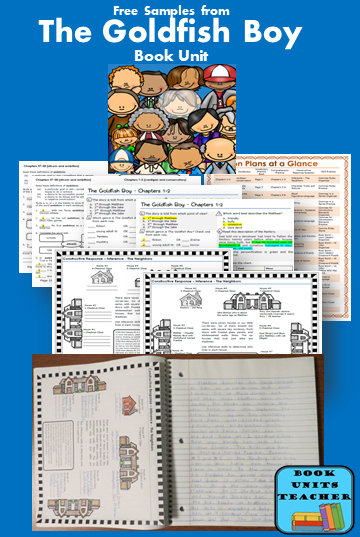
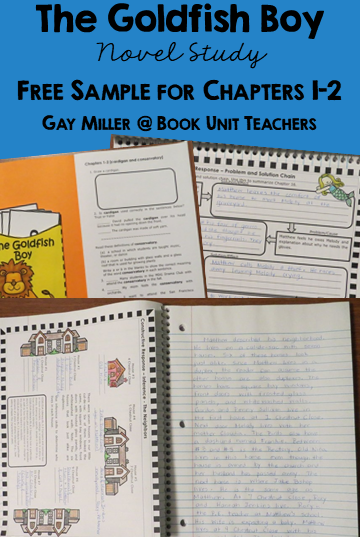
You will find the following in this novel study sample:
- Vocabulary Practice for Chapters 1-2
- Comprehension Questions for Chapters 1-2
- Constructed Response Question – Inference – The Neighbors
Teaching Idea #1 – Writing Prompts
Classroom Community: Have students discuss ways to create a safe and supportive classroom environment for students with mental health challenges and come up with a plan to put their ideas into action.
Mystery Solving: Have students work in groups to solve the mystery in the story, practicing critical thinking and problem-solving skills.
Creative Writing: Have students write a journal entry from Matthew’s perspective, exploring his thoughts and feelings about a specific event in the story.
Teaching Idea #2 – Book Trailer
This professional book trailer created by Scholastic is a great way to introduce the book.
Teaching Idea #3 – On the Web
This free nine-page printable from Scholastic provides ideas to use with the book.
Teaching Idea #4 – Learn about OCD
- OCD stands for Obsessive-Compulsive Disorder.
- When you suffer from OCD, your mind gets stuck on a certain thought or image. The thought plays over and over again. Along with the repeating thoughts, you feel anxious. You want to respond, to react, to do something to protect yourself.
- Approximately 2.3% of the population between the ages of 18 to 54 suffers from OCD. In the United States, this is 3.3 million people.
- In children, OCD is more prevalent in boys. Typically OCD is reported at ages 6-15 for males and 20-29 for females.
- Some common obsessions of OCD include:
- worries about contamination
- fear of hurting others or yourself
- being responsible for causing something terrible to happen such as a fire
Have students research and discuss the themes of anxiety and OCD in the book, reflecting on the impact they can have on a person’s life. Encourage open and honest conversations about mental health.
Have students create a visual representation of the concept of overcoming anxiety and OCD, exploring the importance of self-care and support.
See the product that inspired this post.
The Goldfish Boy Novel Study includes vocabulary practice, comprehension questions, constructed response writing, and skill practice.