Last updated: July 16, 2026
Out of the Dust is a haunting and beautifully written verse novel that captures the hardship, grief, and resilience of life during the Dust Bowl. Through Billie Jo’s voice, readers experience the stark landscape, the emotional weight of loss, and the slow, painful journey toward forgiveness and healing.
Reading Level
Lexile 1040L
Interest Level
Grades 6-8
Length
228 pages
Award
Newbery Medal Winner
Jump to Section
⭐ About the Book: Out of the Dust
Out of the Dust by Karen Hesse is a powerful historical drama told entirely in free verse. Set in the Oklahoma Panhandle during the Dust Bowl years, the novel follows fourteen‑year‑old Billie Jo Kelby as she navigates the harsh realities of drought, dust storms, family struggles, and personal tragedy. Billie Jo’s love for playing the piano offers her moments of escape and hope, even as her family faces overwhelming challenges.
When a terrible accident changes Billie Jo’s life forever, she must confront grief, guilt, and the growing distance between herself and her father. Through sparse, poetic entries, Hesse paints a vivid picture of the era while exploring themes of loss, forgiveness, and the strength it takes to keep moving forward. This Newbery Medal–winning novel is ideal for teaching historical context, poetic structure, character development, and emotional resilience.
⭐ Book Details
| Publication Date | 1997 |
| Reading Level | Lexile 1040L • Guided Reading Level X |
| Interest Level | Grades 6–8 (Ages 10–14) |
| Awards | Newbery Medal Winner (1998) |
| Length | 228 pages |
| Estimated Word Count | Approx. 73,200 words |
| Estimated Reading Time | About 4 hours and 52 minutes |
| Audiobook Length | 2 hours and 9 minutes |
| Genre | Historical drama (verse novel) |
| Setting | Joyce City, Oklahoma — Dust Bowl era, 1930s |
| Themes | Loss and Forgiveness, Family, Environment |
| Point of View | First-person (Billie Jo’s verse narration) |
| Memorable Quote | “Nobody knows how things will turn out, that’s why they go ahead and play the game… You give it your all and sometimes amazing things happen, but it’s hardly ever what you expect.” |
| First Line | “As summer wheat came ripe, so did I, born at home, on the kitchen floor.” |
Out of the Dust Teaching Activities
Book Unit Samples
You will find the following in this novel study sample:
- Vocabulary Practice for Reading Selection #1
- Comprehension for Reading Selection #1 “January 1934”
- Constructed Response for Reading Selection #1 Character Traits of Billie Jo
Lesson Plan/Art Project
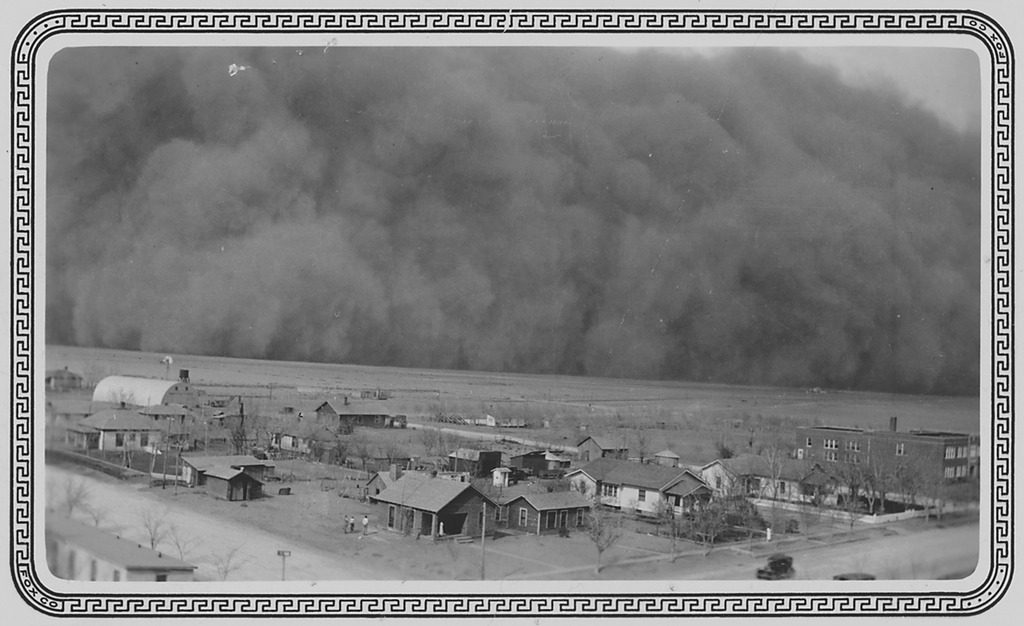
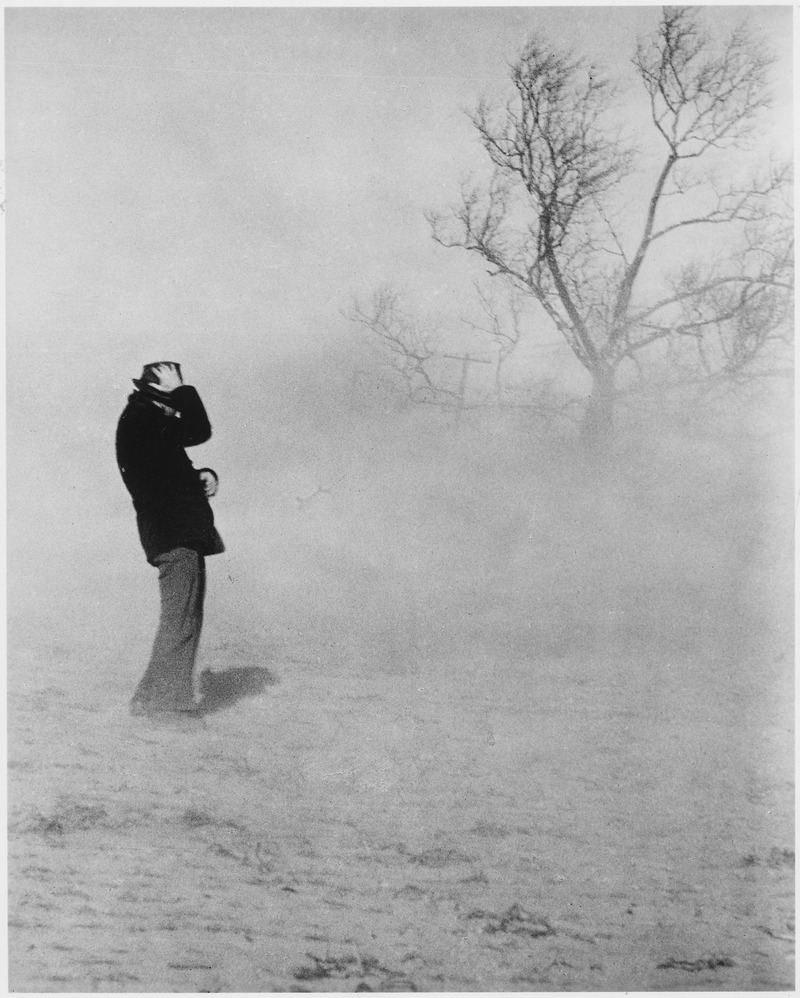
Step #1 ~ Observe Photos
Step #2 ~ Compare and Contrast
Have students reread “Fields of Flashing Light” from March 1934. Next, students draw a T-Chart to compare the words of the poem to the photographs.
After students create the T-Chart, discuss the similarities and differences. Encourage students to add to their chart using rich descriptions of vivid imagery.
The image to the left is an example.
Step #3 ~ Write a Poem
Have students create free verse poems using phrases from their descriptions of the photos.
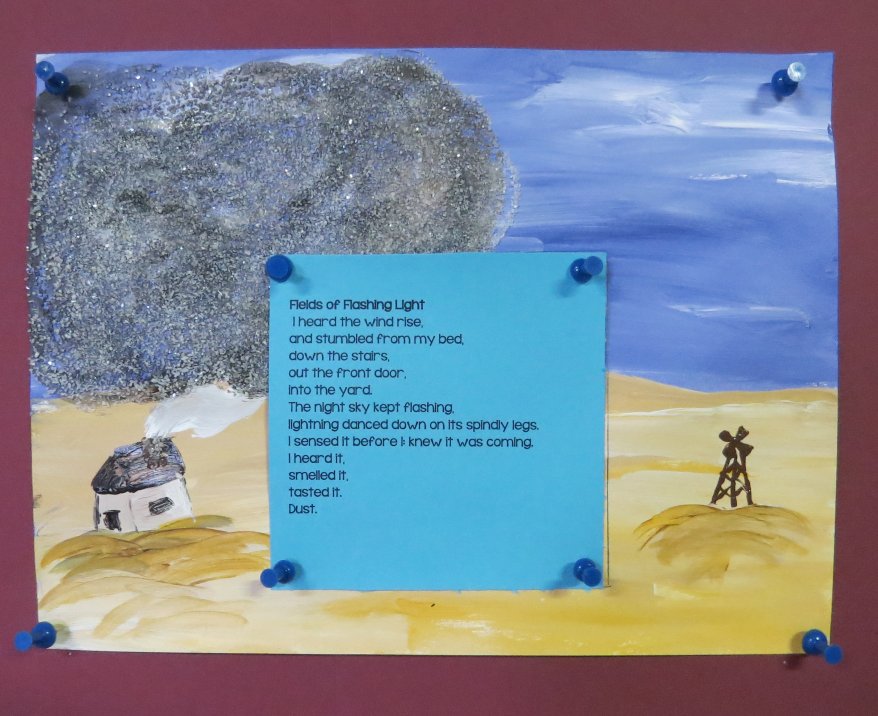
Step #4 ~ Art Project
- Give each student a 9 by 12-inch piece of white construction or drawing paper.
- Have students pencil in a horizon line across the center of the page.
- Students then paint a blue sky above the horizon line and a sandy ground below the horizon. Allow the paint to dry.
- Next, draw a frame area approximately 5 by 5 inches where the completed poem will be displayed.
- Students then paint a scene such as a field of crops, a small town, a home, a fenced-in pasture, etc. below the horizon line. Students will not need to add details to the horizon because this is where the “dust storm” is going. Remind students that the frame area will be covered with their poems. (Encourage students to keep their paintings simple.)
- Using a mixture of glue, paint, and sand, paint a wall of dust blowing in.
- Have students write or type the final draft of their poems on five by five-inch piece of paper.
- Glue or pin the poem in the frame area.
See the product that inspired this post.
Out of the Dust Novel Study includes vocabulary practice, comprehension questions, constructed response writing, and skill practice.