Last updated: August 28, 2026

 Tracking Student Fluency Rates Freebie
Want the printable fluency calendar, WCPM graphs, and tracking sheets?
 What Is Fluency—and What Are You Actually Measuring?
Let’s get our terms straight. When we talk about tracking fluency, we’re mostly measuring Words Correct Per Minute (WCPM)—the number of words a student reads aloud in one minute, minus any errors (like mispronunciations, omissions, or skipped words).
 WCPM = Total Words Read – Errors
This gives you a clear, objective way to track growth over time. It also helps students take ownership of their improvement.
If you want to dive deeper, you can also calculate Accuracy Rate:
Accuracy = (WCPM ÷ Total Words Read) × 100
But for most teachers and students, tracking WCPM is enough.
 Tip #1: Use Fluency Standards for Goal Setting
Most districts use fluency benchmarks to track reading progress. I recommend printing or displaying one in your classroom so students can compare their scores to grade-level expectations.
Here are some excellent fluency norms to consider:

Grab the Freebie
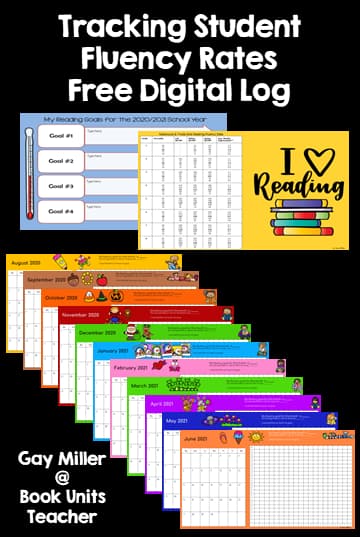
The handout includes a printable fluency calendar plus a link to the Google Slides digital version updated for the 2025/2026 school year, WCPM graphs, and tracking sheets.
Tip #2: Mix It Up With Small Group Fluency Checks
Fluency checks can get repetitive if you’re not careful. To keep things fresh, I rotate between:
- one-on-one reads
- small group fluency checks (my go-to!)
- peer fluency tracking
 Peer Fluency Checks in Small Groups
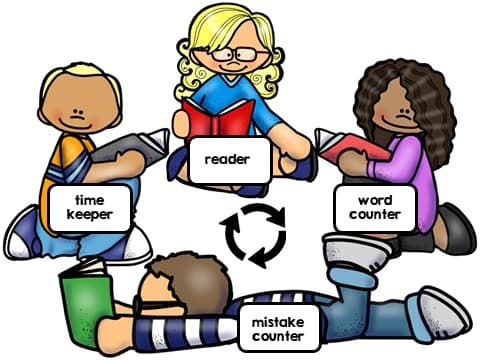
Organize students into small groups (3–4 per group). Once students know the routine, they can handle the tracking with minimal help from you.
- One student reads aloud (cold read).
- Another follows along silently and tracks errors.
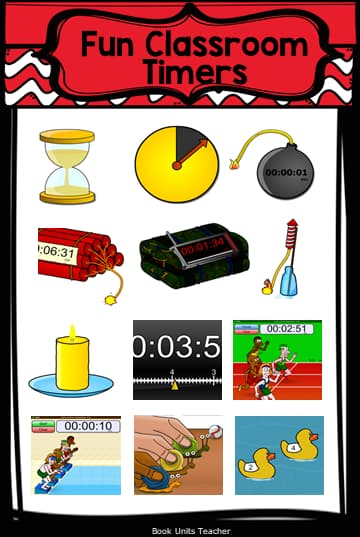
- A third keeps time using a sand timer or stopwatch app, which works great.
- After each round, students rotate roles.
 Want to make sure students take this seriously? Assign roles and rotate them, and provide model examples of how to track errors respectfully.
You’ll still want to do official fluency checks occasionally, but this setup keeps the practice going between check-ins.
 What About Silent Fluency Practice?
Silent reading builds stamina and pacing—but when it comes to tracking WCPM, oral reading is key. It’s the only way to hear decoding, self-corrections, and expression.
That said, short silent rereads can be great warm-ups before a timed oral read.
 Tip #3: Organize It All With a Monthly Calendar
I use a printable Fluency Calendar where students record:
- Cold Read Score
- Hot Read Score
- Errors
- WCPM
- Monthly Average
It becomes a student-owned progress log. You can even make this part of reading centers, RTI, or homework review. Kids love seeing their growth charted month by month.
 Why Fluency Tracking Works
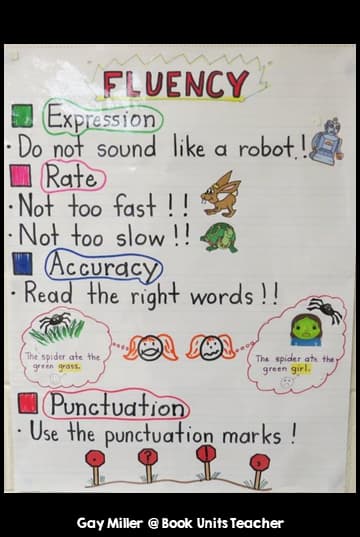
This isn’t just about reading faster—it’s about reading better. With confidence. With voice. And with understanding.
Fluency is closely tied to comprehension, and when students build fluency, they begin to feel like real readers.
Best of all? You’re teaching them how to monitor their own growth. That’s a skill that sticks.
Encourage a growth mindset by using a fluency calendar system. Each month, students aim to beat their own best—not the kid sitting next to them.



4 comments
Skip to comment form
Yes, my students LOVE those fun online timers. I have never thought of practicing fluency in a group like that, have only ever done it in pairs so thanks for the idea!
LOVE those timers! Thank you for such great tips 🙂
Julie
The Techie Teacher
Thanks so much for joining in. I love putting kids in charge of their practice and learning Great suggestions for fluency!
I have that website bookmarked. I love the cute timers. There’s also a fun bubbles site for noise level. Thank you so much for the tips.