Last updated: December 3, 2025

 Chapter Summary
Chapter 2: “The Council with the Munchkins”
Dorothy’s house lands in the magical Land of Oz right on top of the Wicked Witch of the East. The Munchkins and the Good Witch of the North celebrate Dorothy’s arrival, declaring her a heroine for freeing them from the witch’s rule. Dorothy, worried about Aunt Em and Uncle Henry back in Kansas, asks for help returning home. The Good Witch advises her to travel to the Emerald City and seek guidance from the Great Oz.
This chapter introduces the vibrant world of Oz and sets Dorothy on her journey, contrasting the bleakness of Kansas with the color and wonder of her new surroundings.
Chapter 2: “The Council with the Munchkins” Projects
 Mentor Sentences
One way to turn classic literature into a powerful teaching tool is to pull mentor sentences straight from the text. Instead of random worksheets, students get to see grammar, punctuation, and style in action inside a story they’re already reading.
Here are a few examples you can use right from Chapter 2 of The Wonderful Wizard of Oz:
 “You are welcome, most noble Sorceress, to the land of the Munchkins.”
Focus: Capitalization of Proper Nouns + Titles
Practice Prompt: Write a sentence that includes two capitalized proper nouns—a title and a place name.
Dorothy looked, and gave a little cry of fright.
Focus: Compound Verbs + Commas with Conjunctions
Practice Prompt: Write a sentence that includes two actions joined by “and.” Use these verbs: jumped, shouted.
“Oh, dear! Oh, dear!” cried Dorothy, clasping her hands together in dismay.
Focus: Quotation Marks + Interjections + Commas
Practice Prompt: Write a sentence that begins with an interjection and includes a speaker tag. Use this interjection: Oh no
Figurative Language Focus: Personification
Let’s pause to notice how the author gives human-like qualities to nature and objects. These moments of personification help the setting feel alive and emotional. Look for phrases where the land, flowers, or weather seem to act or feel like people.
The cyclone had set the house down very gently.
The brook… murmuring in a voice very grateful to a little girl… – Personification (The brook is given a voice and emotional tone.)
Lesson Idea: Have students identify non-human elements that are given human-like qualities and rewrite a sentence to personify a new object.
Focus Skills
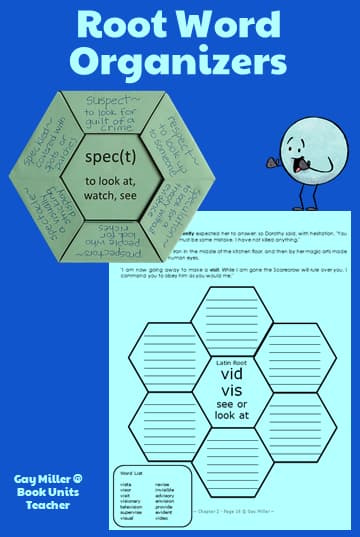
Each chapter in The Wonderful Wizard of Oz Novel Study includes a constructed response question and a skill-based graphic organizer. These two pieces are part of the full-paid unit, which includes comprehension questions, skill lessons, assessments, answer keys, and Google Slides versions.
The free handout linked below includes the activities from the blog post for this chapter. If you’d like the complete set of constructed responses and skill organizers for all 24 chapters, you’ll find them inside the full unit once it is released.
Navigate the Book Study
 Previous: Chapter 1 – The Cyclone
 Next: Chapter 3 – How Dorothy Saved the Scarecrow


1 comment
Thank you for doing this study! I just remembered it this morning and dashed over to be involved!