Teach Setting in Writing with Animated Shorts

Last updated: August 7, 2026

Teaching Setting in Writing with Animated Shorts

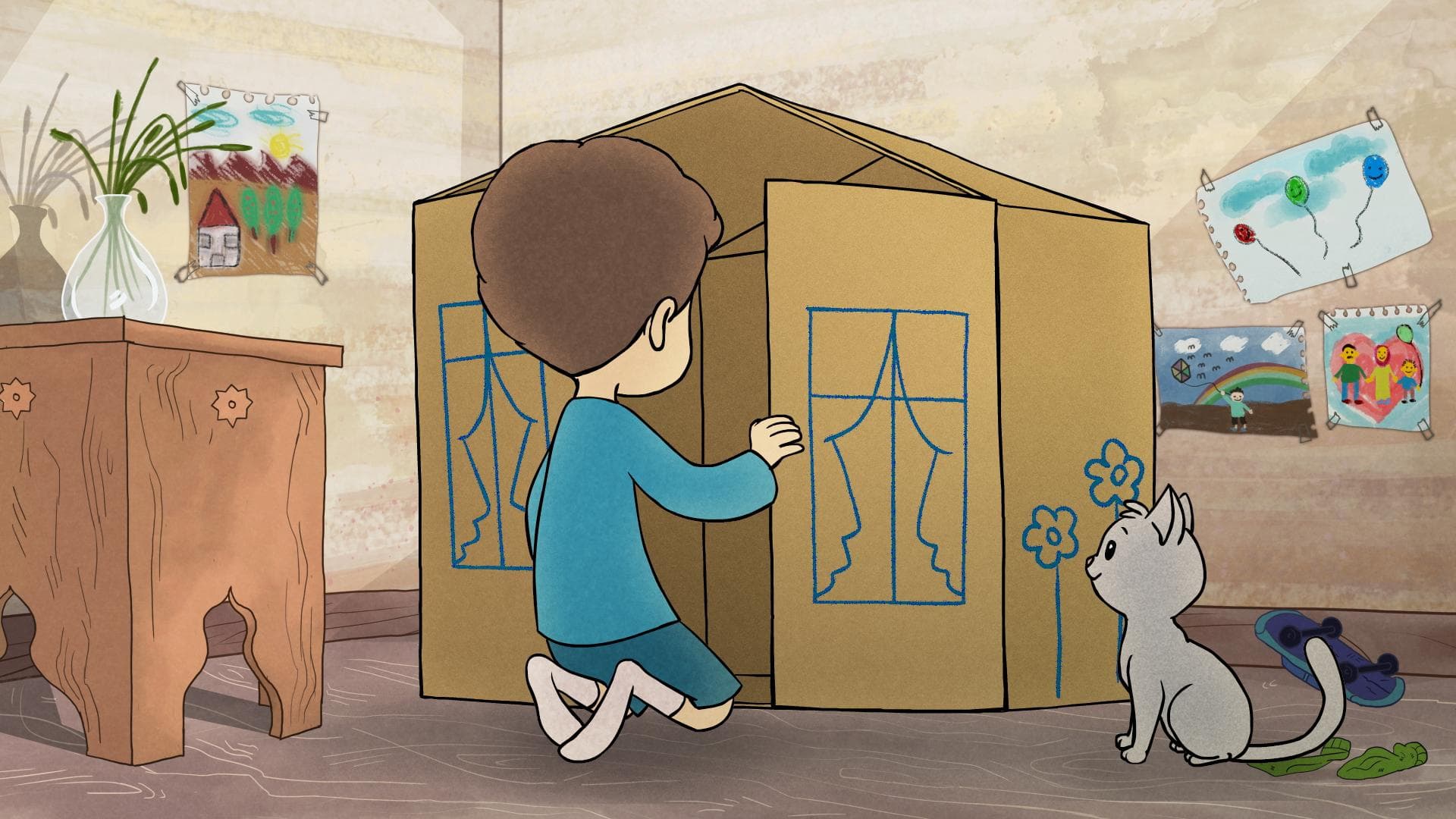
Using animated shorts to teach setting is engaging and helps students understand how place shapes mood, conflict, and character decisions. The animated short The Box (by Merve Cirisoglu Cotur) tells a wordless story about a Syrian boy whose cardboard playhouse becomes a symbol of survival during wartime. When paired with Mahmoud’s journey in Alan Gratz’s Refugee, this lesson helps students analyze how setting influences tone, tension, and emotional impact, especially in stories of displacement.

Grade Level4th–6th
Skill FocusWriting Narrative Hooks
StandardsW.4.3.A • W.5.3.A • W.6.3.A
FormatPrintable & Google Slides

Jump to

This post includes a free printable pack to help your students analyze how setting impacts a story’s tone and theme. Using a film-and-novel comparison, students explore setting, mood, and visual storytelling while building empathy through real-world connections.

⭐ What You’ll Learn

By the end of this lesson, you’ll be able to help students:

✔ describe physical and emotional settings in visual and written texts

✔ analyze how color, sound, and imagery create mood

✔ compare a short film to a novel excerpt

✔ explain how setting influences character choices

✔ write from a character’s perspective using setting details

✔ build empathy through stories of displacement

⭐ Mini‑Lesson: How Setting Shapes Mood and Character Decisions

Setting is more than a backdrop—it shapes the emotional tone of a story and influences how characters act, feel, and respond to challenges. Animated shorts are especially powerful for teaching this because students can see how visuals, color, and sound work together to create mood.

Explain to students that strong settings:

  • reveal emotional tone (fear, hope, tension, safety)
  • influence character decisions and survival
  • shift throughout the story to increase conflict
  • use visuals and sound to communicate meaning
  • help readers/viewers understand the stakes

Model how to examine a setting by asking: “How does this place make the character feel—and how does that affect what they do next?” This question helps students connect setting to character motivation and theme.

Be sure to get the handout. It Includes setting/mood chart, comparison organizer for The Box and Refugee, background info, and Google Slides version.

Comparing Stories with Short Films for Kids

🌍 Why This Pair Works So Well

The Box uses music, sound effects, and visuals (with no dialogue) to convey the emotional and physical realities of war. Refugee does the same through powerful language and detail. Together, these two texts help students make deep connections between story, structure, and setting.

Animated Short Film The Box
Play Video about Animated Short Film The Box

🎥 The Box (2:00 – 2D Animation)

A young boy plays happily with a cardboard box until bombs hit his home. His beloved box becomes a makeshift shelter, then a boat, as he flees violence in search of safety.

Refugee Book Trailer
Play Video about Refugee Book Trailer

📚 Mahmoud in Refugee (excerpt from the novel by Alan Gratz)

Mahmoud, a Syrian refugee, escapes with his family after a bombing, traveling overland and by sea in a dangerous journey to Germany. The setting constantly shifts from war zones to refugee camps to the open sea, and plays a key role in every life-or-death decision.

Activities for Teaching Setting with Animated Shorts

This lesson uses two guided handouts to help students analyze setting, mood, and character experiences in The Box and Refugee. Each activity builds on the last, moving students from observation to comparison to written explanation.

✨ Activity #1 — Setting & Mood Exploration (Handout 1)
Teach Setting with the Animated Short One Small Step

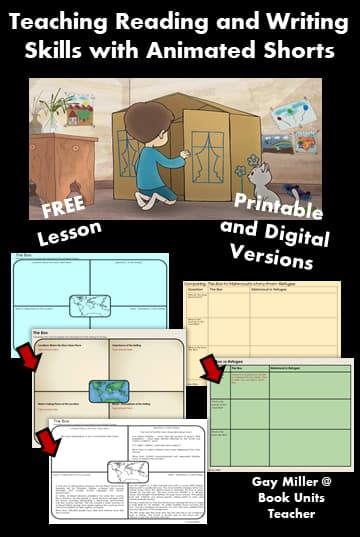
Using the four‑quadrant setting chart, students track how the setting shifts throughout The Box. They record:

  • location (home, refugee camp, sea)
  • events happening in each place
  • why the location matters to the character
  • mood created through visuals, color, and sound

This helps students see how setting shapes tone and tension as the story unfolds.

✨ Activity #2 — Text‑to‑Film Comparison (Handout 2)

Students complete a guided comparison table with three questions that connect The Box to Mahmoud’s journey in Refugee:

  • Why do the boys leave home?
  • What is the journey to the coast like?
  • What is the boat ride like?

This structured comparison helps students identify shared themes of danger, displacement, and survival.

✨ Activity #3 — Writing from the Setting

After analyzing both texts, students write a journal entry from the boy’s perspective, describing what it feels like to live in a place that once felt safe but is now filled with uncertainty. They use details from both handouts to support their writing.

✨ Activity #4 — Visual Storytelling Discussion

Students discuss how The Box communicates powerful ideas through visuals alone. They examine how the absence of dialogue makes the story more emotional and universal, and how setting becomes a central part of the storytelling.

⭐ Lesson Recap

Type Used For Example
Physical Setting Showing where the story takes place and how it changes. Home → refugee camp → open sea in The Box.
Emotional Setting Revealing how the character feels in each location. Safe → fearful → desperate → hopeful.
Mood & Tone Using visuals, color, and sound to create atmosphere. Dark colors and low music during bombing scenes.
Text-to-Film Comparison Connecting themes and experiences across media. Mahmoud’s journey in Refugee mirrors the boy’s escape.
Perspective Writing Describing setting through a character’s point of view. Journal entry from the boy in The Box.

⭐ Teacher Information

Differentiation for Descriptive Settings

Emerging Writers: Provide sensory word banks and figurative‑language examples. On‑Level Writers: Ask students to write two versions of the same setting—one “telling,” one “showing.” Advanced Writers: Challenge students to revise for tone or mood (peaceful, eerie, joyful, tense). English Learners: Pair sensory details with visuals and sentence frames. Extra Support: Offer mentor‑text excerpts with color‑coded examples.

Common Misconceptions

Students often:

  • list details instead of blending them into the narrative
  • confuse figurative language with literal description
  • overuse adjectives instead of sensory imagery
  • forget to connect setting to character emotion

Addressing these early helps students write settings with intention and depth.

⭐ Teacher Tip

Encourage students to read their descriptive paragraphs aloud. If the writing “sounds” flat, they likely need stronger sensory details or figurative language. If it “sounds” vivid, they’re on the right track.

 📥 What’s Included in the Free Handout Pack
Teach Setting with the Animated Short The Box
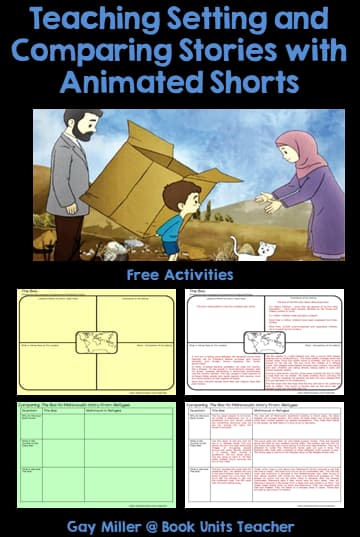
  • Setting & Mood Chart (Handout 1) — Four‑quadrant organizer for analyzing location, importance, events, and mood in The Box.

  • Comparison Chart (Handout 2) — Three guided questions comparing The Box and Refugee with a focus on setting and survival.

  • Google Slides Version — Digital option for flexible classroom use.

You can unsubscribe anytime.
No spam—just helpful ideas and freebies!

See the product that inspired this post.

Teaching Skills with Animated Short Films All-in-One Reading and Writing Mega Bundle

If you are looking to add some high interest activities to your lessons, try using animated shorts to teach reading and writing skills. This packet contains graphic organizers covering many Common Core skills. $Save$ when you purchase this mega bundle which includes all 12 units.  

Gay Miller

Permanent link to this article: https://bookunitsteacher.com/wp/?p=144