Chocolate Fun in the Classroom

Engaging Recipes & Activities

Bring Chocolate Creations to Life


From sensory writing experiments to holiday crafts and kitchen science, these hands-on chocolate activities are designed to captivate upper elementary students and sneak in some serious learning along the way.
Cup of Hot Chocolate

Chocolate Classroom Recipes & Activities

Six ready-to-use ideas that connect chocolate to writing, science, and the holidays β€” no fancy equipment required.

Writing Descriptive Language

Writing Compare & Contrast Paragraphs About Chocolate

Comparing Chocolate Bars

Give each student two different types of chocolate to taste and compare. Hershey Miniatures work perfectly β€” a 40-ounce bag includes milk chocolate, Special Dark, Krackel, and Mr. Goodbar, and with 135 bars per bag it's very economical for classroom use.

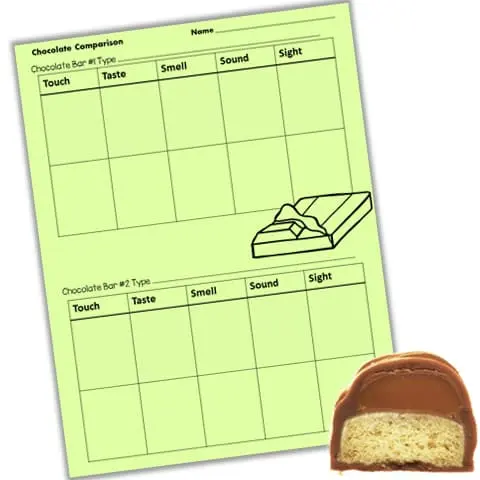
Students open one piece at a time and complete the five-senses chart below, describing texture, flavor, smell, sound, and appearance with rich, specific language. Remind them that "good" and "yummy" don't count β€” push for phrases like silky texture, crackly crunch, or mildly bitter finish.

Chocolate πŸ‘… Taste βœ‹ Touch πŸ‘ƒ Smell πŸ‘‚ Sound πŸ‘οΈ Sight
Bar #1 Type: ___ student fills in student fills in student fills in student fills in student fills in
Bar #2 Type: ___ student fills in student fills in student fills in student fills in student fills in
Example compare & contrast sentence Hershey's Milk Chocolate has a rich, creamy texture whereas the Krackel contains a wonderful crackly crunch that dissolves into a smooth, sweet finish.
Teacher Tip: Words to Ban
  • Instead of "good" β†’ try satisfying, indulgent, rich, mellow
  • Instead of "yummy" β†’ try velvety, buttery, intensely sweet, faintly bitter
  • Instead of "crunchy" β†’ try crackly, crispy, snappy, brittle
  • Instead of "smooth" β†’ try silky, creamy, satiny, luscious
Instructional Writing Holiday

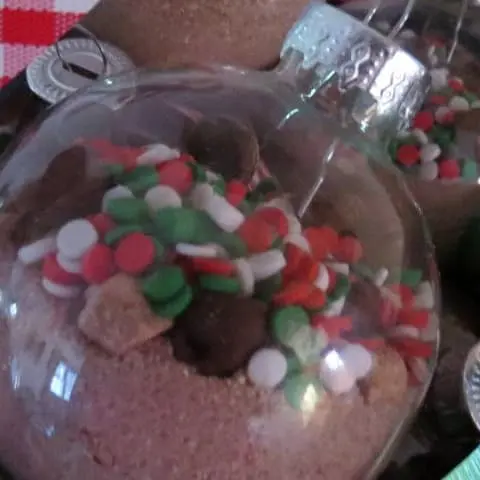
Hot Cocoa Mix-Filled Ornaments

Hot Cocoa Ornaments

These hot cocoa ornaments are a perfect holiday classroom project that doubles as an instructional writing lesson. Students assemble the ornaments, then write step-by-step directions explaining how to make them β€” and how to brew the hot chocolate inside.

What you need per ornament:

  • 1 clear plastic ornament (remove the top)
  • ΒΌ cup hot cocoa mix with marshmallows
  • 1 tablespoon chocolate chips
  • 1 teaspoon sprinkles
  • Ribbon for decoration

Use a funnel to layer the ingredients β€” cocoa mix first, then chips and sprinkles. A skewer helps push any marshmallows that get stuck. Tie ribbon around the hanger for a festive finish.

Writing connection After assembling the ornaments, students write a two-paragraph instructional piece: paragraph one explains how to make the ornament, paragraph two tells the recipient how to prepare the hot chocolate. The downloadable PDF includes the recipe, drinking instructions to print and attach, decorative writing paper, and a bonus chocolate pretzel recipe.
Novel Connection Community Building

Chocolate Chip Cookies β€” A Classroom Story

Chocolate Chip Cookies

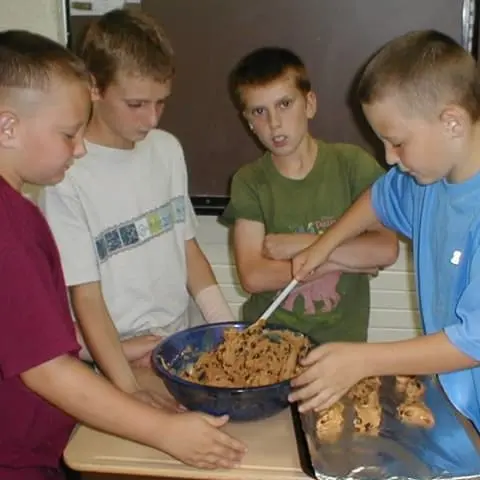
While reading The Chocolate Touch, my fourth-grade students were inspired to bake chocolate chip cookies β€” because when every character's food turns to chocolate, the natural response is to make something chocolatey yourself.

I reached out to our cafeteria staff to ask if they'd bake the cookies if we prepared them. Without hesitation, they agreed. Their generosity made this sweet classroom experience possible β€” and it became one of those lessons students talked about for years. Ironically, one student from that very group later graduated from Johnson & Wales and became a professional chef.

Classroom Extension
  • Before baking: Students predict and write about what they think the cookies will taste, smell, and look like.
  • While baking: Students observe and note changes β€” solid butter becomes liquid, raw dough browns and firms. Science and writing together!
  • After tasting: Students write a descriptive paragraph comparing their prediction to reality. Were they right? What surprised them?

Tip: Don't have cafeteria access? No-bake chocolate oat cookies work just as well and require only a stovetop or microwave.

Science Observation Writing

Experiment: Turning Solids to Liquids

Chocolate Melting Experiment

As a hands-on way to explore the properties of matter, students melt candy coating and observe how it changes state from solid to liquid. They then spread the warm, melted chocolate onto graham crackers and watch it slowly solidify again as it cools.

This simple experiment reinforces phase change concepts in a way students won't forget β€” and it's delicious.

Science + Writing Integration
  • Before: Students write a hypothesis β€” what will happen when chocolate is heated? How will it change?
  • During: Students record observations at each phase using precise, scientific vocabulary: viscous, opaque, glossy, crystalline.
  • After: Students write a conclusion paragraph explaining what happened and why. Why does chocolate melt near body temperature? (Hint: it's on the Hangman facts page!)
  • Connection: Discuss how this same property β€” melting at 98.6Β°F β€” is what makes chocolate feel so satisfying in your mouth.
Novel Connection Classroom Rewards

Classroom Rewards: Raspberry Hot Chocolate & S'mores

These two activities come straight from real classroom moments β€” both used chocolate as a way to celebrate reading and reward students who had earned something special.

Raspberry Hot Chocolate

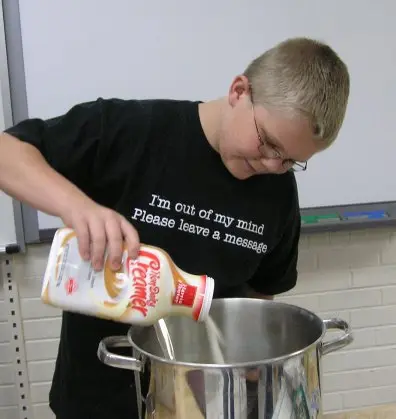
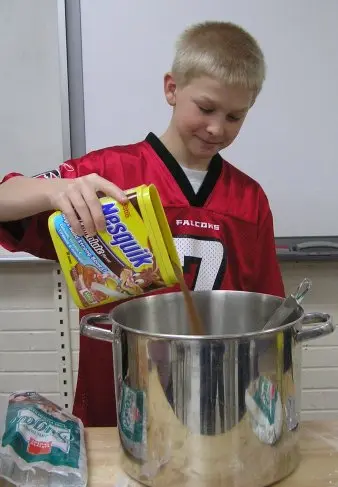
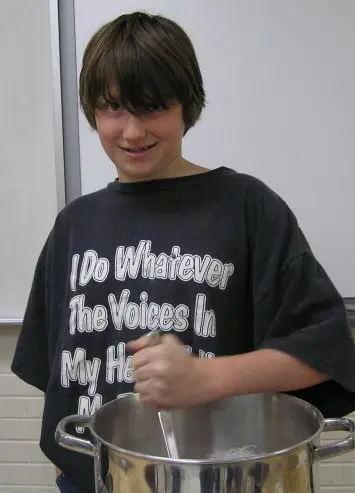
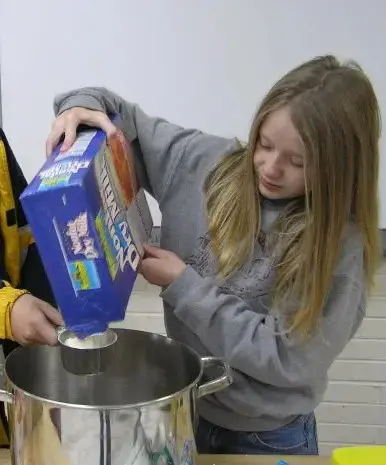
This recipe was inspired by Hatchet by Gary Paulsen. After Brian discovers a raspberry patch in Chapter 7 β€” a genuine lifeline after days of bitter choke cherries β€” we celebrated his find by making our own raspberry-flavored hot chocolate. Even the threat of a bear couldn't keep Brian from those berries, and the students loved connecting a real food experience to the story.

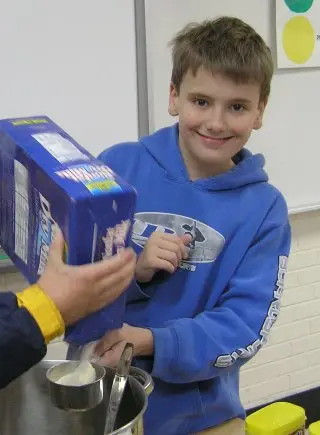
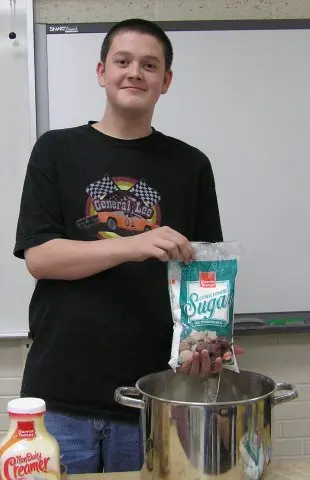
Students making raspberry hot chocolate Mixing the cocoa ingredients Pouring the cocoa mix Stirring hot chocolate Serving hot chocolate Students enjoying hot chocolate
Raspberry-Vanilla Cocoa Mix β€” Makes 13 cups of dry mix
  • 6 cups instant powdered milk
  • 2 jars (8 oz each) French vanilla flavored coffee creamer
  • 1 package (16 oz) powdered sugar
  • 1 package (15 oz) powdered chocolate milk mix
  • 1 envelope (0.15 oz) raspberry drink mix (such as Kool-Aid)
  • Β½ teaspoon salt
  1. In your largest mixing bowl, combine all ingredients well.
  2. Store in an airtight container in a cool, dry spot.
  3. To serve: pour 6 oz of hot water over about 2Β½ heaping tablespoons of mix.
  4. Stir well and enjoy.
  5. Fill a canister with the mix and include serving instructions for students to take home.
Writing Connection
  • Before making: Students write a prediction β€” what will it taste like? How will raspberry and chocolate combine?
  • After tasting: Students write a descriptive paragraph comparing their prediction to the actual flavor.
  • Extension: Students write their own recipe card using sensory details β€” not "1 cup of mix" but "1 heaping cup of rich, raspberry-scented cocoa mix."
S'mores β€” A Classroom Reward

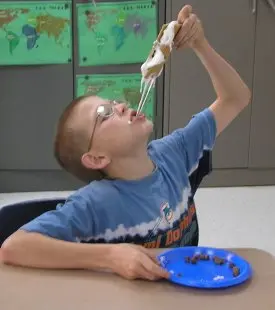
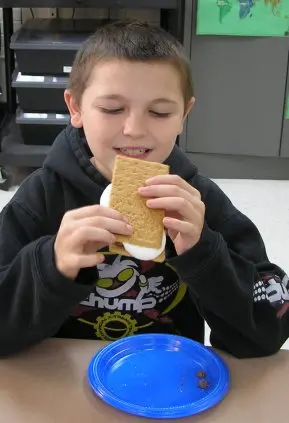
The S'mores activity came from our classroom reward system. Once a month, students who had met their nightly reading goals joined a celebration while their classmates worked with the other teacher. We pulled desks together to form a large table, placed a candle in the center, and students took turns roasting marshmallows to make S'mores.

It was a simple treat, but because it was earned, it felt genuinely special. The anticipation alone motivated reading habits for weeks.

Students making s'mores Roasting marshmallows
A Note on Safety
This activity was done years ago when classroom rules were less restrictive. Open flames in classrooms would not be permitted in most schools today. Modern alternatives that preserve the same spirit: use a fondue pot with adult supervision, try microwave s'mores, or save this as a special outdoor event around a fire pit or at a school campfire night.
Writing Connection: Descriptive Recipe Writing
  • After making either treat, students write a recipe card β€” but every ingredient description must include a sensory detail. Not just "1 graham cracker" but "1 crisp, honey-sweet graham cracker."
  • Challenge extension: Students write the recipe as if explaining it to someone who has never tasted chocolate before. What context do they need to provide?
Science Art & Craft

Chocolate Bowls β€” A Video Walkthrough

Chocolate Bowl Project

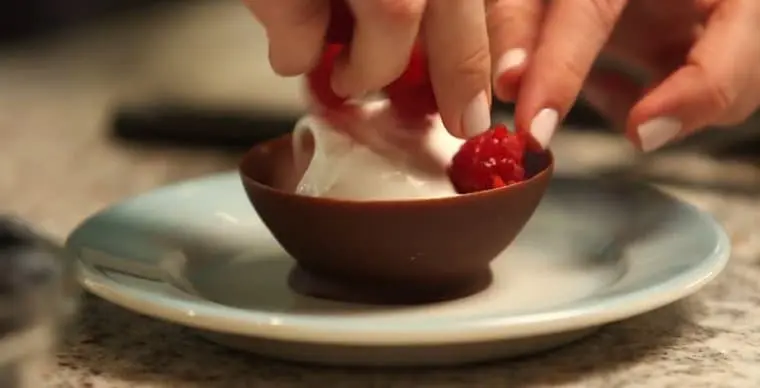
This project was such a hit that it earned a permanent spot on the page even without photos to share! Students dip balloons into melted chocolate, let the coating harden, then pop the balloon β€” leaving behind a beautiful edible bowl.

We filled ours with Easter candy for a festive treat, but they work beautifully for any occasion: fill with berries, trail mix, or ice cream toppings for an end-of-unit celebration.

Step-by-Step Writing Connection
  • Before: Students predict in writing β€” will the balloon affect the shape of the chocolate? What will happen when the balloon pops?
  • After: Students write an instructional paragraph explaining the process for a friend who wasn't there. Emphasis on transition words: first, next, then, finally.
  • Science angle: Why does the chocolate hold its shape after the balloon is removed? Connect to the melting experiment β€” chocolate solidifies when it cools, creating a rigid structure.

Explore the World of Chocolate

Timeline: 600 BCE–1700s Timeline: 1800s Timeline: 1900s Timeline: 2000s Recipes Concentration Hangman Cloze Story Oreo Activities Themed Books