Teaching narrative hooks is one of the most effective ways to help students strengthen their storytelling skills. Students love writing stories, but crafting a strong opening isn’t always easy. Many begin with “One day…” or “Hi, my name is…”—not exactly gripping starts.
The good news? Students can learn clear patterns for writing powerful narrative hooks. This post shares five effective hook types along with classroom activities that help students master engaging story beginnings.
📥 Get the Teaching Materials Here!
Includes printable organizers, reference guides, and Google Slides resources.
Five Effective Narrative Hook Methods
A great hook immediately draws the reader in. Encourage students to begin their stories with a strong opening by using one of these five techniques
✨ Dialogue Hook
First Lines in Children’s Literature – The One and Only Ivan by Katherine Applegate
A dialogue hook starts with a conversation, pulling readers directly into the action.
📌 Example
“Hurry or you’ll be late!” called Mom.
📌 Example from Literature
“Hello. I am Ivan. I am a gorilla. It is not as easy as it looks.”
—The One and Only Ivan by Katherine Applegate
📌 Classroom Tip
Have students draft a hook using dialogue, then swap with a partner to revise for clarity and interest.
✨ Question Hook
First Lines in Children’s Literature – Charlotte’s Web by E.B. White
A question hook engages readers with an intriguing question that sparks curiosity.
📌 Example
Have you ever had a day when you wished you had stayed in bed?
📌 Example from Literature
“Where’s Papa going with that axe?” said Fern to her mother as they were setting the table for breakfast.
—Charlotte’s Web by E.B. White
📌 Classroom Tip
Challenge students to write three possible hook questions before choosing the strongest one.
✨ Vivid Description Hook
First Lines in Children’s Literature – A Little Princess by Frances Hodgson Burnett
A vivid description hook uses sensory details to create a scene that immediately captures attention.
📌 Example
The sun warmed my back as I raced toward the bus, the smell of fresh‑cut grass filling the air.
📌 Example from Literature
Once on a dark winter’s day, when the yellow fog hung so thick and heavy in the streets of London that the lamps were lighted and the shop windows blazed with gas as they do at night, an odd‑looking little girl sat in a cab with her father…
—A Little Princess by Frances Hodgson Burnett
📌 Classroom Tip
Let students brainstorm sensory words related to their setting before crafting their descriptive hook.
✨ Interesting Fact Hook
First Lines in Children’s Literature – The Best Christmas Pageant Ever by Barbara Robinson
An interesting fact hook opens with a surprising or fascinating detail that leads naturally into the narrative.
📌 Example
Shock has been known to make a ten‑year‑old’s brain freeze on the spot.
📌 Example from Literature
The Herdmans were absolutely the worst kids in the history of the world.
—The Best Christmas Pageant Ever by Barbara Robinson
📌 Classroom Tip
Provide students with fun or unusual facts related to their story topics and have them write hook sentences using one.
✨ Sound Effect Hook
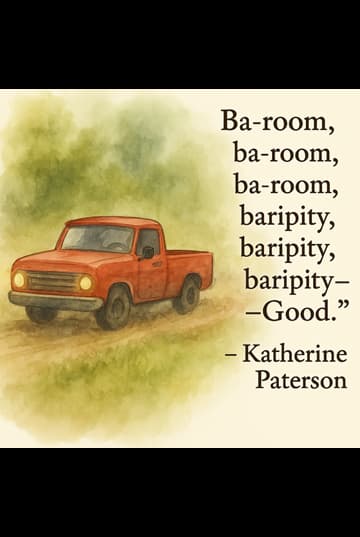
First Lines in Children’s Literature – Bridge to Terabithia by Katherine Paterson
A sound effect hook begins with an attention‑grabbing noise that launches the reader straight into the moment.
📌 Example
“Buzzzzz!” My alarm clock blared as I struggled awake.
📌 Example from Literature
Ba-room, ba-room, ba-room, baripity, baripity, baripity, baripity—Good.
—Bridge to Terabithia by Katherine Paterson
📌 Classroom Tip
Encourage students to list sound words before writing their own sound‑effect hook
Classroom Activities for Teaching Hooks
Activity #1: Reference Guide
✏ Students create a storage pocket to hold cards listing different types of narrative hooks.
✏ Use the cards as a reference when beginning stories.
✏ Review and explain each hook type together.
Activity #2: Hook Sorting Challenge
✏ Students read the same story written with five different beginnings.
✏ Discuss which hooks are most effective and why.
✏ Encourage students to rank them and explain their reasoning.
Activity #3: Analyzing Hooks in Published Books
✏ Students read famous first lines and identify the hook method used.
✏ Discuss what makes each beginning effective.
✏ Extend the activity by having students rewrite the opening using a different hook type.
Final Thoughts for Teachers
Teaching narrative hooks helps students break free from repetitive story beginnings and develop strong storytelling skills.
✔ Encourage experimentation—let students try different hooks!
✔ Make revision fun—use peer editing challenges.
✔ Show real-world examples—authors use these hooks all the time.
Get the Teaching Materials Here! Includes printables, Google Slides, and classroom resources.
See the product that inspired this post.
If your students are ready to put their narrative hook skills into action, this step‑by‑step mystery writing unit is the perfect next step. With 11 lessons, foldable graphic organizers, and a focus on crafting suspenseful stories, this resource guides students through the entire writing process—from planning and dialogue to figurative language and final edits. It’s also included in my novel study for The Westing Game, so if you already own that, you’re covered.

6 comments
Skip to comment form
Dear Gay:
Excellent resources and methodology. I will definitely use aspects of this lesson plan with my students.
Hi I am so thrilled I found your webpage, I really found you by
accident, while I was browsing on Aol for something else,
Nonetheless I am here now and would just like to say cheers for a fantastic post and a all round interesting blog (I also love the theme/design), I don’t have time to browse it all at the minute but I have bookmarked
it and also added your RSS feeds, so when I have time I will be back to read a great deal more, Please
do keep up the great b.
We are focusing on writing Hooks right now at the beginning of school. These will work perfectly.
Thank you so much! This is perfect!
Perfect! Ta
I am so thrilled to find this webpage! WHAT a wonderful resource this is! Fisrt I am grateful to share the teaching ideas. It will really help me teach my kids. I like to teach English using the storybooks and newspapers. Thank you very much!Already I become a fan of you!:)